USS Gerald R. Ford Returns Home After 326 Days, Ending Longest US Carrier Deployment Since Vietnam
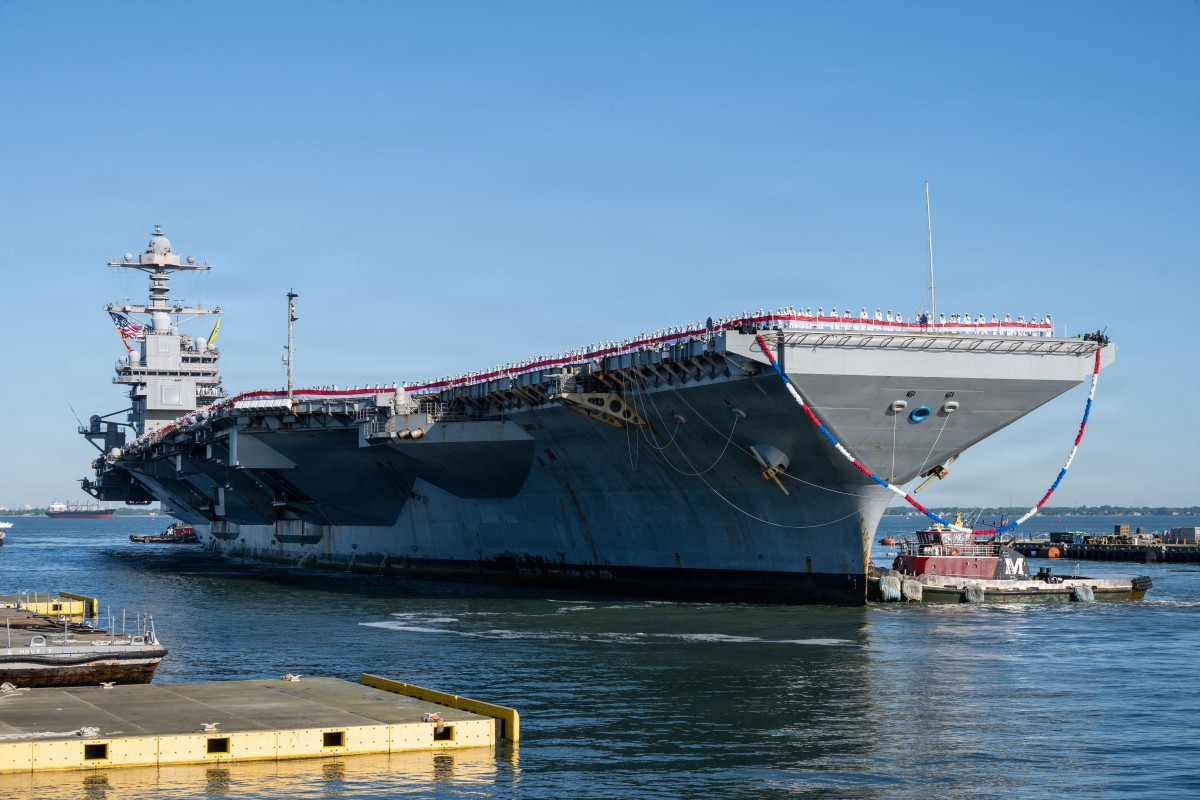
The USS Gerald R. Ford aircraft carrier returned to its homeport on Saturday, concluding a historic 326-day deployment that spanned anti-smuggling operations in the Caribbean and active combat operations against Iran, the Pentagon announced.
War Secretary Pete Hegseth traveled to Naval Station Norfolk to personally welcome home the crew of the world's largest aircraft carrier, the U.S. military confirmed in a statement on X (formerly Twitter).
The grueling mission marks the longest deployment for a U.S. carrier strike group since the Vietnam War, underscoring the intense strain placed on American naval forces amid escalating global conflicts.
From the Caribbean to Combat in the Middle East
The USS Gerald R. Ford originally deployed to the Caribbean, where its strike group took part in high-stakes counter-narcotics and geopolitical operations. During this phase, Washington's forces launched strikes on suspected drug-smuggling vessels, interdicted sanctioned oil tankers, and ultimately participated in the high-profile seizure of Venezuelan leader Nicolas Maduro.
However, as geopolitical tensions boiled over into open warfare with Iran, the Pentagon rapidly rerouted the supercarrier to the Middle East. Once stationed in the region, the Ford became a central launchpad for American combat operations against Iranian forces.
Shipboard Incidents and Maintenance Strains
The exceptional length of the deployment took a visible toll on the state-of-the-art vessel. On March 12, a fire broke out in one of the ship's laundry rooms, injuring two sailors and causing extensive damage to approximately 100 crew berths, according to military officials.
Beyond combat and accidental damage, the carrier also reportedly suffered chronic, significant malfunctions with its advanced toilet and sewage plumbing systems while at sea—a persistent technical issue that has plagued the newer class of supercarriers.
The return of the Ford offers a critical window for long-overdue maintenance and crew respite after nearly eleven months on the frontlines of global conflict.
17/05/2026