Kurdistan Region Stores More Than 9 Billion Cubic Meters of Water as Authorities Prepare Summer Management Plan
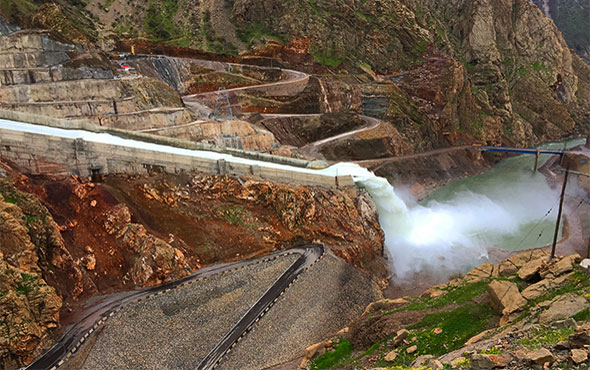
Water storage in the Kurdistan Region’s dams has reached its highest level following a season of heavy rainfall, with more than 9 billion cubic meters currently stored. Officials say preparations are underway to manage water resources during the summer and to respond to any potential water releases from Iran.
Water Storage Reaches High Levels
Rahman Khani, Director General of Dams in the Kurdistan Region, said more than 9 billion cubic meters of water have been stored in the Region’s dams.
He told Channel8 that several small dams have already reached capacity since the start of the rainy season. Among the larger dams, Darbandikhan has been releasing water for an extended period, while Dukan is nearing overflow levels. The Gomaspan Dam has also accumulated substantial water but has not yet reached full capacity.
Khani said the stored water is distributed across 22 small and medium-sized dams and three major dams, Dukan, Darbandikhan, and Duhok, as well as the Gomaspan Dam, which he described as one of the Region’s large dams.
Summer Water Management Plan
The Kurdistan Region Directorate of Dams is preparing to launch its summer water management program in June.
Khani said, “The program will release water according to a scientific plan and based on the needs for drinking water, agriculture, and electricity generation. The ministry's plan is coordinated with the Iraqi Ministry of Water Resources.”
Preparations for Potential Water Releases From Iran
The Ministry of Agriculture and Water Resources said it has also prepared for the possibility of water releases from Iran, although officials believe such releases are unlikely to create significant risks.
Every year, Iran occasionally releases excess water from its dams into rivers that flow into the Kurdistan Region. These include the Little (Lower) Zab River, which enters through the Pshdar area, and the Sirwan River, which passes through Halabja Governorate.
Little Zab and Sirwan Rivers
The Little Zab, also known as the Kalwe River, originates in Eastern Kurdistan. Iran has constructed the Kolase Dam near the city of Sardasht on the river, which extends approximately 400 kilometers before reaching the Dukan Dam in the Kurdistan Region.
A similar situation exists on the Sirwan River. Iran has built the Daryan Dam in the villages of Eastern Hawraman near the borders of Pawa (Paveh) district, allowing it to regulate the flow of water that eventually reaches Darbandikhan Dam and Sirwan Lake.
According to officials, Iran periodically restricts and releases water from both rivers based on existing understandings and water management needs.
Authorities Say Releases Can Be Managed
Hiwa Ali, spokesperson for the Ministry of Agriculture and Water Resources, told Channel8 that Iran is likely to retain much of its water reserves for domestic needs.
However, he said that even if Iran releases water from the Little Zab and Sirwan rivers, the situation would not pose a threat comparable to the recent release from Turkey’s Ataturk Dam.
“The Directorate of Dams has made preparations, and the water can easily be retained and managed,” Ali said. “The easiest method is to increase the volume of water released from the Dukan and Darbandikhan dams.”
Regional Context
The preparations come as Turkey has recently released water from the Ataturk Dam on the Euphrates River toward Syria.
According to reports, the release caused human casualties and material damage in the Syrian provinces of Deir ez-Zor and Raqqa, while authorities in Iraq also began preparing for potential impacts downstream.
31/05/2026