Sherri Kraham Talabany: Women’s Participation Is Key to Kurdistan’s Economic Growth and Institutional Progress
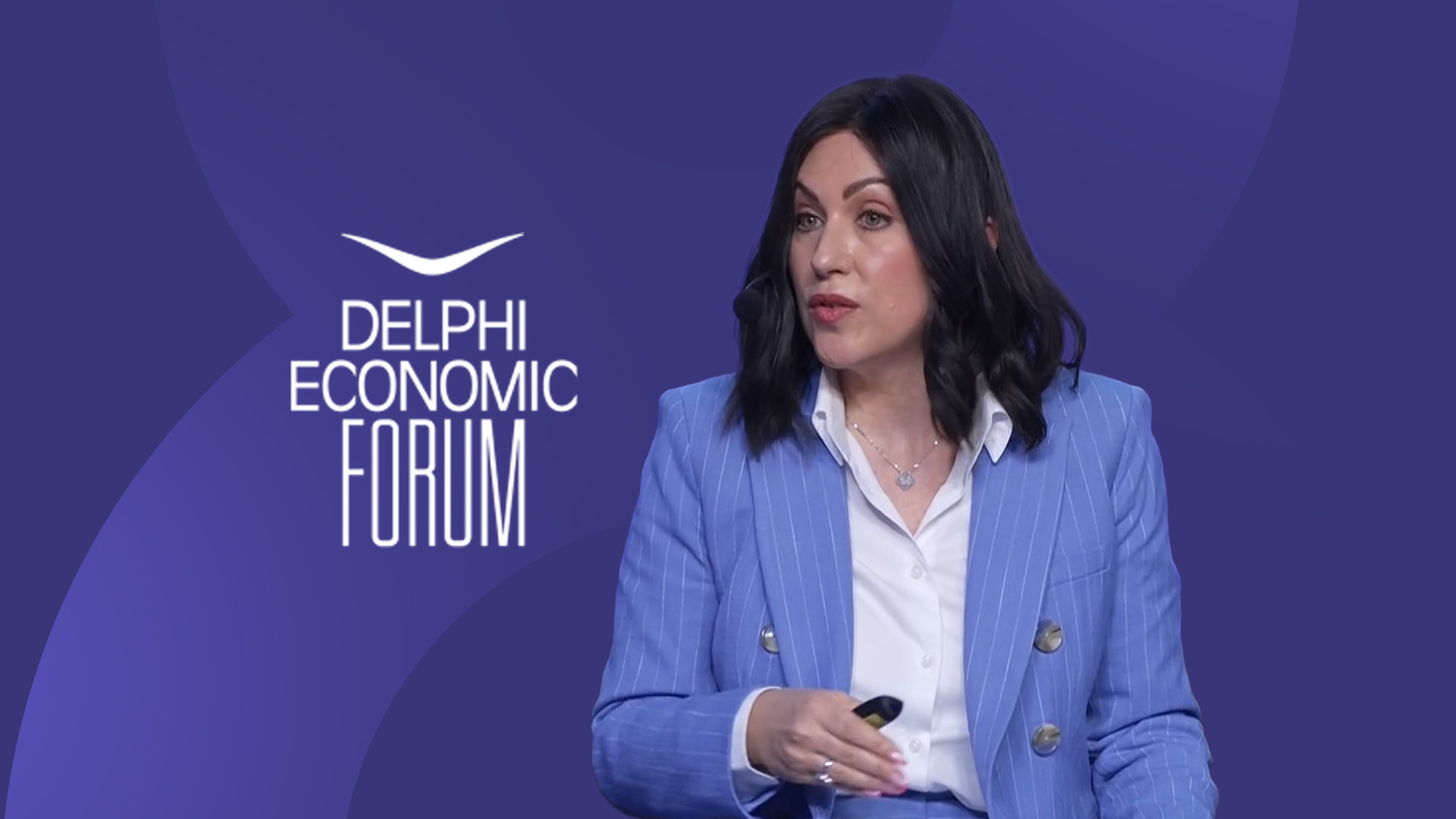
Sherri Kraham Talabany, President of the SEED Foundation, outlined a comprehensive framework for advancing gender equality and institutional progress during a panel on “Gender Equality and Institutional Progress: Lessons and Trajectories from the Region” on the second day of the Delphi Economic Forum Slemani.
She emphasized that women’s participation is not only a rights issue but also a central driver of economic growth, institutional strength, and social resilience.
Gender Equality as an Economic and Institutional Imperative
Sherri Kraham Talabany opened her remarks by stressing that gender equality must be understood beyond social or rights-based narratives.
As she stated, “Gender equality is not only an issue about rights, but it's about institutional development, economic competitiveness, and social resilience.”
She added that her reflections draw from both international experience and Kurdistan’s own development trajectory, noting, "These lessons are not just about women. They're about how Kurdistan can fully utilize its human capital.”
Economic Growth and the Untapped Workforce
A central theme of her address was the economic cost of underutilizing women in the workforce.
She highlighted that while only around 2% of any population are entrepreneurs, the far larger question is the participation of the remaining population, particularly women. As she put it, “What about the 50% of our population contributing to the economy?”
Citing international comparisons, she noted that OECD countries have around 52% workforce participation, while the Kurdistan Region stands at approximately 14%. According to her, this gap represents a major loss in productivity and growth potential.
She referenced World Bank estimates, stating that a 5% increase in female labor force participation could raise Iraq’s GDP by 1.6%, equivalent to about $4.5 billion annually.
She emphasized that Kurdistan has the autonomy to drive this change independently: “We are not dependent on Baghdad for this in Kurdistan. We can do this here on our own.”
Education Without Transition: Bridging the Gap to Employment
Talabany highlighted that Kurdistan has made significant progress in education, particularly for women.
She noted that women now make up about half of university students, calling it “a remarkable achievement.” However, she pointed out a major structural gap "that has not translated into participation in the workforce.”
While education levels are high, workforce participation remains low, creating a “drop-off” between graduation and employment.
To address this, she called for stronger links between education and employment, including internships, mentorship programs, entrepreneurial support, investment in women-led businesses, STEM opportunities, and closer cooperation between universities and the private sector.
Family-Friendly Policies and the “Invisible Economy”
Another key focus was the importance of family-friendly workplace policies, which she described as essential economic tools rather than social benefits.
She explained that women globally often carry a “double burden,” stating, “Many women around the world have two jobs. One is paid, and one is unpaid.” This unpaid work includes childcare, elder care, and household responsibilities, which she described as part of the “invisible economy.”
She warned that when women leave the workforce due to these pressures, economies lose productivity and innovation. As she stated, “When talented women leave the workforce, economies lose productivity, innovation, and leadership.”
She emphasized that policies such as childcare support, parental leave, and workplace flexibility are not only beneficial for women but also for the entire economy.
Referring to recent KRG labor law proposals, she highlighted provisions such as childcare facilities in government institutions as “innovative” steps that could significantly improve workforce participation.
Workplace Safety and Zero Tolerance for Harassment
Talabany identified workplace safety as a core economic issue, not just a social concern.
She stated clearly, “Women need safe workplaces. Women can't participate fully in economic life if they don't feel safe.” She added that safe environments are as essential as infrastructure, saying economies require “roads, electricity, telecom,” but also safe working conditions.
She referenced World Bank findings that women are more likely to participate in the workforce when there is protection from harassment, safe transportation, and effective accountability systems.
Sexual Harassment as a Structural Barrier
Expanding on safety, she devoted significant attention to sexual harassment, describing it as a critical barrier to women’s economic participation.
She argued for strict institutional policies, stating, "Every company, every organization, every government institution should have a zero-tolerance policy towards sexual harassment.”
She stressed the need for clear complaint mechanisms, protection from retaliation, and independent investigations. According to her, such measures are essential for building trust in workplaces.
She also linked workplace safety to broader social norms, explaining that addressing harassment could gradually allow us to “address longer-term problems…such as conservative social norms.”
She concluded that “It doesn't cost money to say that you're against sexual harassment and that you want your employees feeling safe.”
Stronger Institutions and Leadership Opportunities for Women
Talabany emphasized that legal and institutional frameworks must support women’s advancement, not just in theory but in implementation.
She pointed to pending labor reforms as critical for the next government, noting that implementation of existing laws, including equal pay legislation, is essential. She also urged a broader government strategy focused on women’s participation in the economy.
Beyond legal frameworks, she highlighted leadership as the ultimate goal.
As she stated, “The goal is not to just get women in the workplace. But the goal is to ensure that women lead institutions.”
She called on political parties, institutions, and businesses to appoint more women to senior leadership roles and ensure fair promotion systems. Universities, she added, also have a key role in preparing women for careers in business, STEM, and public service.
She concluded that “Leadership doesn't happen automatically. It has to be cultivated.”
From Education to Full Participation
In closing, Sherri Kraham Talabany summarized her message as a transition from educational achievement to full economic inclusion.
She noted that Kurdistan has already achieved an important milestone in educating women, but the next phase must ensure that this talent is reflected in the workforce, institutions, and leadership structures.
As she emphasized, the region now has “hugely talented young women ready to enter the workforce,” and the challenge ahead is ensuring that their participation becomes a defining feature of economic and institutional development.
07/06/2026