Kurdistan Region Faces Small-Dollar Shortage as Banknotes Flow to Turkey and Qatar
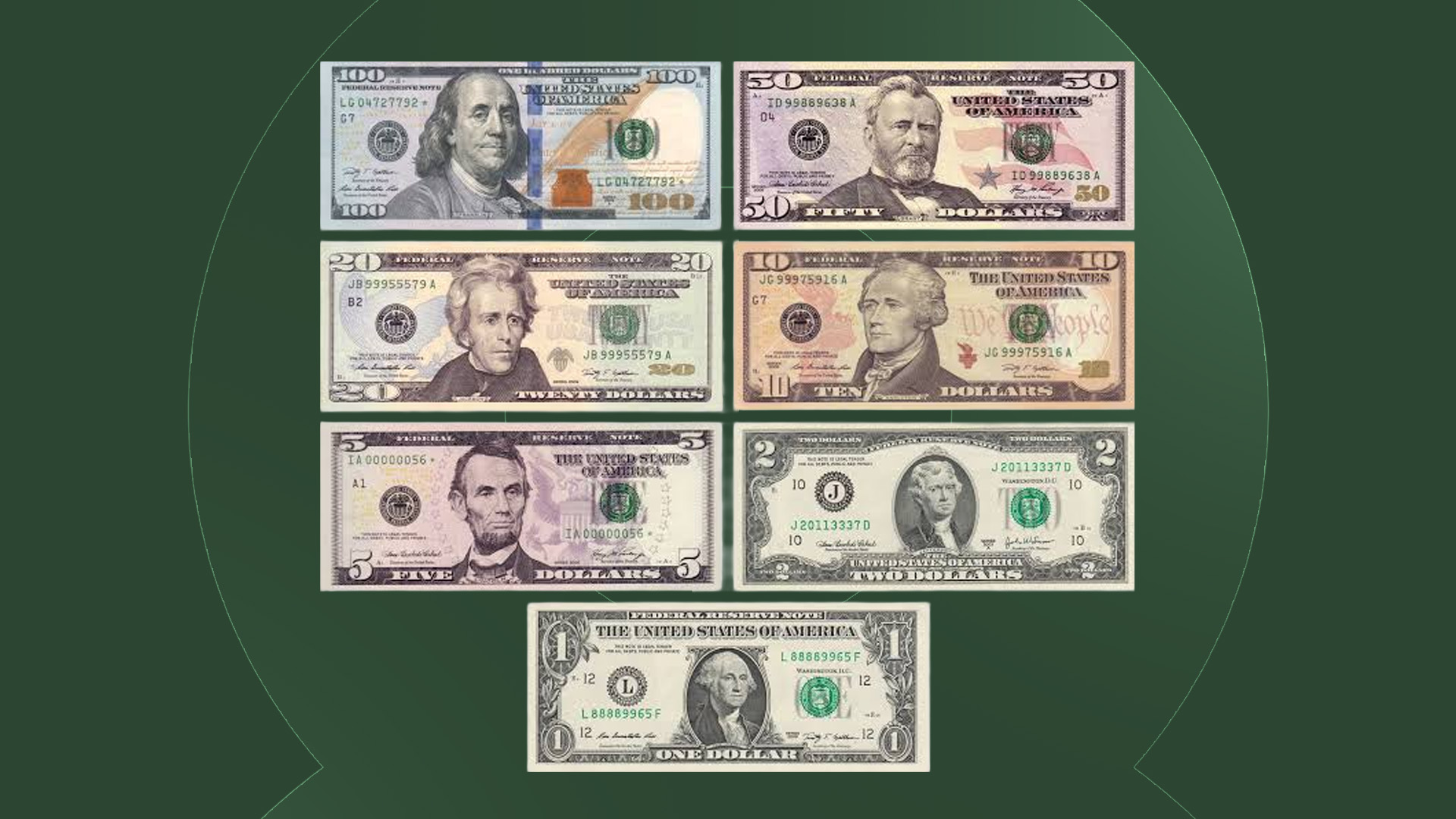
Currency exchange activity in the Kurdistan Region’s markets continues to face multiple challenges. While small-denomination U.S. dollars have become increasingly scarce due to outbound flows, differences in the value of various types of dollar banknotes continue to create financial losses for citizens.
Small-Dollar Outflows and Growing Market Challenges
Dana Mawlud, a currency exchange trader in Sulaymaniyah, stated that small-denomination U.S. dollar banknotes, specifically $5, $10, $20, and $50 bills, are being exported from the Kurdistan Region to Turkey, Qatar, and the United Arab Emirates (UAE).
He noted that only limited quantities of these bills remain in local circulation, with most of the available supply being used by merchants to settle balances when importing goods.
According to Mawlud, small-denomination dollars are not exchanged at the same rate as $100 bills. For every $100 in small bills, there is a deduction of 5,000 Iraqi Dinars (IQD) if the notes are crisp and new. If the bills are old or worn, their value drops below 140,000 IQD.
He added that public reluctance to accept smaller denominations has pushed traders to apply heavier discounts.
Price Gaps Between Blue, White, and “Washed” Dollars
In the Kurdistan Region’s currency markets, the price difference between the $100 “White” note (older design) and the $100 “Blue” note (newer design) has narrowed to 1,000 IQD, provided the notes are not old, worn, or washed.
Dana Mawlud stated that a “washed” $100 note is traded at only 100,000 IQD. Meanwhile, a worn white $100 note is valued between 140,000 and 145,000 IQD, depending on its condition and the extent of physical damage.
Exchange Practices, Market Regulation, and Government Position
Addressing why gas stations and supermarkets often accept dollars at discounted rates, Dana Mawlud explained that these businesses treat the dollar strictly as a foreign currency and apply their own commission structures and profit margins.
He advised citizens to exchange money directly through licensed currency exchange markets to avoid unnecessary losses.
At the same time, the Asayish (security forces) have issued a regulatory guideline stating that within every $10,000 exchange bundle, a maximum of $8,000 should be in blue notes and $2,000 in white notes.
An official from the Kurdistan Region Ministry of Finance and Economy stated that dollar trading and exchange rate fluctuations are linked directly to the monetary policies of the Central Bank of Iraq (CBI) and do not fall under the administrative authority of the Kurdistan Regional Government (KRG).
The official added that only 15% of citizens conduct transactions directly in U.S. dollars, while the overwhelming majority rely on the Iraqi dinar as the region’s official currency. Market oversight operations, meanwhile, are primarily carried out by the Economic Asayish across the provinces.
13/06/2026