Strait of Hormuz Closure Caused Severe Collapse in Iraq Oil Output and Regional Exports
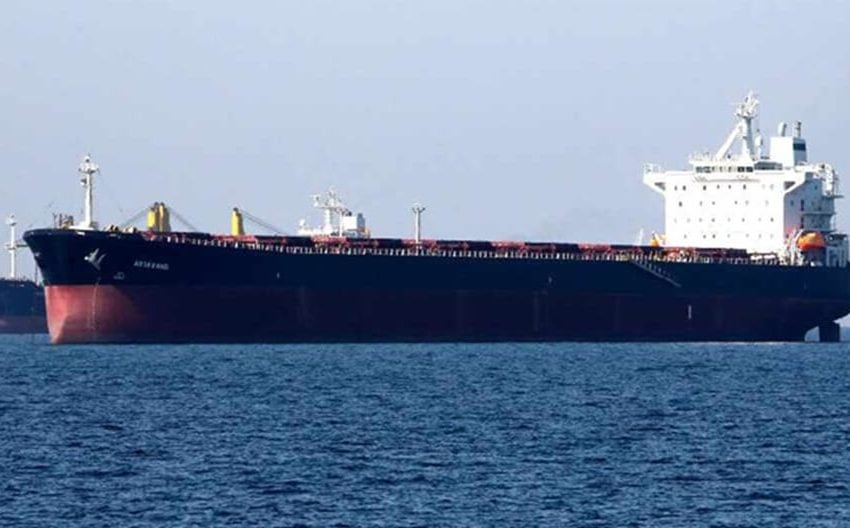
The closure of the Strait of Hormuz following regional conflict has triggered a severe disruption in oil production and exports across Iraq and the wider Gulf region, resulting in major financial losses, sharp production declines, and a shift in global energy routes.
Iraq’s Export Collapse and Massive Financial Losses
The Eco Iraq Observatory (Eco Iraq) reported that Iraq has lost around 350 million barrels of crude oil exports as a direct result of the closure of the Strait of Hormuz. Based on prevailing market prices, these losses are estimated at $37.7 billion, significantly undermining the country’s public revenues.
Before the closure on February 28, 2026, Iraq was exporting between 103 and 107 million barrels per month. After the outbreak of war and escalating regional tensions, export levels dropped sharply, creating a major fiscal gap in the national budget.
Eco Iraq warned that Iraq’s heavy reliance on oil, accounting for roughly 90% of public revenue, makes the economy highly vulnerable. It stressed that continued disruption without alternative export routes would deepen the crisis and stall public projects across the country.
The observatory also highlighted the importance of the “New Levant” (Al-Sham al-Jadid) project, supported by Saudi Arabia, describing it as a strategic option to secure export stability and reduce geopolitical risks affecting maritime routes.
Kurdistan Region Production Falls from 314,000 to 80,000 Barrels
Oil output in Iraq and the Kurdistan Region has also seen a dramatic decline following the conflict between Washington and Tehran and the closure of the Strait of Hormuz.
Before the war in February 2026, total production stood at 4.5 million barrels per day, including 314,000 barrels per day from the Kurdistan Region. Iraq’s total exports reached 3.567 million barrels per day, with the Kurdistan Region contributing 198,000 barrels per day.
Current figures show a steep decline, with total production falling to 1.332 million barrels per day, while the Kurdistan Region’s output has dropped to just 80,000 barrels per day, marking an overall reduction of 3.2 million barrels.
The main reason for the decline in the Kurdistan Region is the suspension of operations by international oil companies, which evacuated staff at the start of the conflict. Security incidents have also contributed, including drone attacks on the Sarsang oil field, which damaged storage facilities and halted operations.
Regional Oil Power Disrupted by Strait Closure
Before the war involving the United States and Israel against Iran, Gulf countries and Iraq accounted for 21% of global oil production and 26% of global exports, producing around 23 million barrels per day and exporting approximately 16 million barrels per day.
Production levels in key countries were as follows:
- Saudi Arabia: 9.5-10 million barrels per day, exporting 6-7 million
- United Arab Emirates: 3-3.5 million barrels per day, exporting over 3 million
- Kuwait: around 3 million barrels per day
- Qatar, Bahrain, and Oman: collectively exporting around 3 million barrels per day
Following the closure of the Strait of Hormuz, exports from Kuwait, Qatar, Bahrain, and the UAE have dropped to zero. Iraq has been left exporting only limited volumes overland via Turkey and Syria, while Saudi Arabia continues partial exports through the Red Sea at reduced capacity. Oman remains the only country largely unaffected, as it is able to bypass the Strait entirely and maintain its export flow.
Regional Energy Disruptions Continue Amid Strait Closure
The closure of the Strait of Hormuz has led to widespread disruptions in oil production and export flows across Iraq, the Kurdistan Region, and Gulf states. While Iraq faces major revenue losses and reduced output, broader regional export systems have also been significantly affected, with only limited alternative routes currently sustaining partial trade flows.
21/06/2026