"If You Strike, You Will Be Struck:" Ghalibaf Warns U.S. Following Attacks on Iranian Coastal Sites
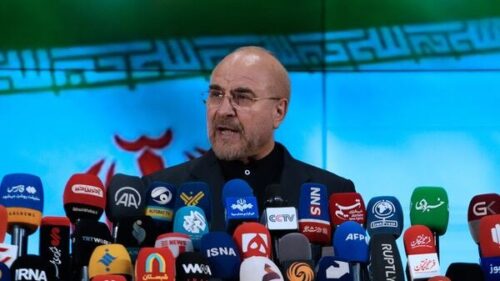
Iranian Parliament Speaker and Chief Negotiator Mohammad Bagher Ghalibaf declared on Thursday that the Strait of Hormuz would re-open exclusively under Iranian administrative arrangements.
The statement follows consecutive waves of U.S. airstrikes in the region, which U.S. Central Command officials confirmed were executed to degrade Iranian capabilities threatening international commercial shipping channels.
Defiant Posture from Tehran
In an official public statement, Ghalibaf rejected U.S. pressure regarding the strategic waterway and warned of immediate retaliation for any ongoing military actions.
"The United States still has not learned that bullying and breaking its promises no longer come without consequences," Ghalibaf stated. "Let me be clear: If you strike, you will be struck."
Ghalibaf emphasized that threat tactics would not dictate the operational terms of the maritime corridor, asserting that future navigation protocols through the strait must align with frameworks established by Tehran.
Expanded U.S. Bombing Campaign
The diplomatic warning from Iran coincided with a formal announcement by U.S. Central Command detailing an expanded aerial campaign. According to defense officials, American forces finalized a secondary round of targeted strikes to neutralize active military assets deployed along the Iranian coastline.
The U.S. military reported hitting approximately 90 distinct military targets, focusing on infrastructure utilized to disrupt shipping lanes:
- Defense Systems: Precision strikes engaged coastal air defense networks and regional radar installations.
- Surveillance Assets: Coastal monitoring facilities tracking maritime traffic were disabled.
- Storage Facilities: Operations targeted localized drone and missile storage infrastructure.
- Logistical Support: Naval capabilities and primary military logistics nodes were heavily damaged across the coastal sector.
The sequential actions follow an initial U.S. operation targeting 80 military installations and more than 60 Islamic Revolutionary Guard Corps small boats the previous evening, launched after three commercial vessels were attacked while navigating the Strait of Hormuz.
![Irani’s Araghchi, left, meets with Pakistan’s Munir in Islamabad, Pakistan, in April 2026 [File: Iranian Foreign Ministry/AP Photo]](https://media.channel8.com/english/wp-content/uploads/2026/05/AP26115285212508-1777383639.webp)
.jpg)