Kurdistan Region Exports 60% of Its Watermelon Harvest to Central and Southern Iraq
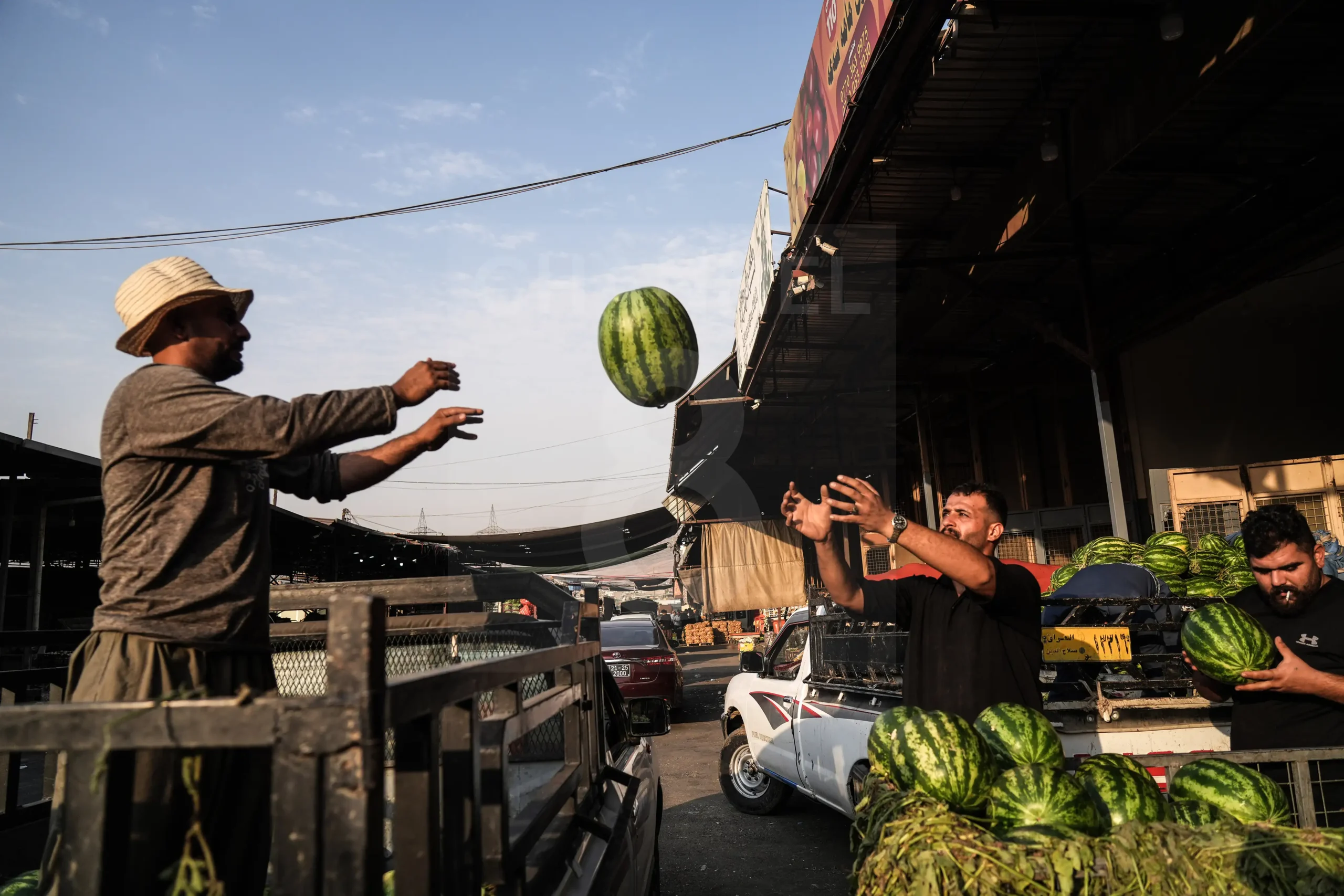
Watermelon harvesting is underway across much of the Kurdistan Region, with large quantities of locally grown produce being shipped to central and southern Iraq. The increase in exports comes as a ban on foreign watermelon imports remains in effect to support local farmers.
Harvest Expected to Exceed 60,000 Tons in Key Growing Areas
The watermelon harvest has ripened in the Sharazoor Plain, Erbil, and Duhok and is now reaching local markets.
According to official data, 3,825 dunams of land have been planted with watermelons in Halabja Governorate and the Sharazoor Plain, with production expected to exceed 30,000 tons. In Saidsadiq district, another 5,000 dunams have been cultivated, with an expected yield of 30,000 tons.
Most Produce Shipped to Central and Southern Iraq
Sarwar Ali, spokesperson for the Sulaymaniyah Wholesale Produce Market, said 500 to 600 tons of watermelon and cantaloupe from the Sharazoor Plain and Akre arrive at the market each day.
He said 60% of that volume is transported to central and southern Iraqi provinces because local production exceeds demand within the Kurdistan Region.
Produce Undergoes Quality Inspections
Ali said all fruit and vegetables arriving at the wholesale market are inspected before distribution to verify their quality.
He added that the inspections are intended to protect public health and ensure the safety of locally produced agricultural goods.
Production Rebounds After Poor 2025 Season
According to the Ministry of Agriculture, watermelon production reached 307,000 tons in 2022 and remained around 300,000 tons in both 2023 and 2024.
Production fell sharply in 2025 to 54,884 tons after the spread of the "Raqqa" plant disease, making it the most difficult season for watermelon farmers.
Import Ban Continues to Support Local Farmers
To support domestic producers and help market local crops, the Kurdistan Regional Government has enforced a full ban on foreign watermelon imports since May 12, 2026.
The measure ensures that local markets rely entirely on domestically produced watermelons.
3 hours ago