Kurdistan’s Monthly Non-Oil Revenue Plummets From 350B to 126B Dinars in 2026
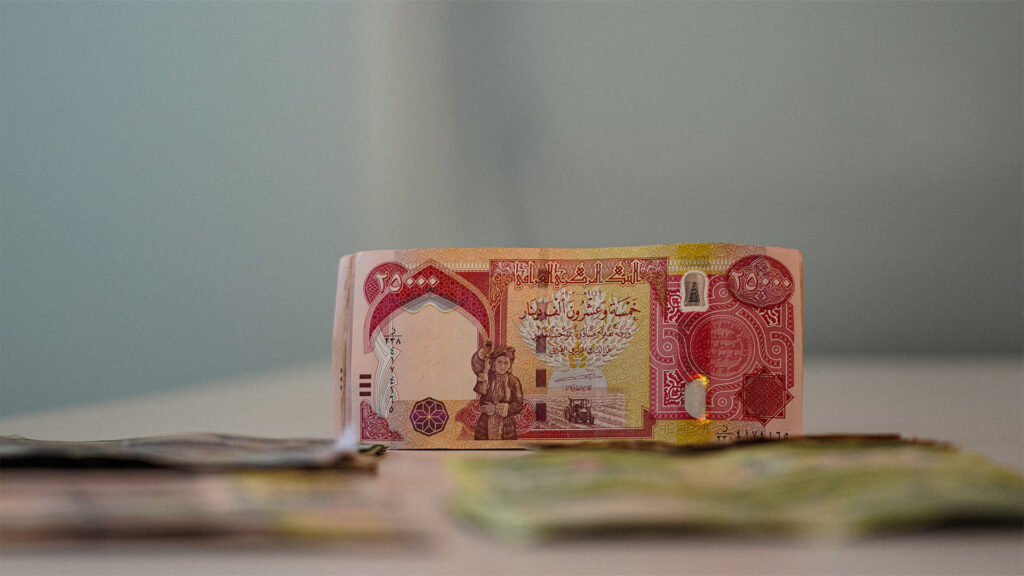
The Kurdistan Region's average monthly non-oil revenue stood at 350 billion dinars between 2019 and 2025; however, during the first five months of 2026, this monthly average plummeted to 126 billion dinars.
Official data from the Kurdistan Regional Government's Ministry of Finance and Economy indicates that non-oil revenue has experienced a historic contraction in 2026, severely impeding efforts to secure salary funding for 86,000 contract employees.
KRG 2026 Non-Oil Revenue Falls 70%
According to ministry figures, the monthly non-oil revenue during the first five months of 2026 represents a 70% decrease compared to the 2019–2025 baseline.
This decline is linked to the deployment of the electronic ASYCUDA customs platform alongside economic disruptions from regional conflicts.
Revenue Slump Threatens Salaries of 86,000 Employees
The shortfall in domestic revenue directly threatens the livelihoods of 86,000 contract teachers and public employees.
Since the Iraqi federal government does not fund salaries for this workforce, the KRG must allocate 43 billion dinars monthly from its own local revenue to cover their pay.
Furthermore, the KRG requires an additional 70 billion dinars per month for essential operational expenditures.
This leaves an exceptionally narrow financial margin, as the Region's total monthly revenue amounts to only 126 billion dinars.
Salary Deal Stalls Over 120B Dinar Quota and Revenue Definitions
According to the established framework between Erbil and Baghdad, the Iraqi government releases Kurdistan Region public sector salaries in exchange for the monthly transfer of regional non-oil revenues.
The federal government insists on a fixed monthly remittance of 120 billion dinars as its share of non-oil revenue.
Conversely, the KRG rejects this quota, counterproposing a 50% transfer of actual, realized federal revenues due to sharp revenue contractions caused by regional instability and new electronic regulatory rollouts.
A major point of contention is the conflicting definition of domestic revenue, with Baghdad demanding 50% of the Kurdistan Regional Government's (KRG) total internal revenue.
In contrast, Erbil proposes transferring 50% of what it classifies specifically as "federal revenues," which limits the scope to fees and duties collected uniformly across all Iraqi provinces.
Non-Oil Revenue Statistics (2019–2025):
- 2019: 3.855 trillion dinars
- 2020: 3.189 trillion dinars
- 2021: 4.301 trillion dinars
- 2022: 4.787 trillion dinars
- 2023: 4.711 trillion dinars
- 2024: 4.702 trillion dinars
- 2025: 3.125 trillion dinars
- Monthly Average: 350 billion dinars
Non-Oil Revenue Statistics (First 5 Months of 2026):
- January: 150.18 billion dinars
- February: 180.61 billion dinars
- March: 86.17 billion dinars
- April: 106.83 billion dinars
- May: 110.00 billion dinars
- Monthly Average: 126 billion dinars
Monthly Expenses Covered by Domestic Revenue:
- Administrative Operating Costs: 70 billion dinars
- Contract Employee Salaries: 43 billion dinars
16/07/2026