CHANNEL8 INVESTIGATION: Secret Document Reveals 100% Tax Exemption for KDP-Linked "Ghost" Company in Kurdistan
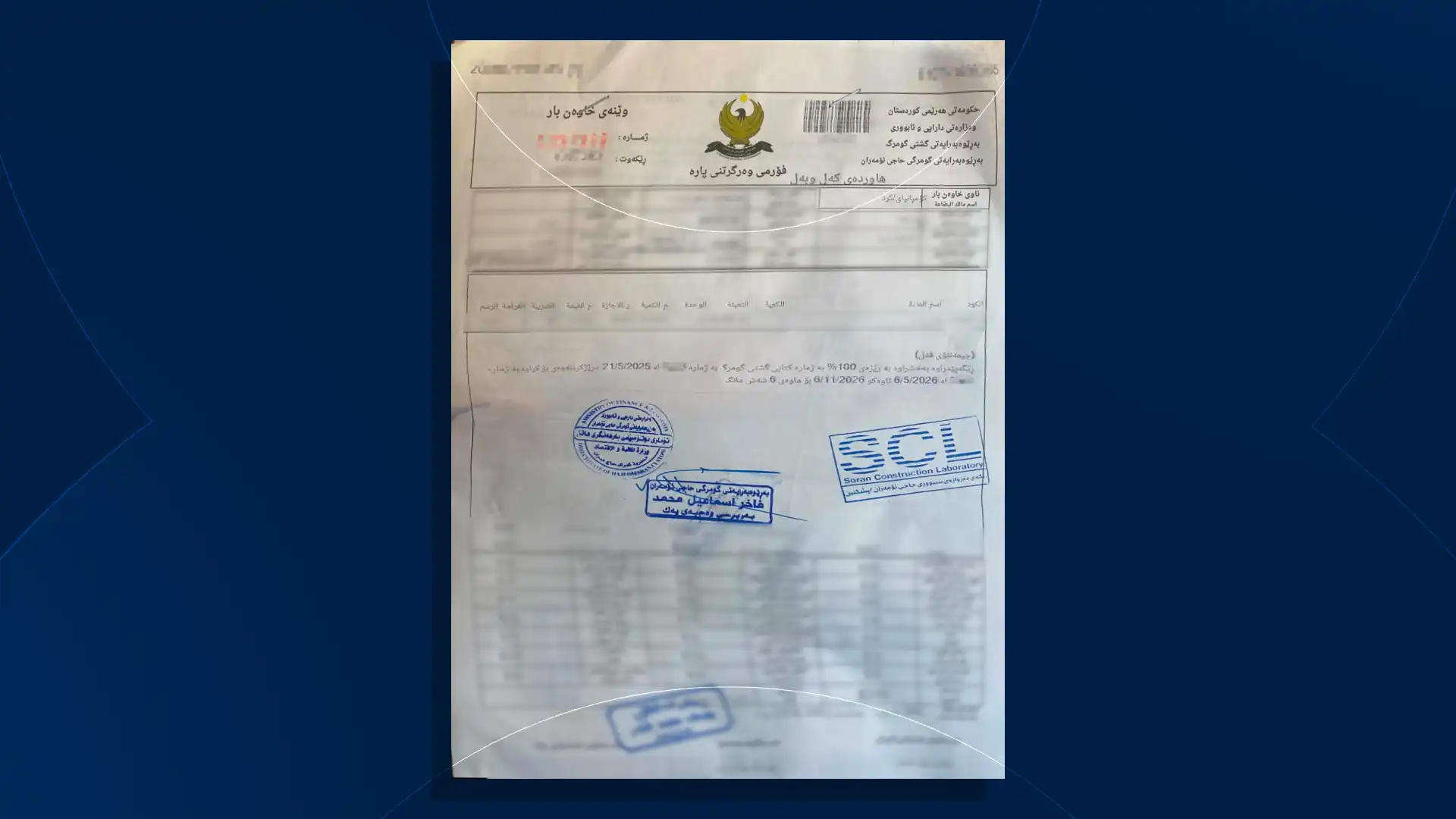
In a documented investigative report, Channel8 has revealed that despite official pledges by the caretaker Prime Minister to reform the tax system, a company affiliated with the Kurdistan Democratic Party (KDP) has been granted a 100% customs tax exemption to import bulk cement through the Haji Omaran border crossing.
Tax Promises vs. Border Reality
Over the past seven years (four years officially and three years in a caretaker capacity), Masrour Barzani, the caretaker Prime Minister of the Kurdistan Region, has repeatedly asserted that his government is working to reform the tax system to ensure all companies pay their fair share based on their size, with zero exceptions.
However, Channel8’s investigation reveals a different reality at the Haji Omaran border crossing—one of the region's key sources of non-oil revenue. A special decree was quietly issued through the Ministry of Finance and the Customs Directorate to grant a 100% customs exemption to a KDP-linked company.
The Official Exemption Document
According to an official document obtained by Channel8:
- The Decree: A 100% customs waiver was granted for importing bulk cement.
- Timeline: The initial decision was issued via an official letter from the General Directorate of Customs on May 21, 2025.
- Extension: The exemption was recently extended on June 6, 2026, for another six months, remaining valid until November 6, 2026.
The investigation highlights that these types of targeted exemptions are a primary driver behind the decline in the Kurdistan Region's domestic revenues.
Undercutting Local Production
The influx of untaxed imports has had a devastating impact on local manufacturers:
- Production Costs: Producing one ton of local cement in the Kurdistan Region costs between 90,000 and 92,000 IQD.
- Import Underpricing: The exempted company imports bulk cement from Iran and sells it on the market for just 80,000 IQD.
- The Impact: Because the importing company pays zero taxes, its overhead is incredibly low. This drains regional public revenues and severely damages local cement factories, which produce high-quality cement but are being forced out of the market by cheap, low-quality bulk imports.
Mechanics of a "Double-Sided" Profit Scheme
The operation utilizes currency exchange rate discrepancies to maximize profits. Every day, hundreds of trucks carry bulk cement through the Haji Omaran crossing under the following scheme:
- Official Rate Advantage: The cargo of each truck is valued at $315, and the company is permitted to settle this at the official government exchange rate of 1,300 IQD per USD.
- Market Rate Resale: The company then resells the cement in the local market in USD and exchanges those dollars back to IQD at the much higher parallel market rate.
This loop allows the company to reap a double profit: first from the total customs tax exemption, and second from the currency exchange rate spread.
"Gird" Company: A Front Entity?
In tracing the identity of the beneficiary, Channel8 discovered that the exemption was registered to a company named "Gird."
A comprehensive search for any physical address, official registration, or social media presence for "Gird Company" yielded absolutely no results.
This has raised strong suspicions that "Gird" is a shell company created solely to enrich a specific political faction. Channel8 concludes that this case points to a broader trend: the centralization and consolidation of major economic portfolios and corrupt networks under the direct supervision of a single authority, the Office of the Prime Minister.
1 hour ago