Iraq PM Announces Al-Faw "Energy City" Project During Houston Energy Talks
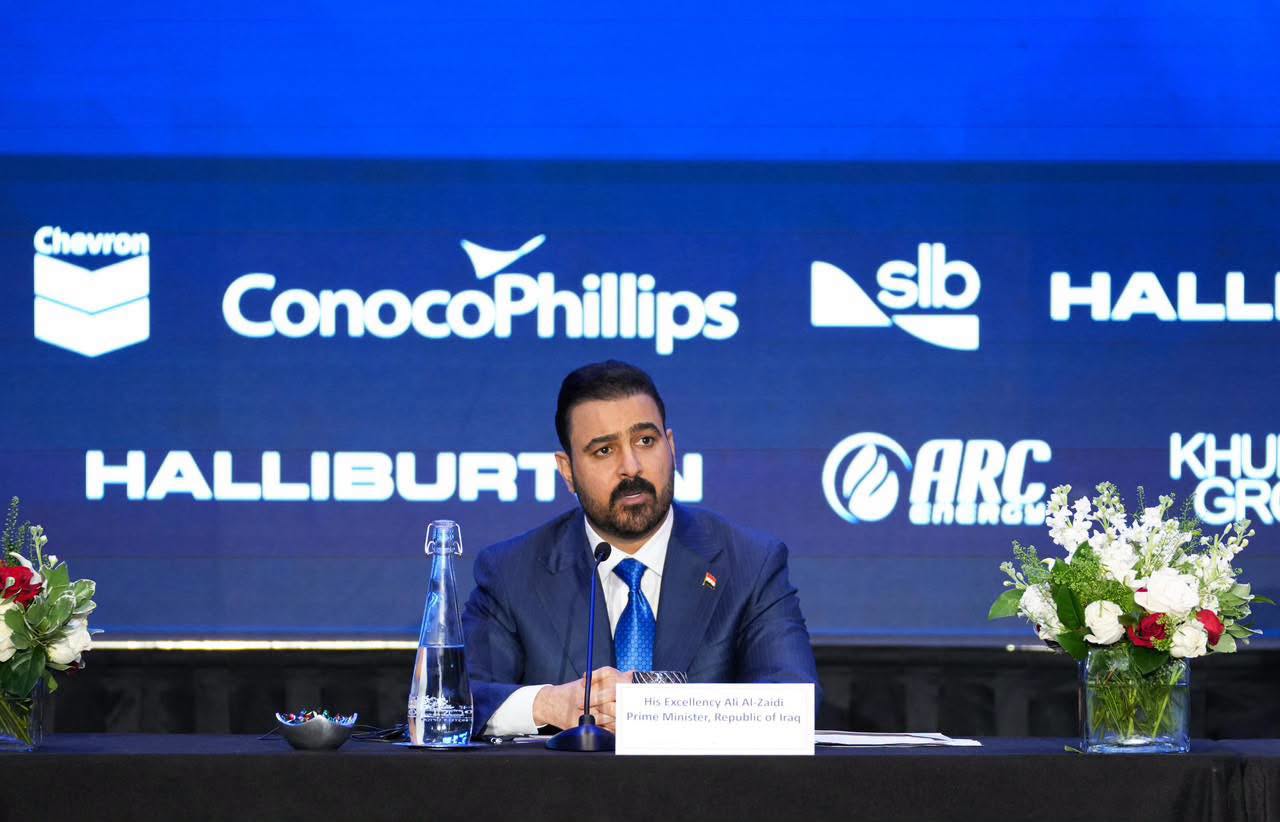
Iraqi Prime Minister Ali Faleh Al-Zaidi concluded a series of high-level economic meetings with major U.S. energy and engineering corporations this week, announcing a major "Energy City" project on the Al-Faw Peninsula and offering land concessions along strategic corridors in exchange for long-term infrastructure partnerships.
The delegation, which included Iraq's Minister of Oil, Minister of Electricity, and the Chairman of the Prime Minister’s Advisory Commission, engaged with executives from KBR, ExxonMobil, Halliburton, Shell, Honeywell, Weatherford, and Baker Hughes to secure foreign investment and advanced technology transfers.
Proposed Al-Faw "Energy City" and Infrastructure Expansion
At an economic dialogue forum hosted by the Bilateral Chamber of Commerce in Houston, Prime Minister Al-Zaidi announced the planned "Energy City" project on the waterfront of the Al-Faw Peninsula in southern Iraq. The initiative is designed to establish an integrated hub for heavy industry and domestic supply.
According to the official government plans, the development will feature:
- Integrated oil refining and crude processing complexes.
- Natural gas gathering, processing, and production facilities.
- High-capacity power generation plants.
- Direct physical connections to both the domestic strategic oil pipeline network and the multinational Development Road transport corridor.
To accelerate the implementation of these projects, Al-Zaidi confirmed that the Iraqi government is prepared to allocate dedicated land for investment, industrial, and petrochemical facilities along its strategic pipeline and transport corridors.
National Energy Objectives and Environmental Targets
During talks at the headquarters of engineering and technology firm KBR, as well as a separate summit with ExxonMobil Chief Executive Officer Darren Woods, the Iraqi delegation outlined their core national development goals.
The administration’s primary industrial objectives include:
- Production and Export Capacity: Increasing domestic crude oil production and establishing diversified export routes to enhance global market access.
- Refining Self-Sufficiency: Expanding national refining and petrochemical operations to end reliance on imported petroleum products.
- Gas Capture and Utilization: Capitalizing on associated natural gas and halting environmentally damaging gas flaring, with the ultimate goal of ending dependence on imported gas for electricity generation.
- Human Capital Development: Partnering with foreign firms to train local workforces and develop national engineering expertise.
During their meeting, Woods presented an overview of ExxonMobil's regional capabilities and expressed the company's interest in expanding cooperation. He emphasized that while Iraq’s energy sector offers broad investment potential, future operations must strictly adhere to international environmental standards and pollution-reduction targets.
Investment Guarantees and Security Mandates
Addressing concerns from U.S. business leaders regarding regional stability, Al-Zaidi detailed several legislative and security reforms intended to protect foreign assets.
The Prime Minister stated that the Iraqi government is actively implementing financial and banking sector reforms to streamline cross-border business transactions and ease operations. Furthermore, Al-Zaidi announced that the state is on track to enforce a security directive designed to disarm non-state actors and end any armed presence outside the authority of the state by the end of September.
David Phillips, Chairman of the Bilateral Chamber of Commerce, noted that the Texas business community and the broader private sector maintain a strong interest in expanding operations in Iraq, citing the country's long-term plans to develop its untapped natural gas and oil reserves.
2 hours ago