Kurdistan Region Oil Production Drops by 50,000 BPD
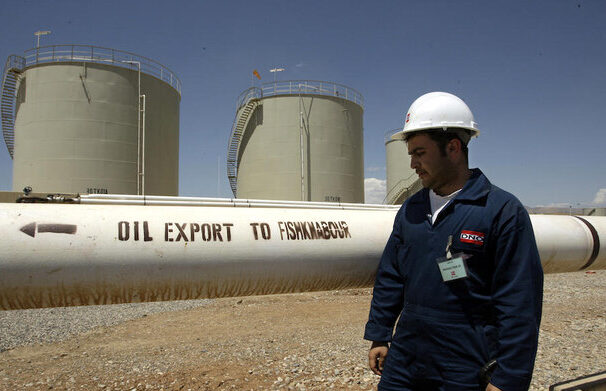
According to a source within Iraq's North Oil Company, oil production in the Kurdistan Region has dropped by 50,000 barrels per day (bpd), directly reducing export volumes to the port of Ceyhan.
The source noted that oil production in the Kurdistan Region's fields, which had previously reached 180,000 bpd, has dropped to 130,000 bpd.
Based on data from Saturday, only 80,000 bpd of that amount was exported to the Ceyhan port via the Kurdistan Region's pipeline, while the remaining 50,000 barrels were retained for domestic use and fuel supplies.
The production drop comes amid intensifying regional escalation between the United States and Iran, coupled with recent waves of drone and ballistic missile strikes targeting the Kurdistan Region that have prompted international companies to halt operations in the oil fields.
Additionally, Dana Gas temporarily suspended operations at the Khor Mor gas field in Sulaymaniyah as a precautionary measure due to credible security threats and escalating regional tensions.
Kirkuk Oil Production Hits 326,000 BPD
North Oil Company data reveals Kirkuk oil output has hit 326,000 bpd, with just 60,000 bpd routed through the KRG pipeline to Ceyhan, while the rest goes toward domestic refining and consumption.
To meet local fuel demands, 90,000 bpd of Kirkuk crude oil are supplied to the KAR Group for the production of gasoline, diesel, and kerosene, while an additional 38,000 bpd is allocated to the Qaiwan Group for the same purpose.
Baghdad Urges KRG to Restore Oil Exports
The Iraqi government has officially requested that the Kurdistan Regional Government restore export volumes to pre-war levels, which averaged 200,000 bpd.
While foreign operators, including HKN Energy at the Atrush field, Gulf Keystone Petroleum at the Sheikhan field, and DNO at the Tawke and Peshkhabour fields, maintain production, persistent regional tensions pose a significant risk of future output declines.
12 hours ago