KRG PM Addresses Energy Shortages, Parliament Delays, and Baghdad Ties
- Security risks disrupt KRG energy infrastructure.
- PM Barzani urges immediate parliamentary reactivation.
- Erbil remains neutral in regional conflict.
- Bilateral coordination with Baghdad remains active.
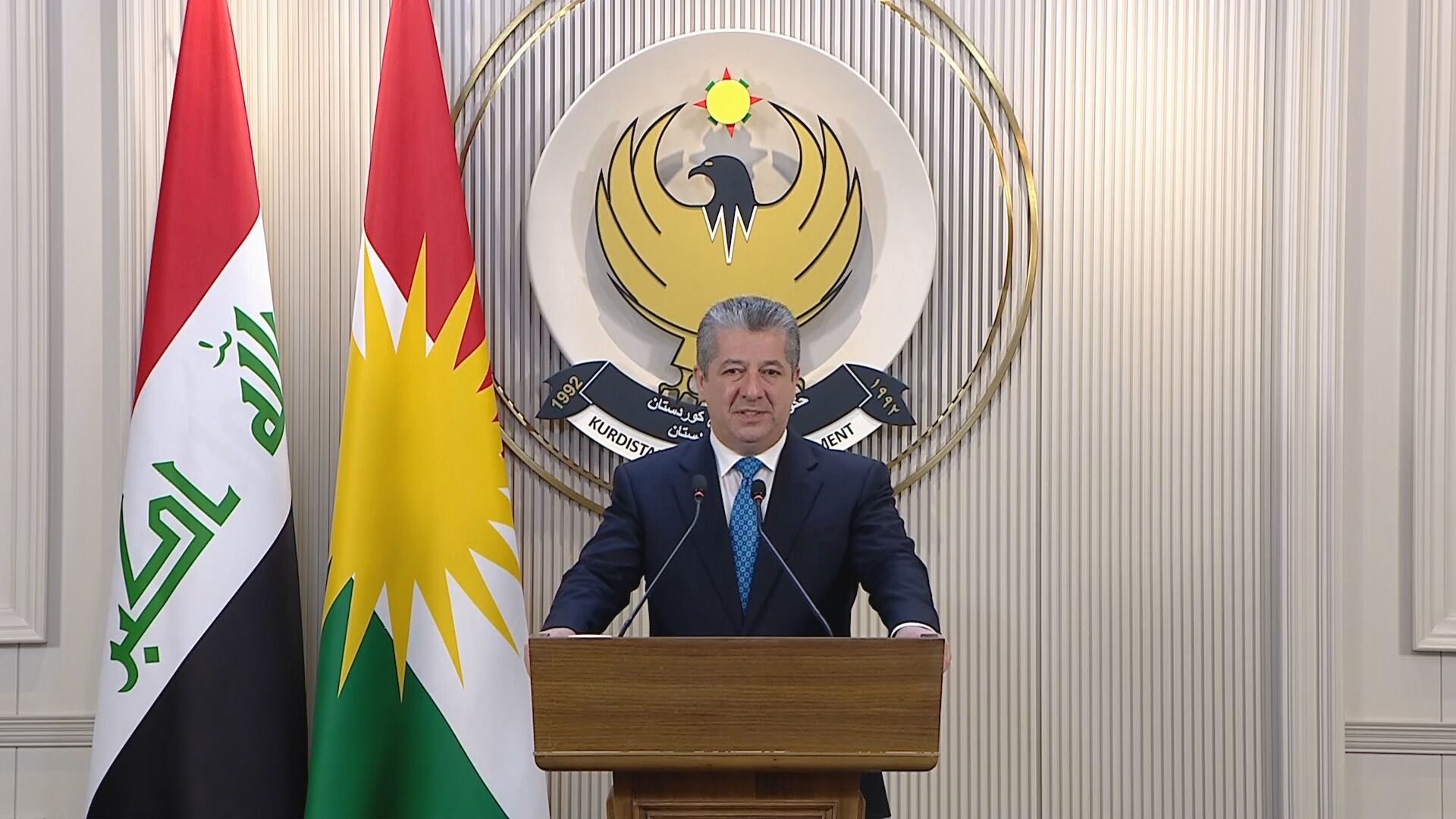
Masrour Barzani, Prime Minister of the caretaker Kurdistan Regional Government (KRG), stated that security risks have temporarily impacted gas and electricity production, while urging the swift reactivation of parliament and praising the ongoing political and security coordination with Baghdad.
Key Statements and Focus Area
PM: The gas and electricity supply issues are anticipated to move toward a resolution in the coming days.
Barzani: “We believe that reactivating the Parliament and forming the government is, first and foremost, in the interest of the people of the Kurdistan Region.”
Barzani: The KRG currently maintains enhanced political and security coordination with the federal government.
During a media briefing on Monday, Prime Minister Barzani acknowledged the ongoing challenges facing Kurdistan, specifically highlighting the electricity deficit.
He reaffirmed the administration's commitment to stabilizing the grid, noting that continuous efforts are underway to fulfill the government's promise of providing a 24-hour power supply to the Kurdistan Region.
Barzani emphasized that natural gas remains the primary fuel source for the Region's electricity generation, noting that localized shortages are directly linked to regional security threats.
He highlighted that the drop in power supply followed a decision by Dana Gas to temporarily scale back operations to mitigate these infrastructure risks.
Energy Grid Deficit, Infrastructure Threats, and Oil Extraction Costs
According to the prime minister, while the structural design of the Runaki project remains flawless, its implementation has been temporarily disrupted by localized security challenges and subsequent fuel shortages.
However, he anticipated that the gas and electricity supply issues will move toward a resolution in the coming days.
The prime minister said that the government is actively meeting with energy corporations to safeguard the rights of the Kurdistan Region's population, noting that the broader fuel crisis stems from regional conflicts alongside a simultaneous decline in global oil prices.
The government is responsible for preventing attacks and threats against Kurdistan's energy infrastructure, he added.
He confirmed that he met with the Ministry of Natural Resources to set fuel prices that are "realistic" relative to the cost of oil extraction.
Moreover, Barzani said the federal government determines the cost of oil for the companies, but the Kurdistan Region does not receive any portion of these costs from the sovereign expenditures provided by the Iraqi government.
Consequently, all of these costs fall squarely on the shoulders of the Kurdistan Regional Government.
Barzani Praises Public Resilience, Urges Parliament Reactivation
The prime minister expressed his gratitude for the resilience and patience of the people of Kurdistan during this situation, underlining that citizens should remain assured that the region has successfully navigated far greater historical crises and will overcome the current challenges as well.
Regarding the political impasse and the political process in the Kurdistan Region, Barzani said, “We believe that reactivating the Parliament and forming the government is, first and foremost, in the interest of the people of the Kurdistan Region.”
He stated that the primary responsibility rests upon the political factions representing the electorate.
He also renewed his long-standing call for parliament to convene immediately and resume its legislative duties to facilitate the formation of a government that reflects the aspirations of the people of Kurdistan.
Barzani Affirms KRG Neutrality and Pledges Full Support to Baghdad
During the briefing, the Prime Minister also addressed the regional conflict and its impact on Kurdistan, and renewed support for the Iraqi government, underscoring that the Kurdistan Region is not part of any conflict.
Barzani stated that the KRG remains fully prepared to assist the federal government in every capacity, adding that they have also participated actively in supporting the national administration.
Addressing the financial and administrative issues between both governments, Prime Minister Barzani stated that determining the exact volume of domestic revenues to be transferred to Baghdad requires “bilateral cooperation.”
Furthermore, he stressed that the KRG is making “serious efforts” alongside the Iraqi government regarding trade regulations and the implementation of the ASYCUDA customs system, expressing hope for a swift and final resolution.
He stated that the KRG currently maintains enhanced political and security coordination with the Iraqi federal government, expressing satisfaction with the ongoing relationship and bilateral cooperation between Erbil and Baghdad.
News Lens
The Kurdistan Region's prolonged political deadlock has delayed government and cabinet formation since the October 2024 parliamentary elections, forcing institutions to operate in a caretaker capacity.
To break this impasse, the region's two primary ruling factions, the Patriotic Union of Kurdistan (PUK) and the Kurdistan Democratic Party (KDP) held high-level negotiation talks in Erbil to discuss the reactivation of parliament and coordinate a unified Kurdish stance.
Simultaneously, the administration faces domestic economic pressure, forcing the Ministry of Natural Resources to cap volatile commercial fuel costs at 850 IQD per liter.
Persistent security vulnerabilities, particularly drone and missile strikes targeting vital energy infrastructure like the Khor Mor gas field, continue to cause rolling electricity generation deficits across the grid.
Despite these inner tensions, Erbil maintains active bilateral coordination with the federal government under Iraqi Prime Minister Ali Faleh al-Zaidi to streamline cross-border customs regulations and finalize comprehensive national revenue-sharing agreements.
27/07/2026