Iraq, Kurdistan Hosts 351,000 Refugees and Asylum-Seekers
At a Glance
- 351,000 refugees and asylum-seekers in Iraq
- 88% are Syrians
- Nearly 80% live in Kurdistan Region
- 1,706 Syrians returned to Syria in 2026
Iraq hosts around 351,000 refugees and asylum-seekers as of the end of June 2026, with Syrians accounting for 88% of the population and nearly 80% living in the Kurdistan Region, according to the latest monthly update from United Nations High Commissioner for Refugees (UNHCR).
Key Statements and Focus Area
- Refugee population: Around 351,000 refugees and asylum-seekers are hosted in Iraq, while about 97,000 internally displaced people (IDPs) remain in 18 IDP camps.
- Kurdistan Region: Nearly 80% of refugees and asylum-seekers live in the Kurdistan Region, while 30% of the overall refugee and asylum-seeker population remains in nine camps across Iraq.
- Refugee law: UNHCR and Iraq’s State Council reviewed the fifth draft of a new refugee law in June, with the draft expected to proceed through government and parliamentary review once finalized.
- Returns to Syria: A total of 1,706 Syrian refugees and asylum-seekers voluntarily returned from Iraq to Syria in 2026, including 384 in June.
- Education: UNHCR completed the construction of six new schools in Iraq in 2026, including two in Erbil Governorate, supporting refugee inclusion in public schools.
Iraq Hosts Hundreds of Thousands of Refugees
As of the end of June 2026, Iraq was hosting around 351,000 refugees and asylum-seekers. Syrians make up 88% of this population.
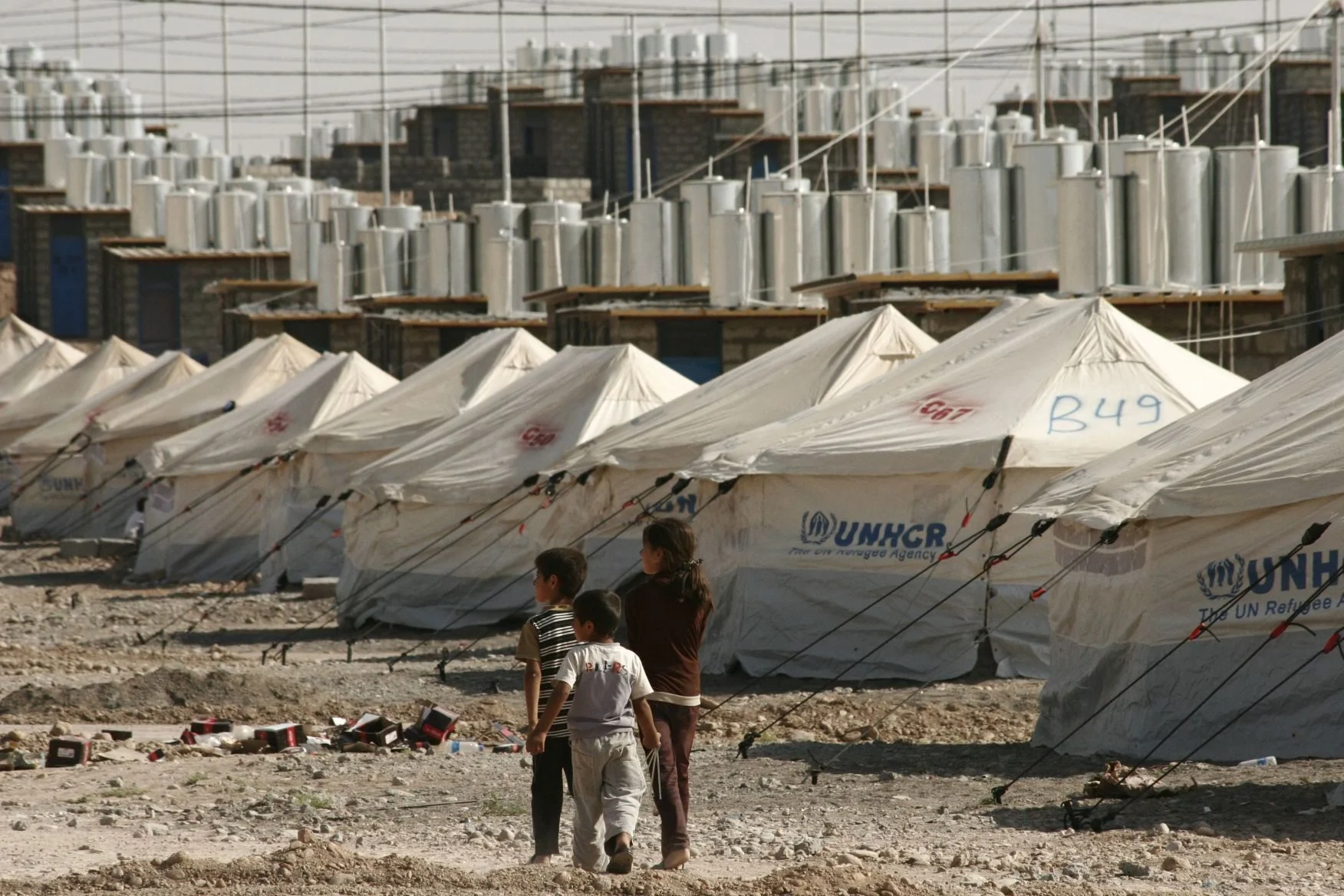
Nearly 80% of refugees and asylum-seekers live in the Kurdistan Region of Iraq. While most live in urban and peri-urban areas, 30% remain in nine refugee camps across the country.
Iraq also hosts around 97,000 internally displaced people living in 18 IDP camps.
UNHCR said it works with the Government of Iraq and partners to support refugees and asylum-seekers in accessing protection, public services such as education and healthcare, economic opportunities, and longer-term solutions.
World Refugee Day Marked in Erbil
On June 20, UNHCR, the Kurdistan Regional Government, and the Barzani Charity Foundation commemorated World Refugee Day in Erbil under the theme “Until everyone is safe.”
UNHCR and senior government officials highlighted ongoing protection efforts and the need for stronger cooperation to support refugees and internally displaced people.
The event included testimony from a Syrian refugee and former DAFI scholar, cultural performances by refugee children and musicians, and an exhibition of handicrafts produced by refugee artisans.
Representatives from federal and regional authorities, UN agencies, NGOs, and the diplomatic community attended the event, which was also covered by local and regional media outlets.
New Refugee Law Moves Through Review
In June, UNHCR and the State Council held a workshop in Erbil with federal and regional officials, academics, and legal experts to review the fifth draft of Iraq’s proposed new refugee law.
Participants examined the draft against international refugee law standards while considering Iraq’s national context.
Once finalized, the draft will be submitted to the State Council’s General Committee. Following finalization by the State Council, it will be sent, with reservations or recommendations, to the General Secretariat of the Council of Ministers for review and approval.
If approved by the Council of Ministers, the draft will be referred to the Iraqi Parliament for review and voting.
Iraq’s current refugee law dates to 1971. The adoption of an updated law would establish a new legal framework for refugees and asylum-seekers in line with international standards.
1,706 Syrians Voluntarily Returned in 2026
A total of 1,706 Syrian refugees and asylum-seekers voluntarily returned from Iraq to Syria during 2026, including 384 people in June.
Of those who returned in June, 317 Syrian refugees returned from the Kurdistan Region, while 67 were processed for return in Baghdad.
As part of the facilitated return process, UNHCR provides eligible Syrian refugees who wish to return with cash assistance of IQD 130,000 per person, equivalent to $100, to help cover logistical costs. Additional financial support is available for the most vulnerable.
Six New Schools Completed in 2026
UNHCR finalized the technical handover in June of two new schools to the Kurdistan Regional Government’s Ministry of Education.
The schools are located in the Qushtapa and Baherka subdistricts of Erbil Governorate.
The two schools bring to six the total number of new schools completed by UNHCR in Iraq during 2026. The others are located in Zakho, Dohuk, Sitak, and Raniya.
UNHCR said the schools support the inclusion of refugees in public education. The agency is now coordinating with the Ministry of Education on furniture and the official opening of the schools ahead of the academic year in September.
Survey to Assess Refugees’ Socio-Economic Conditions
Data collection for the refugee chapter of Iraq’s Socioeconomic Household Survey began in June through a partnership between UNHCR and the Kurdistan Regional Statistics Office.
The survey covers a representative sample of 1,600 refugee households.
The government-owned survey is intended to provide a clearer understanding of refugees’ socio-economic conditions in the Kurdistan Region, including comparisons with host communities.
UNHCR said the findings will support evidence-based programming and discussions on refugee inclusion in public services. The analysis is expected to be published later in 2026.
National ID Applications Processed for al-Amal Centre Residents
Eight reverse missions were conducted by legal actors in Al-Amal Centre in June, bringing families from the center to the Mosul Civil Affairs Directorate to process applications for National Unified IDs.
The missions resulted in 360 National Unified ID applications being submitted for residents of Al-Amal Centre.
In 2026, 43 reverse missions have taken place, resulting in 2,117 applications being submitted. Of these, 1,288 National Unified IDs have been issued.
FYI:
The June update highlights Iraq’s continuing role as a major host country for refugees and asylum-seekers, particularly in the Kurdistan Region, while efforts during 2026 have focused on legal reform, access to education and public services, socio-economic data collection, and voluntary returns to Syria. The proposed refugee law, which is still moving through Iraq’s legislative process, would replace the country’s existing 1971 framework if approved.
29/07/2026