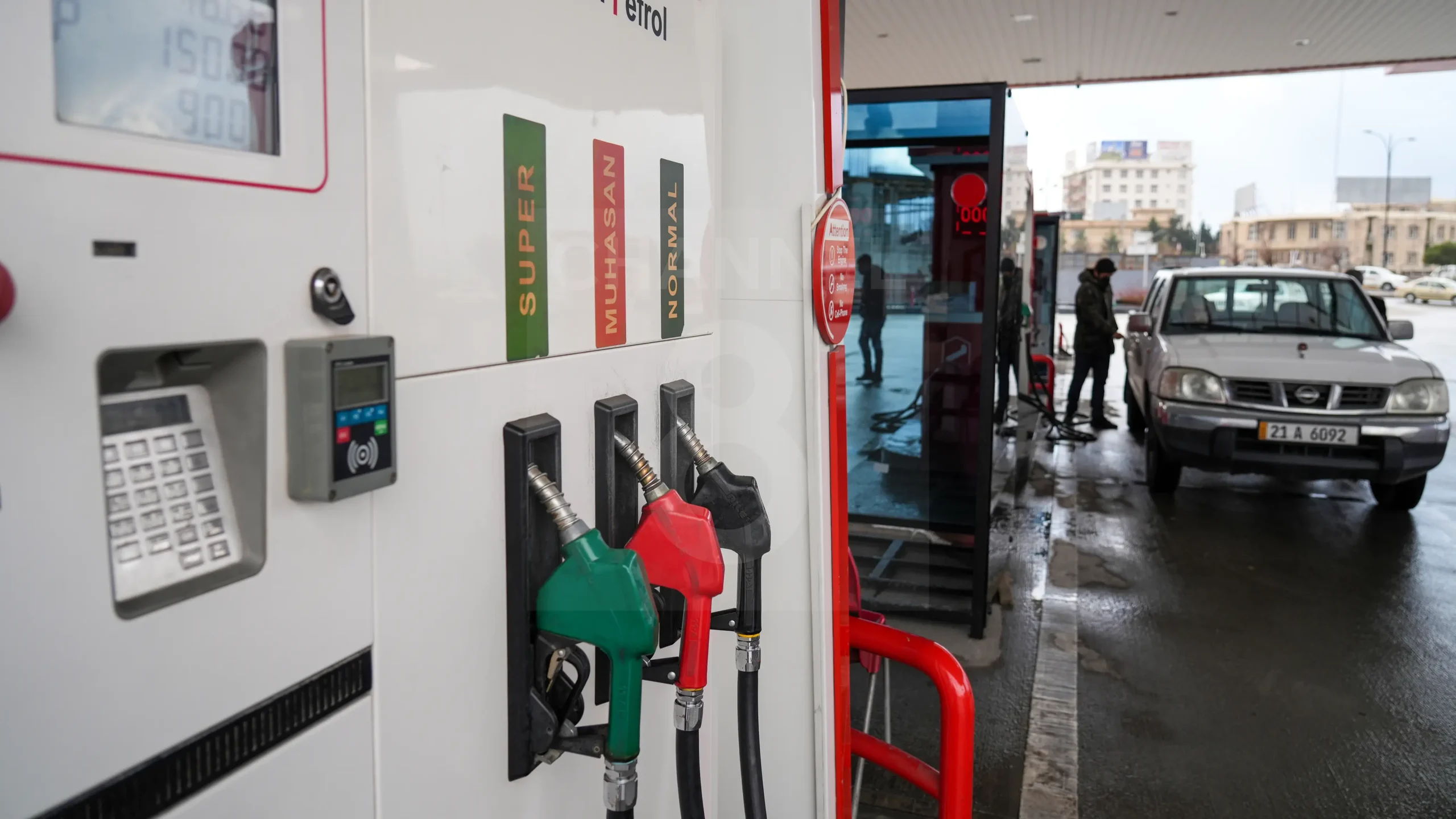
Kurdistan Region Natural Resources Ministry Cuts Normal Gasoline Price to 750 IQD
At a Glance
- Normal gasoline price set at 750 IQD
- Government to cover price difference
- Decision takes effect immediately
- Sixth fuel policy decision in two months
The Kurdistan Region’s Ministry of Natural Resources has announced a new measure aimed at reducing the cost of commercial Normal gasoline amid the ongoing fuel price crisis.
Key Statements and Focus Area
- Ministry of Natural Resources: Commercial Normal gasoline will be sold at 750 IQD per liter, matching the price of government-provided fuel.
- Government: Will cover the financial difference between the regulated pump price and the amount paid by private fuel stations.
- Policy shift: The measure represents the ministry’s sixth regulatory decision in two months aimed at controlling gasoline prices.
The Ministry of Natural Resources has issued a new directive to subsidize commercial Normal gasoline and reduce its retail price to 750 IQD per liter.
The measure was finalized following a meeting held today to address the Region’s ongoing fuel crisis.
Under the new decision, private fuel stations will sell Normal gasoline at the regulated price, bringing it in line with government-provided fuel.
The ministry’s order states that the government will cover the financial deficit created by the subsidized price.
This means the government will absorb the difference regardless of how much private fuel stations initially pay to obtain the gasoline.
The new measure takes effect immediately, starting today.
The directive establishes a distribution framework involving the Ministry of Natural Resources, governorates, independent administrations, Directorates of Oil and Mineral Resources, and private fuel supply companies.
The authorities will coordinate the distribution process while maintaining existing fuel-quality requirements.
The latest directive represents the sixth decision issued by the Ministry of Natural Resources within the past two months to address rising fuel prices.
Previous interventions have failed to prevent continued upward pressure on gasoline prices, prompting the ministry to introduce another pricing measure.
FYI
The Kurdistan Region’s fuel crisis has been compounded by regional security tensions and disruptions to local energy production. Repeated drone strikes by Iran-backed groups have targeted key energy facilities, including the Khor Mor gas field, prompting international companies to suspend some local oil and gas production as a precaution. At the same time, restrictions on cross-border trade have disrupted supplies of chemical agents imported from Iran that are used by local refineries to produce higher-grade gasoline.
The Region also operates under a different fuel-pricing system from central and southern Iraq, where gasoline is heavily subsidized and sold for around 450 IQD per liter. In the Kurdistan Region, greater reliance on private-market fuel has exposed consumers to higher prices. The KRG has also closed numerous illegal and makeshift refineries over environmental and regulatory concerns, reducing a source of cheaper, lower-grade gasoline that had previously contributed to local supply.
The Kurdistan Region receives an allocation of 50,000 barrels of crude oil per day from Baghdad for local refining. Iraqi authorities have proposed instead using this allocation as part of a mechanism to provide federally subsidized gasoline directly to the Region, while the KRG has maintained its preference for receiving the crude oil and managing its own refining and distribution.
Dive Deeper: Handpicked Stories for You
Follow Channel8 for continuous updates:
KRG Demands Constitutional Share Of Subsidized Fuel From Baghdad
13/08/2026