Al-Hakim, Joshua Harris Discuss Economic Crisis and Security
At a Glance
- Ammar al-Hakim met with .S. Chargé d'Affaires to address bilateral relations, economic liquidity, and security frameworks.
- Al-Hakim identified financial liquidity and economic challenges as Iraq's main difficulties amid regional escalation..
- He stated factional weapons must be transferred directly to the Popular Mobilization Forces.
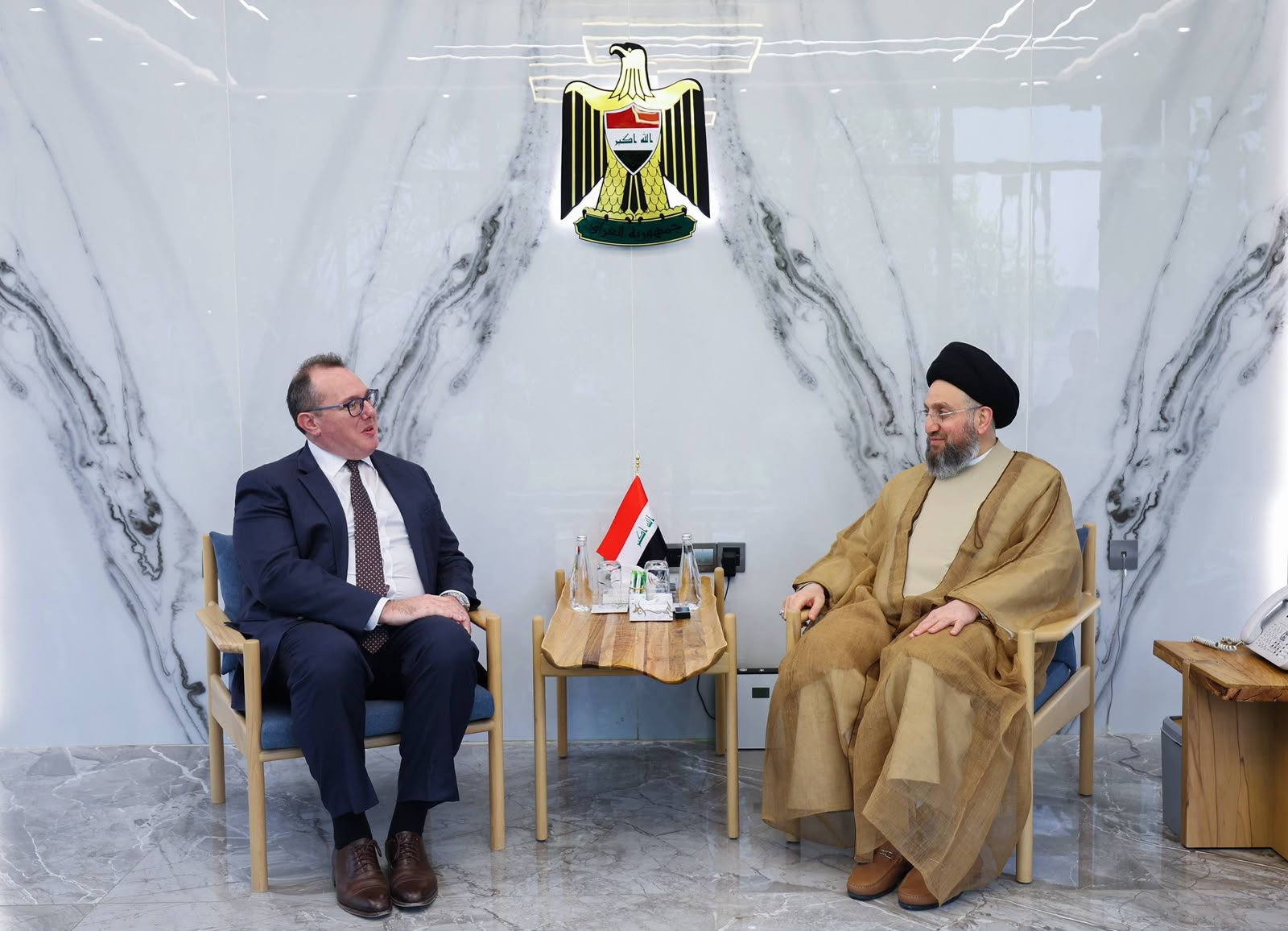
The head of the National State Forces Alliance, Ammar al-Hakim, met with U.S. Chargé d'Affaires Joshua Harris to address bilateral relations, Iraq’s liquidity crisis, and integrating armed factions into official state frameworks.
Key Statement and Focus Area
Al-Hakim highlighted Iraq's pressing challenges, identifying “the economic challenge and financial liquidity” at the forefront of these difficulties.
He “urged adopting the language of understanding and dialogue as a means to restrict weapons to state control.”
Al-Hakim met with Harris at his office in Baghdad on Sunday, with both sides addressing bilateral relations between the two countries. Al-Hakim underlined “the importance of translating agreements into practical action plans.”
He wished the departing Chargé d'Affaires success following the conclusion of his diplomatic mission in Iraq.
Al-Hakim emphasized “the nature of the challenges facing Iraq, identifying the economic challenge and financial liquidity at the forefront of these difficulties due to regional events and ongoing escalation.”
He urged relying on dialogue to resolve outstanding issues.
Regarding the government's efforts to control arms, al-Hakim stated that the factions' weapons “contributed to confronting ISIS, offering thousands of martyrs to liberate the land and restore stability.”
Al-Hakim clarified that factional weapons must be transferred to the Popular Mobilization Forces (PMF) as an official institution, urging the inclusion of “all individuals who fall under the description of bearing arms outside the state framework.”
FYI
The high-level meeting comes as Iraq grapples with a severe liquidity crisis, marked by a 21.24 trillion IQD deficit in the first half of 2026.
This financial strain is compounded by regional security tensions and shipping disruptions in the Strait of Hormuz that have bottlenecked southern crude oil exports.
Amid these economic and diplomatic shifts, political leaders are accelerating efforts to formally integrate remaining independent armed groups under state-regulated security frameworks by September 30.
While compliant factions like Saraya al-Salam are being officially integrated into the government-regulated command structure, other independent groups have not yet handed over their weapons ahead of the deadline.
Regarding the coalition withdrawal, al-Iraqi government spokesperson Haider al-Aboudi told Channel8 earlier that coordination is ongoing to finalize the process through "effective dialogue and stable procedures" anchored in the constitution.
He emphasized that the Iraqi government maintains "the exclusive right to monopolize the instruments of force" and that all factions are "very far removed from any potential confrontation."
Dive Deeper: Handpicked Stories for You
Follow Channel8 for continuous updates:
Al-Aboudi Dismisses Internal Confrontation Risks After Coalition Withdrawal
Amedi: Iraq Has No Need for Coalition Forces
Al-Maliki and US Envoy Discuss Restricting Weapons to State
Al-Zaidi Says Government Will Soon Submit Budget to Parliament
1 hour ago