Abandoned Children Rise Sharply in Kirkuk's Hawija District
At a Glance:
- Radar8 investigation finds a documented rise in child abandonment cases in Hawija, Kirkuk.
- Two contrasting cases at a local hospital: a child with a severe medical condition, and an infant born out of unlawful relations.
- Religious authority: abandoning a child is a major sin, even when the child is born of unlawful relations.
- Poverty and social stigma identified as the two leading drivers.
A months-long investigation by Channel8's Radar8 program, presented by Jin Jiyar, has uncovered a marked increase in cases of child abandonment in the Hawija district of Kirkuk province, a phenomenon local officials and medical staff say has existed for years but has intensified in recent months. The program traces the trend to two distinct but often overlapping causes: chronic poverty and the social stigma surrounding children born outside of marriage. It examines the medical, social, and religious dimensions of a crisis that continues to strain the district's limited support services.
Key Statements and Focus Area:
- On the scale of the problem: Hospital staff interviewed by the program described abandonment as a recurring occurrence rather than an isolated incident, with cases spanning both children with serious health conditions and infants born out of unlawful relations.
- On the religious ruling: A senior member of the Kirkuk Council of Fatwa told Radar8 that abandonment is unequivocally forbidden: "Abandoning it is entirely unlawful (haram) and considered a major sin under Islamic law. Even if the child is born out of Zina, that is one sin in itself, and abandoning the child becomes a second major sin."
- On the mother's obligation: The scholar stated that a child born of unlawful relations "must not be separated from their mother," and that "the child must be breastfed and raised by the mother, and society must accept this reality."
- On inheritance and adoption: Addressing families who informally adopt abandoned children, the scholar cautioned that Islamic law does not grant such children inheritance rights, despite the affection families may develop for them: "Islamic law does not grant inheritance rights to an adopted child."
A Long-Standing Problem, Now More Visible
According to the Radar8 investigation, child abandonment is not a new phenomenon in Hawija, but medical personnel and local residents describe a recent uptick in reported cases. The program's team spent weeks gathering testimony from hospital staff and religious figures in an effort to understand both the scale of the issue and the circumstances driving it.
Inside the Hospital: Two Cases, Two Causes
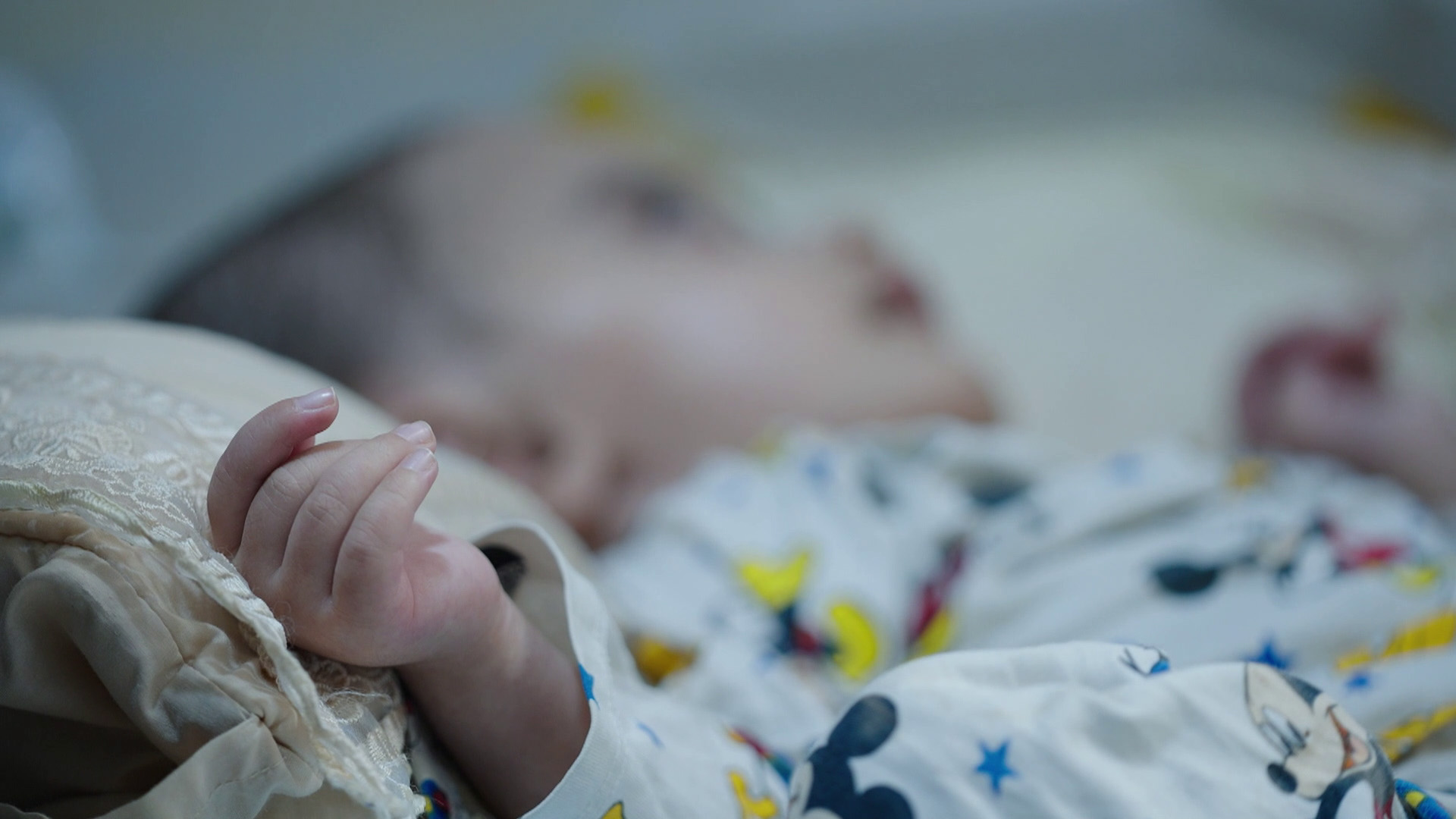
As part of its investigation, the Radar8 team visited a hospital in the area to inquire directly about recent abandonment cases. Staff pointed the crew to two children left at the facility in recent months. One child was found to be suffering from a serious congenital condition involving abnormal enlargement of the head, a medical burden that, according to hospital sources, contributed to the family's decision to leave the child in care. The second child, hospital staff said, was the result of a relationship outside of marriage, a circumstance that, in the district's conservative social environment, frequently leads families to abandon infants rather than face community judgment.
Doctors Describe the Pattern
Physicians interviewed by the program said cases generally fall into one of the two categories highlighted by these examples: children with disabilities or serious health conditions that families feel unequipped to care for, and children born outside of wedlock, whom families abandon largely out of fear of social stigma rather than any capacity issue. Doctors noted that both categories place a strain on hospital resources, which are not designed to provide long-term care for abandoned infants.
Religious Authorities Weigh In
Seeking a religious perspective on the issue, Radar8 spoke with a senior figure at the Kirkuk Council of Fatwa. The scholar was unambiguous in condemning abandonment as a compounding sin, stating that even where a child's conception involved unlawful relations, the child bears no responsibility and must not be discarded. He argued that families must ultimately accept and absorb such situations rather than expel the child from the household, adding that under religious legal rulings not currently enforced in practice, a woman found guilty of extramarital relations would face a defined legal penalty, after which, in his view, no further social punishment or ostracism would be justified. He noted that a married woman committing adultery would, under the same unenforced rulings, face a more severe penalty, but reaffirmed that regardless of the mother's circumstances, the child must remain in her care and would retain inheritance rights from her.
On the question of adoption as a possible solution, the scholar cautioned that while some jurists permit adoption under necessity, it carries legal complications under Islamic law, chiefly that an adopted child cannot legally inherit from the adopting family, a limitation that can create friction even in well-intentioned arrangements.
FYI
The findings align with a broader pattern documented by child welfare and humanitarian organizations across Iraq in recent years, where economic hardship, high poverty rates in rural and semi-urban districts, and persistent social stigma around children born outside marriage have been repeatedly cited as the two dominant drivers of infant abandonment. Districts like Hawija, which continue to recover from the economic and infrastructural aftermath of past conflict in Kirkuk province, have been flagged by local authorities and aid groups as particularly vulnerable, with limited orphanage capacity and inconsistent social-service coverage compounding the problem. Religious and tribal leaders in several Iraqi provinces have in recent years issued public appeals similar to the one voiced in the Radar8 interview, urging families to keep children within the household regardless of the circumstances of their birth, though local officials note that stigma-driven abandonment has proven difficult to reverse through religious guidance alone.
02/09/2026