A New Security Architecture for the Middle East: China's Four-Point Proposal
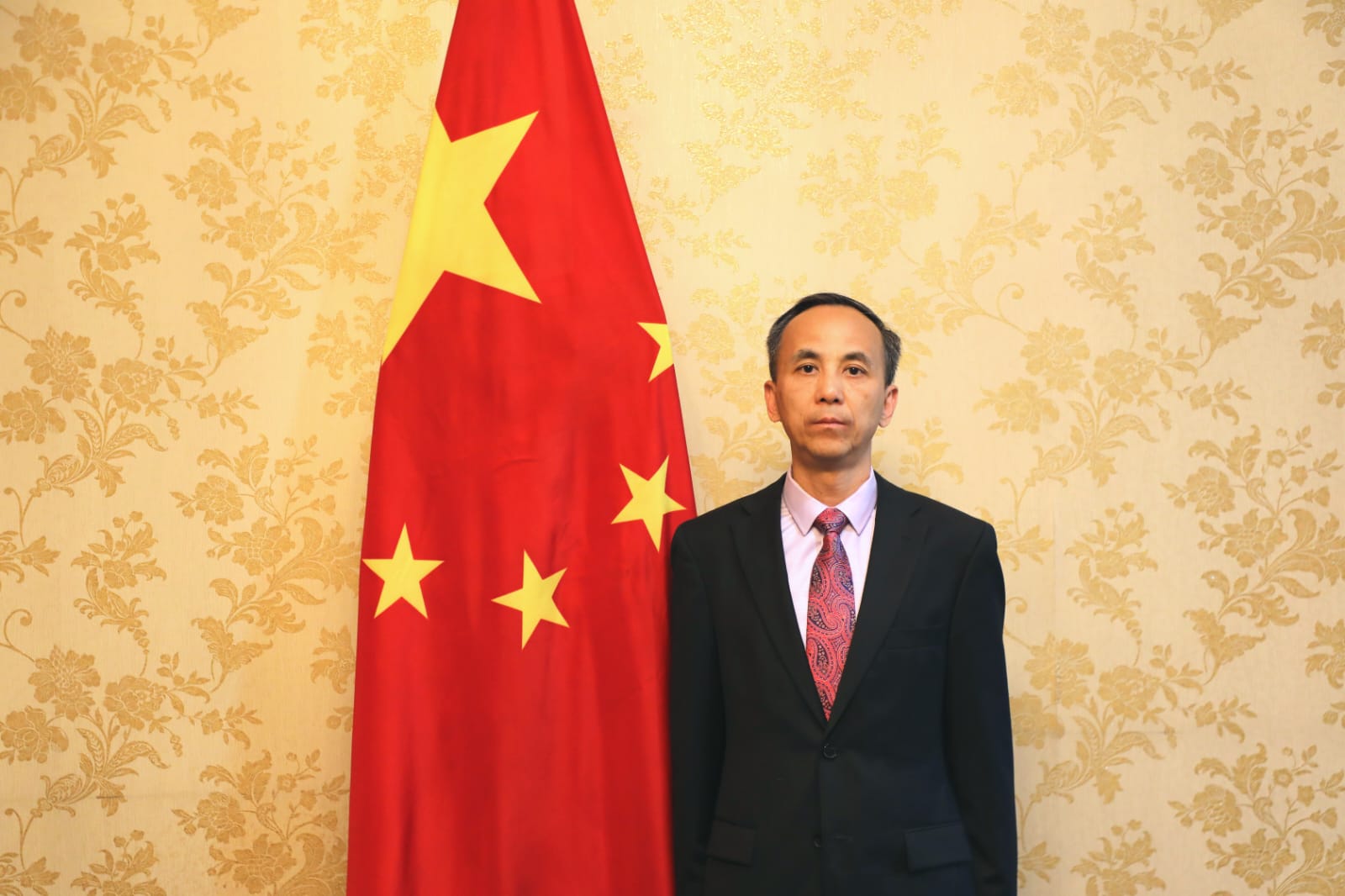
Liu Jun, Consul General of China in Erbil
Since the beginning of this year, the situation in the Middle East has remained tense, with conflicts recurring and dragging on. This has severely disrupted the region's development and brought profound suffering to the countries and peoples of the region. How to end the fighting, promote peace and achieve lasting stability has become a shared concern and a common pursuit of regional countries. Recently, President Xi Jinping paid a successful state visit to Egypt. In his talks with President Abdel Fattah El-Sisi, President Xi noted that the Chinese side supports regional countries in developing good-neighborly and friendly relations, upholding the vision of common, comprehensive, cooperative, and sustainable security, and building a new security architecture for the Middle East. To this end, President Xi made four proposals.
First, unleash the internal momentum of regional common security. The people in the Middle East should be the masters of their own affairs. Interference by external forces should be opposed. Regional countries should be supported in strengthening dialogue on peace and security, discussing the reshaping of the security architecture in the region, and holding their future in their own hands.
Second, advance the comprehensive governance of regional common security. The many highly interrelated hotspot issues in the Middle East require comprehensive solutions. The Palestinian question remains at the core of the Middle East issue, and should not be neglected or marginalized at any time.
Third, cement the development foundation of regional common security. Lasting stability and security in the Middle East relies fundamentally on development. The Chinese side stands ready to work with all regional countries to safeguard the security of international shipping lanes, advance development cooperation, promote the convergence of interests of regional countries, and gradually enhance mutual trust and eliminate the breeding ground for conflict.
Fourth, enhance international coordination on regional common security. The U.N. Charter and international law serve as the basic guidelines for handling Middle East affairs. The international community, especially major countries outside the region, should reject double standards, respect the sovereignty and territorial integrity of regional countries, and safeguard the security and stability of the region. The U.N. should be supported in playing a tangible role in regional affairs.
The four proposals go to the heart of the matter and respond to the security dilemma that has long confronted the Middle East. Hotspot issues in the region are intertwined, conflicts recur, and grievances of every kind are deeply entangled. Facts have proven time and again that force cannot bring security, and that lasting peace cannot be delivered from outside. More than ever, the Middle East needs a new security architecture that is grounded in the realities of the region and accommodates the legitimate concerns of all parties. Working along four dimensions — unleashing internal momentum, advancing comprehensive governance, cementing the development foundation, and enhancing international coordination — the proposals echo the shared aspiration of regional countries to hold their future in their own hands.
The four proposals demonstrate China's sense of responsibility and enrich China's approach to achieving lasting peace and stability in the Middle East. In April this year, in the face of a sharply deteriorating regional situation, President Xi put forward a four-point proposal on upholding and promoting peace and stability in the Middle East — adherence to the principle of peaceful coexistence, adherence to the principle of national sovereignty, adherence to the principle of international rule of law, and adherence to the coordination of development and security. It served as a guide to action for moving the region from turbulence to stability. In August, President Xi put forward four principles for resolving the Palestinian question, building international consensus for an early, comprehensive, just and lasting settlement. The proposals now put forward are closely linked with the previous two and complement them, and together they form a systematic solution for resolving the Middle East issue.
Focusing on common security, the four proposals answer the fundamental questions of what kind of new security architecture the Middle East should build, how to build it, and who should build it. They respect the right of regional countries to hold their future in their own hands, while also underlining the responsibilities of the international community, and they closely link security with development. Consistent with the Global Security Initiative, they offer a viable path toward resolving the security dilemma of the Middle East and point the way forward.
As a permanent member of the U.N. Security Council, China seeks no selfish political gains in the Middle East, seeks no sphere of influence, and creates no bloc confrontation. China facilitated the historic reconciliation between Saudi Arabia and Iran and the signing of the Beijing Declaration by Palestinian factions, and has always worked for peace with the sense of responsibility of a major country. What China hopes to see is a Middle East of peace and stability, fairness and justice, development and prosperity.
Here in Erbil, we feel the practical significance of the four proposals all the more deeply. The Kurdistan Region of Iraq (KRI) has suffered greatly from war, and therefore values peace all the more. It looks forward to a stable and predictable regional security environment, and hopes to devote its energy and resources to economic and social development and to improving people's lives. The security vision and the development propositions that China advocates are highly compatible with what people in the KRI want most — security and development.
As an old Chinese saying goes, "Who wants a tree to grow tall must first strengthen its roots." A new security architecture for the Middle East will not be built overnight, but every dialogue, every act of cooperation and every reconciliation adds a brick to it. China stands ready to work with all parties in the region, including the KRI, to translate the four proposals on building a new security architecture for the Middle East, the four-point proposal on upholding and promoting peace and stability in the Middle East, and the four principles on resolving the Palestinian question into reality, so that this ancient and richly endowed land may leave the flames of war behind and once again become a home where civilizations meet and prosperity is shared.
Article by Mr. Liu Jun, Consul General of the People's Republic of China in the Kurdistan Region
09/09/2026