Kurdistan Senior Officials, UK Defence Advisor Discuss Security and Stability
At a Glance
- Kurdistan Region’s Top Officials held separate talks with UK Senior Defence Advisor Vice Admiral Edward Ahlgren.
- Discussions centered on weapons centralization and accelerating Peshmerga unification.
- The United Kingdom reaffirmed its long-term commitment to providing military training and security advice.
- Leadership explicitly stated the Kurdistan Region will not become a party to regional conflicts, favoring diplomatic dialogue.
- Talks underscored the critical need to reactivate the Kurdistan Parliament and form a new cabinet.
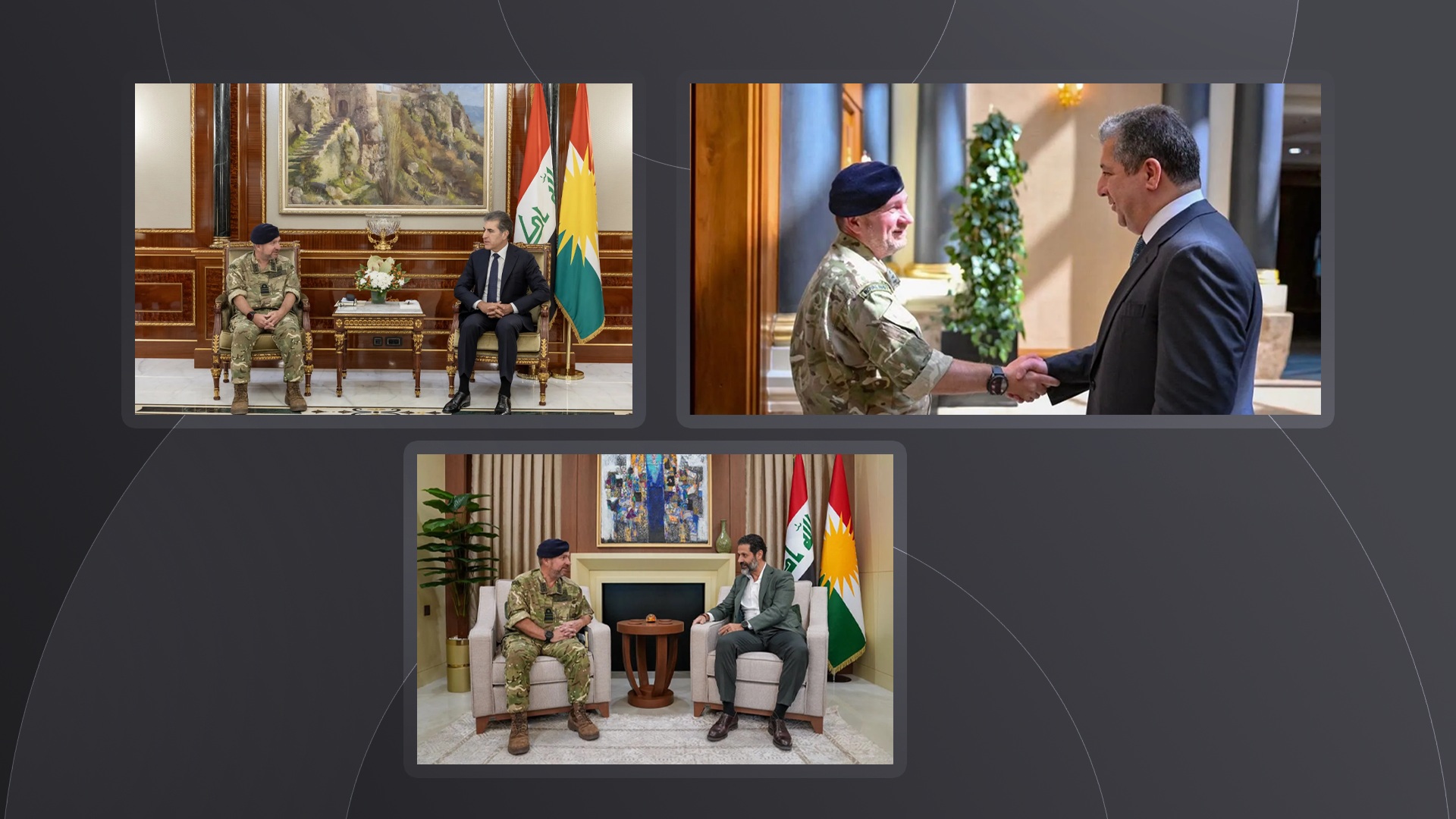
Top leadership of the Kurdistan Region met separately with Vice Admiral Edward Ahlgren, the UK Senior Defence Advisor to the Middle East and North Africa (DSAME), to discuss the domestic political situation, regional security, Peshmerga reforms, and relations with Baghdad.
Key Statement and Focus Area
- The Kurdistan Region Presidency stated that President Nechirvan Barzani “expressed his gratitude for the UK’s continued support in providing military training and security advice to Iraq and the Kurdistan Region.”
- Prime Minister Masrour Barzani and Deputy PM Qubad Talabani stressed the importance of reinforcing security cooperation with the UK and resolving regional conflicts through peaceful dialogue rather than further warfare.
The UK Defence Senior Advisor Ahlgren met with Nechirvan Barzani on Thursday, during which they discussed the centralization of weapons under the Iraqi Federal Government, ongoing efforts to unify the Peshmerga forces, and the latest regional security developments.
Barzani “highlighted the importance of continued coordination and joint efforts to confront the remnants of ISIS and broader terrorist threats.”
Vice Admiral Ahlgren underscored the United Kingdom's steadfast commitment to its relations with Iraq and the Kurdistan Region, highlighting the critical need to preserve national stability.
He also “reiterated the UK’s readiness to continue cooperation and strengthen its security and military partnership with both Iraq and the Kurdistan Region.”
Vice Admiral Ahlgren also met with Kurdistan Regional Government (KRG) Prime Minister Masrour Barzani, where both parties emphasized the importance of further strengthening historic ties, as well as advancing security coordination and cooperation between the Kurdistan Region and the United Kingdom.
The Prime Minister “reiterated the Kurdistan Region’s gratitude and appreciation for the support and assistance provided by the United Kingdom and the Coalition forces.”
Both sides addressed the need to reactivate the Kurdistan Parliament, form the new government cabinet, and resolve outstanding disputes with the federal government based on respect for the Kurdistan Region’s constitutional status.
In a separate meeting with the Deputy PM today, Qubad Talabani noted that, “We clarified that as the Kurdistan Region, not only are we not and will not be a part of the region's conflicts and tensions, but we have also strived to be a helpful force in de-escalating war and turmoil and in establishing peace in the region.”
He said that with Vice Admiral Ahlgren, they underlined that “the situation in the region does not require further war, and it is in everyone's best interest to resolve conflicts through dialogue and negotiation.”
FYI
The United Kingdom has maintained a strong, historic security relationship with the Kurdistan Region, primarily reinforced through its active role in the Global Coalition against ISIS.
Beyond counterterrorism operations, the UK serves as a core international partner providing strategic training, military advice, and capacity building to the region's security apparatus.
Visits by the UK Senior Defence Advisor to the Middle East and North Africa occur routinely to assess security vulnerabilities and align strategic defense goals between London, Erbil, and Baghdad.
A central pillar of the UK's military engagement in the Region is supporting reforms within the Ministry of Peshmerga Affairs. Historically, Peshmerga units have been split along political lines, largely divided between the Patriotic Union of Kurdistan (PUK) and the Kurdistan Democratic Party (KDP).
Backed heavily by the UK, the United States, and other Western allies, the Kurdistan Regional Government has been undergoing a multi-year institutional reform process aimed at unifying these disparate forces under a single and unified national command structure.
The formal conclusion of the U.S.-led International Coalition's military mission in Iraq on September 30, 2026, serves as the vital backdrop to these discussions. The impending withdrawal of these forces makes accelerating Peshmerga unification and establishing centralized state control over weapons urgent security priorities for both Erbil and Baghdad.
2 hours ago