Iraq Partners with Interpol to Close Global Safe Havens for Corrupt Officials
At a Glance
- The Iraqi Integrity chief met Interpol President Lucas Philippe during a state visit to France.
- Fast-track tracking procedures and streamline data sharing to stop fugitives from escaping justice.
- Suspects are exploiting foreign nationalities and legal differences to stall their prosecution.
- Set up direct communication points and share evidence to locate suspects globally.
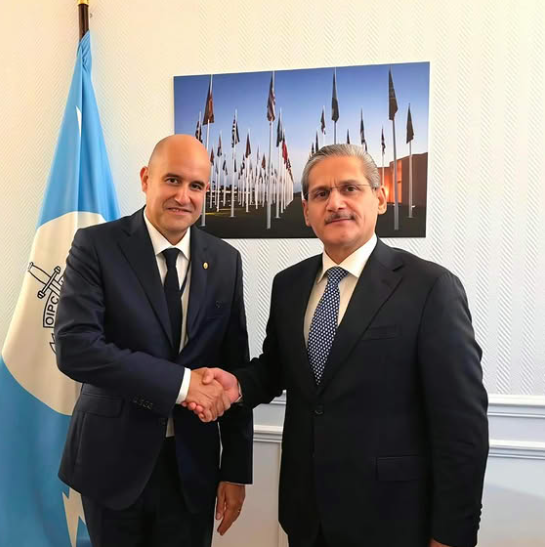
The head of Iraq's Federal Integrity Commission, Mohammed Ali al-Lami, and Interpol President Lucas Philippe agreed to accelerate the tracking of fugitives and eliminate safe havens for individuals wanted in transnational corruption cases.
Key Statements and Focus Areas
- The Integrity Commission stated that Mohammed Ali al-Lami “emphasized the importance of strengthening international cooperation.”
- Ali al-Lami stressed “the need to accelerate tracking procedures and exchange relevant data, thereby tightening the grip on fugitives and preventing them from using other countries as safe havens to escape justice.”
On the sidelines of Prime Minister Ali Faleh Al-Zaidi’s official visit to Paris, the head of the Integrity Commission, Mohammed Ali Al-Lami, met with Interpol President Lucas Philippe on Monday to discuss anti-corruption cooperation.
The two sides focused on enhancing cooperation, establishing direct communication channels, and streamlining information exchange to track down corruption fugitives.
Al-Lami asserted that the transnational nature of corruption makes international cooperation a "cornerstone" in preventing perpetrators from exploiting borders or legal disparities to evade justice and "profit from the proceeds of their crimes."
He noted that intensified anti-corruption efforts in Iraq have driven suspects to flee abroad, requiring a "swift international response" and closer coordination with Interpol to locate fugitives and take immediate legal action.
Al-Lami explained that fugitives obstruct prosecution by acquiring foreign nationalities, exploiting legal disparities, or trying to give a political character to corruption cases, underscoring the urgent need to exchange evidence that clarifies their criminal nature.
Al-Lami called for stronger Interpol support to help Iraq pursue fugitives and recover assets, emphasizing that an effective global partnership must ensure that "fleeing abroad does not mean escaping justice."
The talks also focused on establishing direct communication points and streamlining data sharing to accelerate the tracking of corruption fugitives and expedite international prosecution requests.
Additionally, discussions focused on bolstering the capacity of Iraqi personnel in fugitive tracking and asset recovery through specialized training, knowledge sharing, and the utilization of Interpol's police cooperation networks.
The meeting concluded with both sides emphasizing continued coordination and information exchange to raise responsiveness regarding wanted individuals, ultimately supporting Iraq's efforts to "recover the funds and assets resulting from their crimes."
FYI
The sweeping anti-corruption campaign officially launched in late June, shortly after Prime Minister Ali Faleh Al-Zaidi assumed office. The government initiative is conducted in strict coordination with Iraq's Supreme Judicial Council.
The momentum escalated following the arrest of the Ministry of Oil's undersecretary for refining affairs, Adnan al-Jumaili, whose subsequent confessions exposed an entrenched network of state embezzlement.
The initial wave struck inside Baghdad's Green Zone, resulting in the immediate arrest of at least 47 senior figures, including active lawmakers, political party leaders, and former governors.
The campaign has since expanded to systematically audit and target endemic financial misconduct across heavily plagued sectors, specifically focusing on the ministries of health, oil, and electricity.
By late August, the crackdown successfully recovered over $1 billion in stolen public money, real estate, and financial assets.
Prime Minister al-Zaidi ordered the creation of a specialized recovery fund specifically designed to hold and repurpose these returned assets to directly bolster the state treasury. To locate funds successfully smuggled offshore, a specialized team of international financial experts arrived in Baghdad to assist investigators in tracking illicit wealth across foreign banking systems.
Al-Zaidi arrived in France leading a high-level government delegation to deepen strategic, economic, and security ties.
Because the domestic intensity of the crackdown drove several high-profile suspects to flee the country, Iraq's Integrity Chief utilized this Paris visit to hold direct talks with Interpol President Lucas Philippe.
The meeting aimed to deploy Interpol's global networks to eliminate the legal loopholes and foreign safe havens that these fleeing corrupt officials use to avoid repatriation.
Dive Deeper: Handpicked Stories for You
Follow Channel8 for continuous updates:
Al-Zaidi Advances Energy and Banking Strategies in Paris
15/09/2026