Freedom Movement Cites Force Withdrawal and Urges Turkey to Enact Legal Reforms
At a Glance
- The Freedom Movement completed the total withdrawal of all combat forces posing conflict risks inside Turkey.
- The group completely evacuated and dismantled four major strategic war tunnels in the Metina area.
- Leadership stated the Law on Strengthening National Solidarity and Social Integration falls short of Abdullah Ocalan's framework.
- Movement warned that the government's approach to Ocalan's unrestricted freedom remains the definitive test of the peace process.
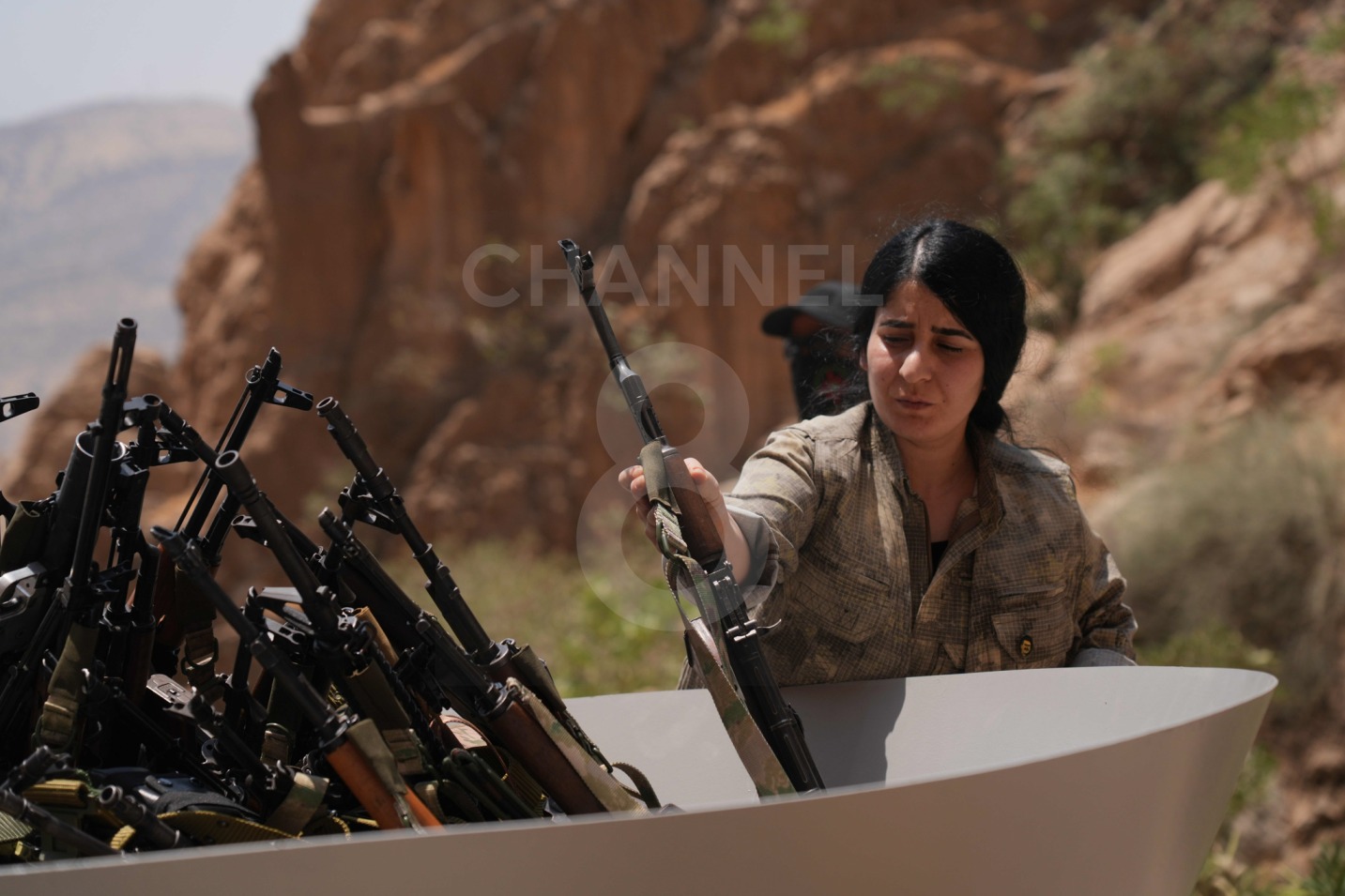
The Freedom Movement, acting through its organizational umbrella framework known as the Kurdistan Communities Union (KCK), announced that four combat tunnels and positions in Metina, west of Zap, were evacuated to eliminate any perception of a threat to Turkey, adding that the group refrained from rejecting the peace process legislation outright due to its situational significance despite severe flaws.
Key Statements and Focus Area
- Freedom Movement leadership stated that the finalized legislative framework, known as the Law on Strengthening National Solidarity and Social Integration, fell short of the scope outlined by Abdullah Ocalan.
- The movement announced it has recently completed the total withdrawal of all forces posing any potential conflict risk inside Turkey.
- The leadership insisted no obstacles remain for enacting freedom laws, calling on the Turkish state to immediately pass necessary measures if it truly favors a democratic resolution over military methods.
Freedom Movement leadership issued a statement on Thursday asserting that Turkish pro-democratization advocates believe resolving the century-old Kurdish issue through democratic integration is vital to overcoming the country's deep-rooted structural problems and reversing systemic animosity.
The leadership stated that a parliamentary commission composed of a majority of political parties consulted various social sectors and held discussions with Abdullah Ocalan before drafting a report on a democratic resolution to the Kurdish issue.
It noted that despite its deficiencies, the report acknowledged that the issue cannot be resolved through military means and must be addressed via democratization, outlining initial steps for the political leadership.
However, the statement claimed the political leadership failed to enact these steps or initiate broader democratization efforts.
The statement noted that despite structural deficiencies, the parliamentary report acknowledged the issue cannot be resolved through military means and requires democratization steps that the political leadership has since failed to implement.
Although the Freedom Movement conveyed its views and proposals through intermediaries and public channels, these inputs were largely ignored.
According to the statement, the Freedom Movement did not reject the legislation outright due to its situational significance, though it argued the law remains severely flawed as it marginalizes leadership figures, compromises parliamentary authority, and restricts its own implementation.
The movement stated that the ruling AKP government has not fulfilled commitments to allow Abdullah Ocalan to meet with journalists and delegations, adding that his isolation has continued with the sole exception of a single meeting with the Imralı-DEM delegation.
The statement highlighted that the government's approach to the unrestricted freedom of Abdullah Ocalan will serve as the definitive indicator of its commitment, warning that further delays will fuel public skepticism and impact future stances.
FYI
Law No. 7595, the Law on Strengthening National Solidarity and Social Integration, was passed by the Turkish Parliament on August 10, and officially entered into force on August 18, establishing a framework for disarmament and conditional amnesty following the PKK’s dissolution.
To manage this transition, the National Solidarity and Integration Coordination Board, chaired by Vice President Cevdet Yilmaz, coordinates four subcommittees overseeing legal workflows and disarmament verification. Under a localized mechanism, fighters must surrender weapons to regional authorities in Erbil, Sulaymaniyah, or Baghdad.
The board enforced a strict two-stage process, meaning no judicial relief or prisoner releases will begin until absolute disarmament is verified and validated by the National Security Council (MGK).
Once the MGK confirms the armed organization has ceased to exist, a six-month application window will open for eligible individuals to apply for trial suspensions and reintegration.
Beyond these administrative structures, the legislative framework directly addresses approximately 79,000 cases, including 4,000 active prisoners and roughly 75,000 individuals living abroad or facing outstanding warrants.
Eligible returning militants receive a suspension of trials or prison sentences for a five-to-ten-year probationary period, after which the charges are permanently dropped if no new offenses are committed. However, the law explicitly mandates that all weapons, ammunition, and explosive materials surrendered during the process must be formally registered by state security forces.
A dedicated parliamentary monitoring commission has also been activated alongside the executive board to guarantee legislative oversight. This dual-track system balances fast-moving political negotiations in parliament with rigorous, state-verified field inspections before any final legal rehabilitation is officially granted.
2 hours ago