Elham Ahmed: Syrian Integration Successful but Challenges for Women Remain
At a Glance
- Elham Ahmed told MERI Forum that SDF-Syrian force integration has successfully restored regional stability.
- She underlined that Syria's ongoing transition remains in an "experimental phase" during its post-conflict reconstruction.
- Kurdish language and culture must achieve official constitutional recognition across Syria.
- Women's public office leadership faces a distinct setback compared to the Autonomous Administration era.
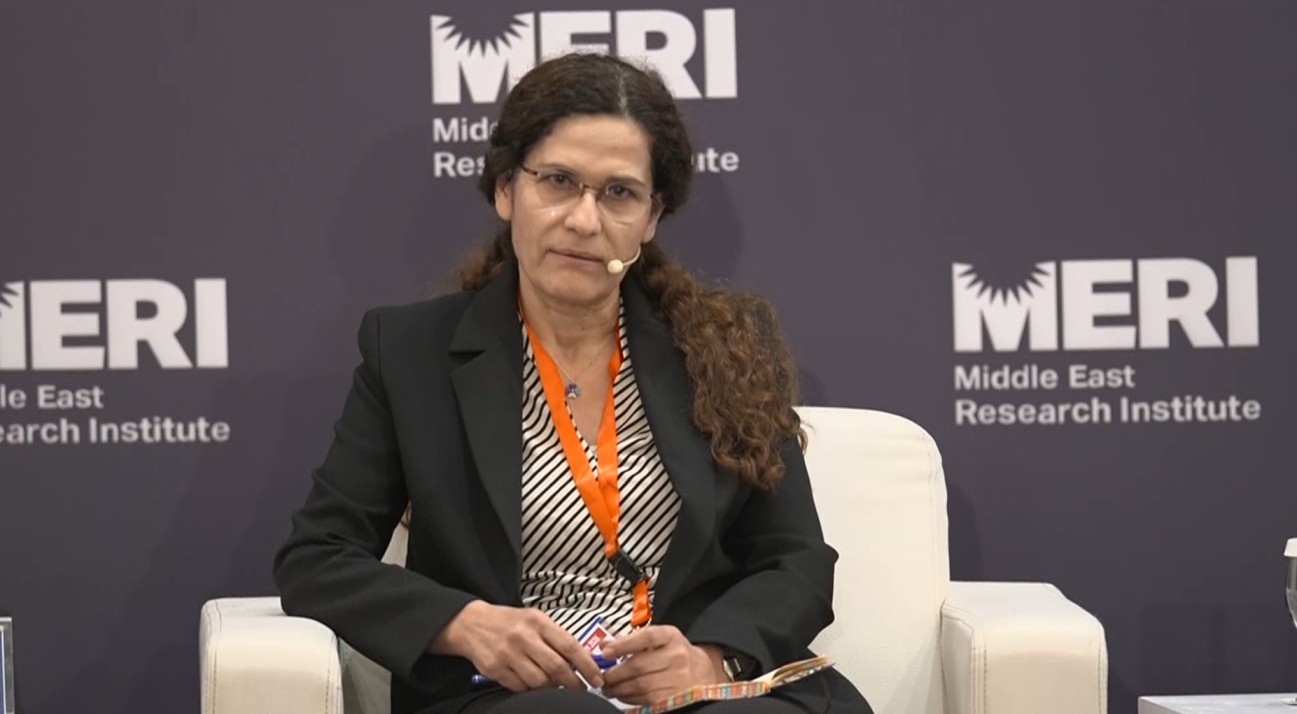
Elham Ahmed, Member of the Foreign Relations Committee of the People’s Assembly of Syria, stated that while the successful integration of SDF and Syrian forces has restored stability, there is a noticeable decline in the active involvement of women within leadership positions.
Key Statements and Focus Area
- Elham Ahmed told the MERI Forum that integration has been successfully implemented between the SDF and Syrian forces.
- She noted that, despite the success in integrating military forces and civil institutions, there is “a visible regression” in women's participation within decision-making bodies.
- The lawmaker said that talking about decentralization in Syria is like talking about "the devil."
Speaking during a panel titled “The New Syria: From Division to a Shared State” at the MERI Forum in Erbil on Monday, lawmaker Ahmed stressed that the integration process has significantly helped reopen Syrian cities to one another and establish a degree of stability.
Ahmed emphasized that while the integration process has secured several achievements for Syria, it remains in "an experimental phase."
She underscored that the country is in dire need of “greater stability.”
Ahmed highlighted that Syria is currently in “a phase of reconstruction,” and we are working to open the country up to the international community.
Regarding the rights of Kurds in Syria, the lawmaker emphasized that the Kurdish language and culture must be officially recognized in Syria.
She also highlighted a clear setback for women's leadership in public office, noting that significant emphasis had previously been placed on the role of women under the Autonomous Administration experience.
Ahmed further clarified that advocacy for decentralization is often misinterpreted by critics as an attempt to partition the country
FYI
The current institutional integration follows intense geopolitical escalation in January 2026, when the Syrian army launched an offensive targeting the Kurdish-inhabited Sheikh Maqsood and Ashrafiyeh neighborhoods of Aleppo.
Following days of violent clashes, a ceasefire agreement was brokered on January 10, 2026.
This paved the way for the January 29, comprehensive agreement between the SDF and the new transitional authorities under Syrian President Ahmed al-Sharaa.
The deal mandated the sequential integration of the Autonomous Administration’s civilian and military wings into the centralized Syrian state apparatus, leading to the formal dissolution of the SDF as an independent force in August 2026.
To ease initial integration friction, President al-Sharaa issued Decree No. 13 in early 2026, recognizing the Kurds as an original component of the Syrian people and designating Kurdish as a national language.
However, widespread protests erupted across Kurdish towns—including Qamishlo, Kobani, and Afrin—following an August 27 educational decree that limited Kurdish instruction to just three hours a week while mandating that core subjects like science and mathematics be taught in Arabic.
Kurdish students, teachers, and political groups have actively boycotted classes, demanding full constitutional recognition of Kurdish as an official language of instruction from primary school through university.
Compounding the delicate transition are deep-seated local rivalries. In early October 2026, hundreds of pro-government Arab residents staged major demonstrations in the provincial capital of Hasakah, demanding an end to lingering Kurdish security structures and protesting the local administrative transitions.
As Arab protesters marched from the Ghuwayran neighborhood toward the city center, some factions vandalized Kurdish cultural symbols, sparking immediate counter-protests from local Kurdish residents.
To prevent volatile communal clashes, Internal Security Forces, General Security, and Asayish units deployed heavily to block the roads, effectively cordoning off Arab demonstrators from reaching predominantly Kurdish neighborhoods
1 hour ago