French High School Students Launch Fresh Protests Amid Rising Tensions
At a Glance
- French high school students are launching a fresh wave of demonstrations on Tuesday to maintain momentum for improved educational conditions.
- The movement, active since mid-September, has resulted in over 6,800 detentions, 86 percent of them minors, and at least 30 million euros in property damage.
- In response to protests that drew tens of thousands, Prime Minister Sebastien Lecornu promised budget adjustments and Education Minister Edouard Geffray announced 3,000 substitute teacher deployments.
- Student unions dismissed the government's concessions as insufficient, demanding an additional 10 million euros for school infrastructure.
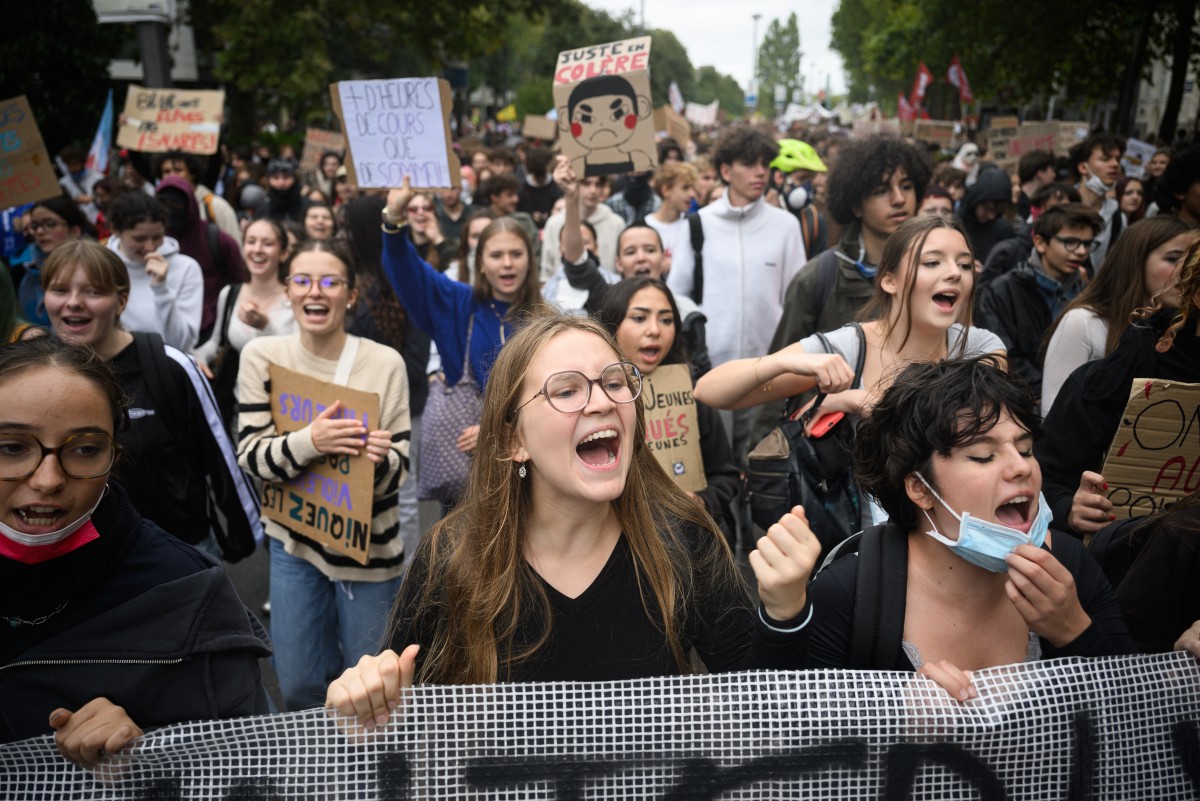
France faces renewed social unrest as high school students prepare for fresh demonstrations, testing the government's ability to defuse a movement that has roiled the country since mid-September.
Student Demands and Government Concessions
- Government Response: Authorities have scrambled to address grievances regarding overcrowded classes and crumbling facilities, deploying substitute teachers to the hardest-hit high schools and pledging revisions to the 2027 budget.
- Police Tactics and Fallout: Clashes between protesters and riot police led to severe injuries, including a student losing a hand, prompting the suspension of stun grenades and internal investigations into 18 alleged cases of police misconduct.
- Broader Political Anxieties: President Emmanuel Macron's administration remains wary that the high school campaign could merge with planned cost-of-living protests, evoking memories of the disruptive 2018 Yellow Vest movement. While public opinion polls show 54 percent backing for the students, medical students have expressed growing concern that continued blockades could disrupt their crucial specialty exams.
The student-led movement, primarily involving teenagers between the ages of 15 and 18 across France's upper secondary lycees, enters a critical phase this week. Although the education ministry reported that over 96 percent of schools were open and experiencing a sharp drop in blockades ahead of the weekend, organizers are determined to reignite momentum with Tuesday's planned demonstrations.
The weeks of unrest have carried a heavy toll: government sources estimate property damage at no less than 30 million euros, while the justice ministry confirmed that more than 6,800 individuals have been detained, with minors accounting for 86 percent of those arrests. Clashes between demonstrators and riot police have drawn intense scrutiny, particularly after heavy-handed tactics left several students severely injured, forcing authorities to suspend the use of stun grenades and open internal investigations into 18 specific cases of alleged police misconduct.
In an effort to appease the protesters, the administration has rolled out concrete measures, including Education Minister Edouard Geffray's announcement to deploy 3,000 substitute teachers to 114 severely affected high schools, and Prime Minister Sebastien Lecornu's pledge to modify the upcoming 2027 budget.
However, student organizations like the Union of High School Students have rejected these steps as mere "crumbs," insisting on an additional 10 million euros dedicated strictly to school renovations and infrastructure. Compounding the administration's political anxieties is the looming threat of upcoming cost-of-living protests scheduled for Saturday, a prospect that evokes troubling memories of the 2018 Yellow Vest crisis that severely rattled President Macron's first term.
While recent Ipsos-BVA polling shows that 54 percent of the public sympathizes with the students' core complaints over class sizes and crumbling facilities, other student bodies, such as France's 10,000 medical students, have voiced growing alarm that ongoing disruptions could jeopardize their critical board exams.
FYI
In France, "lycees" refer to upper secondary schools where students typically aged 15 to 18 complete their final years of education before pursuing higher education or vocational paths.
Dive Deeper: Handpicked Stories for You
Follow Channel8 for continuous updates:
2 hours ago