Eight Endangered Orangutans Released After Borneo Wildfires
At a Glance
- Eight endangered orangutans have been released into a protected forest in Indonesian Borneo.
- The animals were rescued after wildfires destroyed parts of their habitat.
- Three of the orangutans were mothers accompanied by their infants.
- Indonesian authorities report hundreds of wild animals rescued to safer habitats this year.
Eight endangered orangutans have returned to the wild in Indonesia’s West Kalimantan province after wildfires forced them from their forest habitat.
Key Statements and Focus Area
- Wildlife Rehabilitation: “We want to ensure that rescued orangutans are not simply moved from one place to another but actually have a chance to survive in their natural habitat.” — Argitoe Ranting, YIARI Operational Director
- Conservation Efforts: “Rescuing them is one of the best ways we can help them survive.” — Karmele Llano Sanchez, YIARI CEO
- Focus Area: Wildfires have destroyed orangutan habitat, disrupted access to food and water, and pushed wildlife into areas occupied by people.
Orangutans Rescued From Fire-Damaged Forests
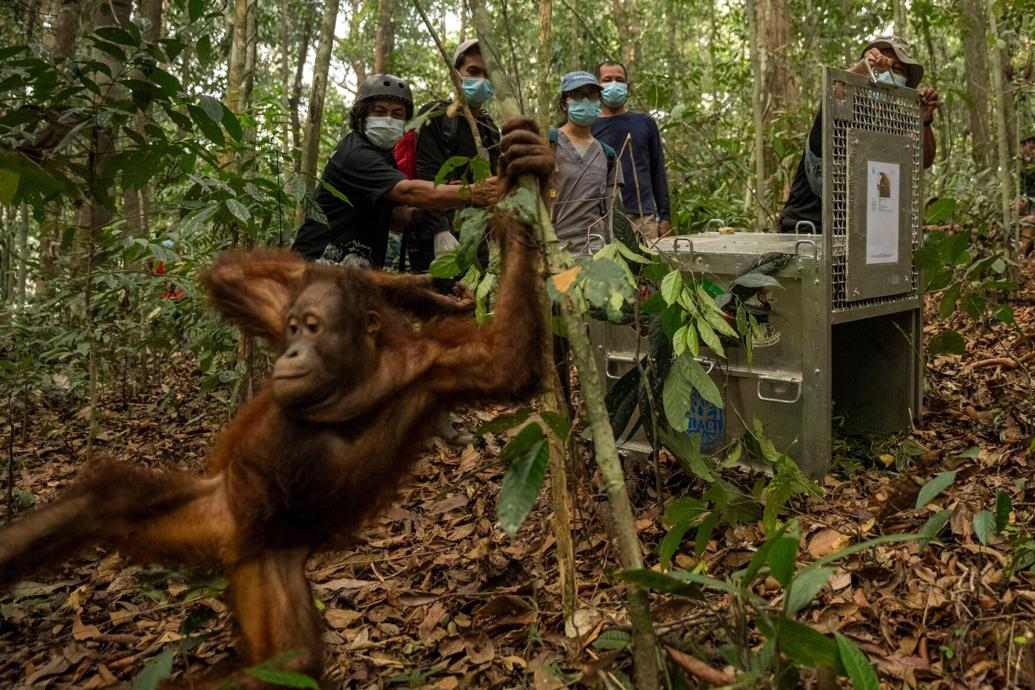
The eight orangutans, including three mothers with infants and two adolescent males, were rescued from areas in Ketapang and North Kayong regencies affected by fires between August and September.
The animals were transferred to Batu Nyambu protected forest on October 8, according to Heribertus Suciadi, a spokesperson for the Indonesian Nature Rehabilitation Initiative Foundation, known as YIARI.
The fires destroyed habitat corridors and reduced access to food, forcing the orangutans into plantations in search of food and shelter. Suciadi said the animals showed signs of malnutrition and dehydration but had no burns, open wounds, broken bones, or other life-threatening injuries.
One rescued female, known as Mama Man, and her infant, Man, had been monitored for months in a small forest patch surrounded by plantations. Expanding fires and heavy smoke left them without a safe route to larger forests before they were evacuated in early September.
Protected Forest Offers Safer Habitat
After their rescue, the orangutans underwent veterinary examinations and observation at a YIARI rehabilitation center before being cleared for release.
The Batu Nyambu site was selected because much of its forest remains intact. It also offers food, water, nesting trees, and connections to neighboring forests.
YIARI CEO Karmele Llano Sanchez said relocation had become a last resort because the animals’ original habitat was no longer safe.
Wildfires Threaten More Wildlife
Indonesia’s forest and land fires have intensified this year amid a prolonged dry season worsened by El Niño. Land clearance using fire and water shortages has also complicated firefighting efforts in Indonesian Borneo and parts of Sumatra.
The impact on wildlife has been severe. In early September, a male orangutan named Sampurna, believed to be around 20 years old, was found struggling to breathe on a palm oil plantation in Ketapang. Indonesia’s Forestry Ministry said he died hours after being rescued.
As of Saturday, the ministry reported that more than 270 wild animals in Indonesian Borneo had been rescued, rehabilitated, or guided to safer habitats. The total included 46 orangutans rescued by YIARI.
FYI
Borneo is one of the world’s most important habitats for orangutans, which depend on forests for food, shelter, and movement between populations. Habitat loss and fragmentation can leave them isolated and increase encounters with people.
El Niño can intensify dry conditions in parts of Southeast Asia, raising the risk of forest and land fires. When fires damage remaining forest corridors, displaced orangutans may struggle to reach safe habitat, making rescue and relocation necessary when their original surroundings become uninhabitable.
1 hour ago