Oil Shipping Costs Surge, Raising Fuel and Food Prices
At a Glance
- The cost of shipping crude oil from the United States to Japan has risen to $81 million for a single supertanker voyage.
- Freight costs now account for more than 40% of the US oil price, compared with an average of 7% in 2025.
- Attacks on ships and longer shipping routes have pushed tanker and insurance costs higher.
- Import-dependent economies and consumers face growing pressure as transport expenses feed into prices across the economy.
Rising oil tanker costs are adding to pressure on global fuel and consumer prices, with shipping a supertanker carrying two million barrels of crude from the United States to Japan now costing about $81 million, compared with an average of $9.1 million last year, as maritime security risks and longer routes tighten vessel availability.
Key Statements and Focus Area
- Higher transport costs: "Higher shipping costs eventually affect prices at grocery stores, convenience stores, and shopping malls as transport expenses spread through supply chains." - Kenneth Medlock, Energy economist
- Pressure on refiners: "Record tanker rates are squeezing Asian refiners’ profits." - The International Energy Agency
- Uncertain outlook: Tanker rates could remain elevated while oil demand exceeds supply but may fall quickly if the crude market becomes less tight, according to tanker analyst Erik Broekhuizen.
The cost of transporting crude oil has surged as conflict-related attacks on vessels, higher insurance premiums, and longer shipping routes disrupt global maritime trade.
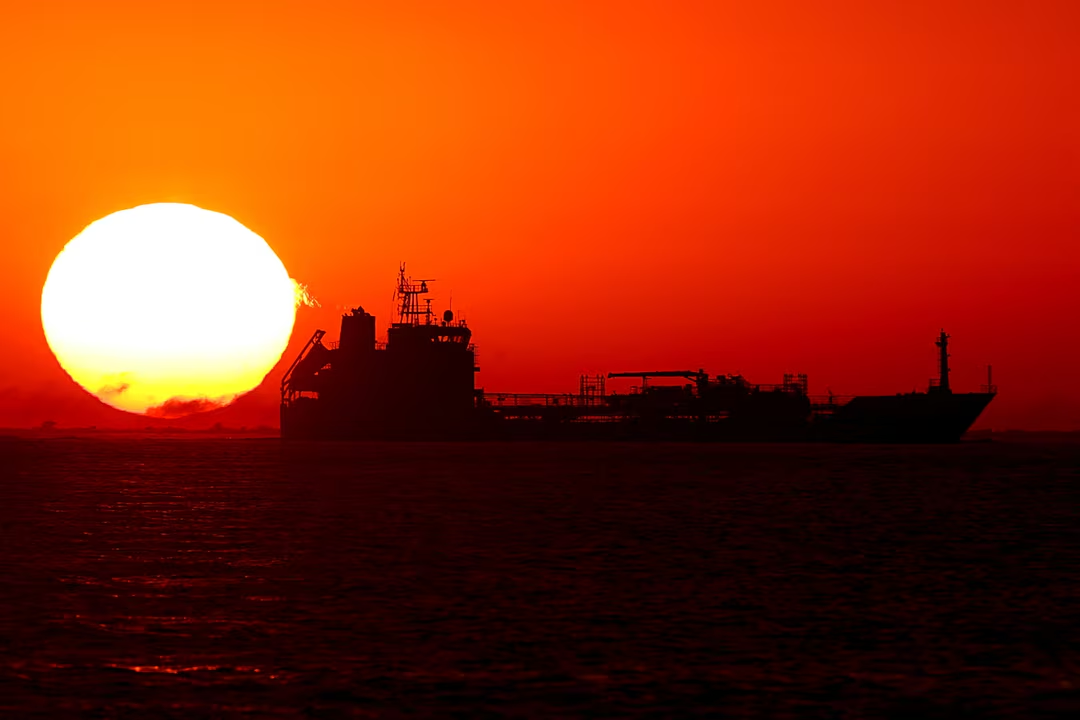
The supertanker Esteem Explorer is scheduled to carry about two million barrels of crude from the United States to Japan in late November at an estimated voyage cost of $81 million. That is equivalent to $40.50 per barrel, roughly nine times the average cost of the same journey last year.
Freight rates accounted for more than 40% of the US oil price, based on a Wednesday benchmark of about $95 per barrel, compared with an average of 7% in 2025, according to LSEG shipping and oil price data.
Shipping Costs Feed Into Consumer Prices
Higher freight costs can increase the price of oil delivered to refineries, which process crude into gasoline, diesel, and jet fuel. Those fuels are essential to road transport, farming, aviation, and the movement of goods.
Kenneth Medlock, a fellow in energy and resource economics at the Baker Institute for Public Policy in Houston, said every $10-per-barrel increase in shipping costs adds about 23 cents per gallon to gasoline. Based on that estimate, the Esteem Explorer’s shipping cost represents at least 80 cents more per gallon of gasoline than last year, according to Reuters calculations.
Medlock warned that the impact can build over time as higher transport expenses move through supply chains. “Everything gets more expensive because that's how we move stuff around,” he said.
Countries that rely heavily on imported oil, including India, the Philippines, and Indonesia, are particularly exposed to rising freight costs, Medlock said.
Conflict and Vessel Shortages Drive Rates Higher
Attacks on ships linked to the US-Iran war and the Russia-Ukraine war have pushed up freight and insurance costs. Rates for transporting oil from the Strait of Hormuz and the Red Sea to Asia reached a record high of around $34 per barrel this week, as shipping companies factored in the risk of attacks.
Some vessels are taking longer routes to reduce exposure to danger, keeping ships at sea for longer and limiting the number available for other cargoes.
Shipping companies moving Saudi oil have also increased ship-to-ship transfers to reduce risks to individual vessels. The strategy has added to demand for tankers and extended the time needed to move oil, further tightening supply.
The shortage of very large crude carriers has also pushed up rates for smaller vessels. Freight rates for Suezmax tankers, which can carry up to one million barrels, have quadrupled since the Iran war began in February on routes from the US Gulf Coast to Asia. Rates for Aframax vessels, which carry up to 750,000 barrels, have also quadrupled on routes from the US Gulf Coast to Europe, according to Signal Ocean.
Tanker Owners Benefit From the Disruption
The surge in shipping rates has sharply increased earnings for tanker owners. Georgios Sakellariou, a freight analyst at Signal Ocean, said some vessels had recently earned as much as $1.3 million per day on round trips from the Persian Gulf through the Strait of Hormuz to Asia, compared with an average of $55,000 per day in 2025.
Michelle Wiese Bockmann, a senior analyst at maritime intelligence firm Windward, said the scale of the increase had been difficult to anticipate. Some companies expect the current conditions to make 2026 an exceptionally profitable year for tanker operators.
However, Erik Broekhuizen, head of tanker research and consulting at ship broker Poten & Partners, said the outlook depended on the balance between oil supply and demand. “As soon as the crude oil market loosens, tanker rates will come off the boil quickly,” he said.
FYI
Crude oil is transported by sea to refineries, where it is processed into fuels and other petroleum products. Tanker freight rates, insurance premiums, route length, and vessel availability all influence the delivered cost of crude.
Higher shipping costs do not translate immediately or uniformly into retail prices. The final impact depends on factors including refinery margins, fuel taxes, distribution expenses, currency movements, and how quickly businesses pass on additional costs.
Dive Deeper: Handpicked Stories for You
Follow Channel8 for continuous updates:
1 hour ago