Commercial Shipments to Gaza Halt Amid Disputed Claims
At a Glance
- Commercial goods have not entered Gaza for two days, according to Israeli authorities.
- Israel blames the halt on merchants protesting Hamas-imposed taxes, a claim Palestinian importers dispute.
- The suspension threatens supplies of fresh food, winter clothing, and other essential goods.
- Aid groups warn that disruptions to commercial markets could push prices higher.
Commercial shipments into Gaza have been suspended for two days, Israeli authorities said Thursday, blaming Palestinian merchants who allegedly objected to taxes imposed by Hamas.
Key Statements and Focus Area
- Israeli authorities: “We were prepared to coordinate the entry of their trucks as usual, but the vendors informed us that they were cancelling the coordination due to Hamas’s taxation mechanism and threats against them." - Lt. Daniel Kantorovich, deputy spokesperson for COGAT, the Israeli military body overseeing civilian and humanitarian affairs in Gaza
- Gaza’s private truckers union: "The restrictions were imposed by Israel rather than the merchants." - Nahed Sheheiber, head of Gaza’s private truckers union
- Humanitarian organizations: Aid groups warn that humanitarian assistance alone cannot meet Gaza’s needs without a functioning commercial market.
Dispute over why shipments stopped
COGAT, the Israeli military body overseeing civilian and humanitarian affairs in Gaza, announced the suspension of commercial shipments on Wednesday. Its deputy spokesperson, Lt. Daniel Kantorovich, said the agency was responding to a decision communicated by Palestinian merchants on Tuesday.
COGAT said no private-sector vendors had attempted to bring goods into Gaza since the merchants notified Israeli authorities.
Following COGAT’s announcement, the union met with Gaza’s Ministry of Economy to discuss the suspension and express concern that Israel was using fees imposed on merchants to justify restricting commercial supplies.
Sheheiber said the ministry had asked merchants to pay 10,000 shekels, approximately $3,226, for each truck entering Gaza. At the meeting, ministry Undersecretary Khaled Al-Raqab said the payment was not a tax but a donation intended to help pay civil servants in the territory, according to Sheheiber.
Concerns over food supplies and prices
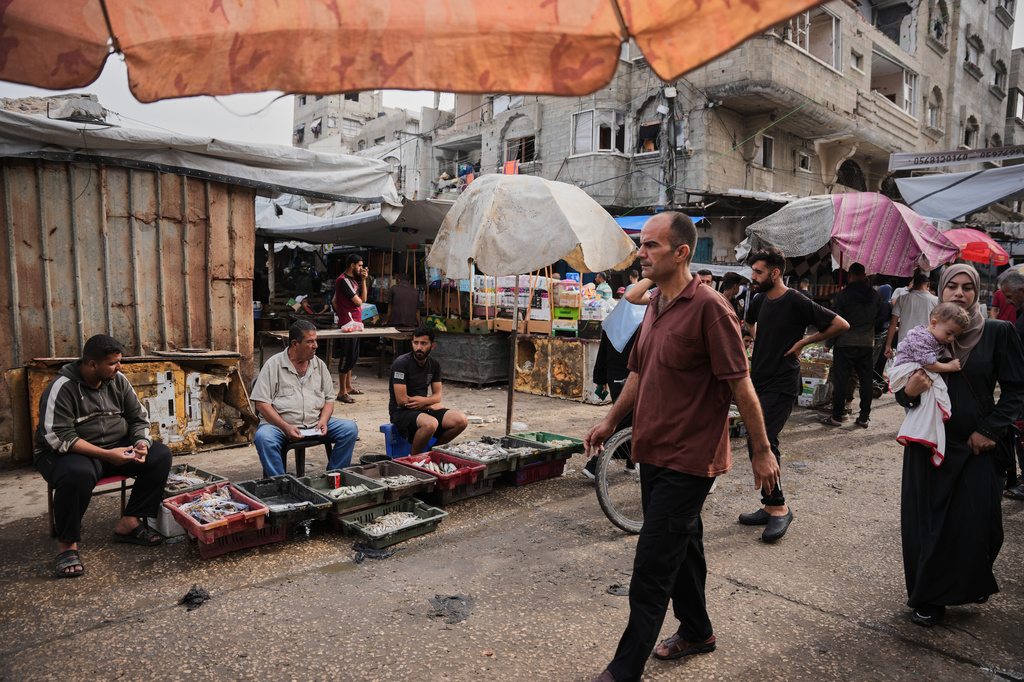
The suspension affects commercial shipments, including fruit and winter clothing. Gaza relies on goods permitted to enter through Israeli-controlled crossings, leaving supplies vulnerable to interruptions.
Aid organizations generally bring in staples such as flour, while private merchants supply more perishable products, including fruit and meat, according to data published earlier this year by COGAT.
Humanitarian workers warn that aid deliveries alone cannot meet the needs of Gaza’s population or maintain affordable prices if commercial markets are disrupted.
“The humanitarian sector on its own cannot meet the needs of all the people,” said Shaina Low, a spokesperson for the Norwegian Refugee Council. “The markets need to be functioning.” It remains unclear whether aid agencies will be permitted to increase deliveries to offset the suspension of commercial goods.
COGAT estimates that Gaza’s population of roughly two million people requires about 250 truckloads of goods daily. That figure is below the minimum of 600 trucks per day stipulated under a ceasefire agreement brokered by the United States a year ago.
Gaza remains vulnerable to food insecurity
A global authority on food insecurity reported earlier this year that conditions in Gaza had improved since famine was declared in August 2025 but remained at crisis levels. Most families were still not receiving enough food, the report said, warning that even small disruptions to humanitarian access could reverse recent progress.
The suspension comes amid continuing humanitarian needs following more than two years of war. The conflict began on October 7, 2023, when Hamas-led militants killed about 1,200 people in Israel and took 251 hostages.
Israel responded with extensive bombardment and a ground invasion. More than 74,000 Palestinians have been killed, according to Gaza’s Health Ministry, including more than 1,400 since the ceasefire took effect. The ministry also reports that five Israeli soldiers have been killed in Gaza during the same period.
The health ministry operates under the Hamas-run government. Its casualty records are regarded as generally reliable by United Nations agencies and independent experts, although its figures do not distinguish between civilians and combatants. The ministry says women and children account for about half of those killed.
FYI
Gaza depends heavily on goods entering through border crossings controlled by Israel. Commercial imports and humanitarian deliveries serve different but complementary roles, with private traders often supplying fresh foods and other products that are difficult to distribute through aid operations alone.
The dispute over the shipment halt highlights competing claims about the restrictions and fees affecting trade into Gaza. The scale and duration of the suspension, and whether additional humanitarian deliveries will be allowed, remain uncertain.
Dive Deeper: Handpicked Stories for You
Follow Channel8 for continuous updates:
Katz Says Israel Will 'Finish Job' in Gaza and Remove Palestinians
3 hours ago