Afghanistan Faces Rising Malnutrition Amid Aid Cuts
At a Glance
- Nearly 19 million Afghans are projected to face acute hunger in the coming months.
- About 5.3 million women and children will need treatment for acute malnutrition over the next year.
- The World Food Program says funding shortages are forcing it to turn away six in seven malnourished women and children seeking help.
- Doctors warn that limited hospital capacity is leaving more children without treatment.
Afghanistan is facing worsening hunger and malnutrition as poverty, disrupted trade, returning refugees, and declining international aid place growing pressure on vulnerable families. The World Food Program estimates that 19 million people will face acute hunger in the coming months, while funding shortages are preventing humanitarian organizations from providing treatment and food assistance to millions in need.
Key Statements and Focus Area
- World Food Program: "5.3 million women and children would need treatment for acute malnutrition over the next year, an increase of 1.3 million compared with 2022." - John Aylieff, the World Food Program’s country director for Afghanistan
- Humanitarian funding: “We are forced to turn away six out of seven acutely malnourished women and children from those health clinics because we simply do not have the food to give them to save their child’s life." - John Aylieff
- Hospital capacity: Doctors at Kabul’s Indira Gandhi Institute of Child Health say limited resources restrict treatment to the most severe cases.
Children bear the brunt of worsening hunger
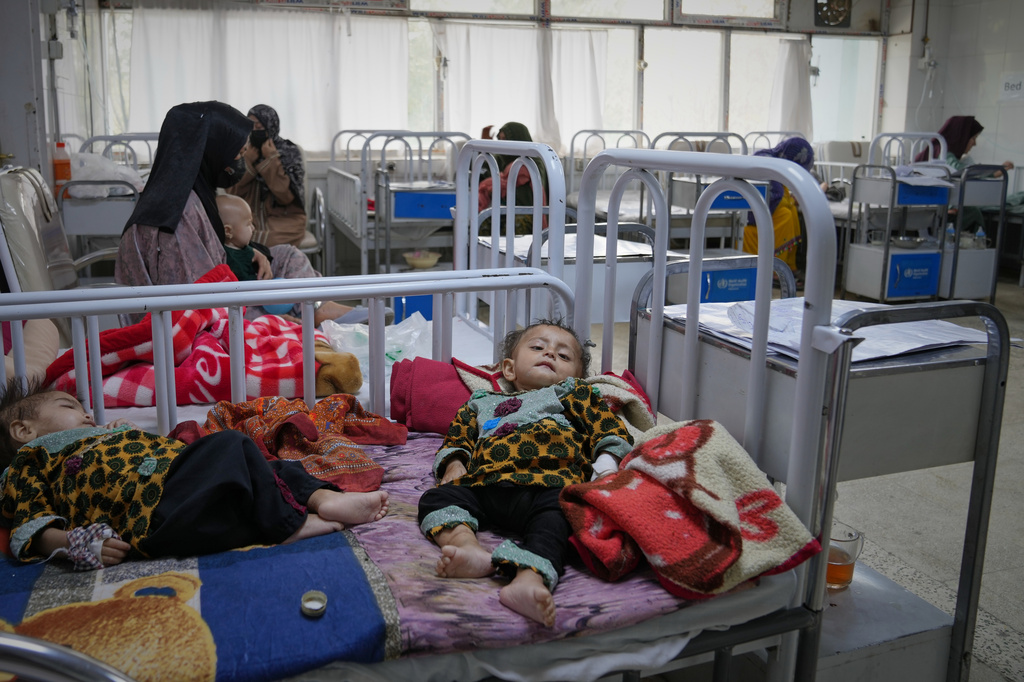
At Kabul’s Indira Gandhi Institute of Child Health, all 20 beds in the malnutrition ward are occupied. The hospital, Afghanistan’s main children’s facility, cannot afford to expand its capacity despite growing demand for treatment.
Three-year-old Kalsoum is among the children receiving care. Her mother, 25-year-old Malika, lost another daughter, five-year-old Khadija, to malnutrition just months earlier. Kalsoum has similar symptoms, including swollen hands, feet, and abdomen, associated with severe malnutrition.
Malika said her husband earns between $3 and $4.60 on days when he finds work, but the income is insufficient to feed their five children. The crisis extends beyond Kabul. At the hospital, another mother, Zarmina, is caring for her two-year-old daughter, Fatma, who weighs just 4.8 kilograms, around half the weight considered healthy for her age.
Fatma was referred to Kabul after being treated at a hospital in Logar province alongside three of her siblings, who were also malnourished. Her family had to borrow money to pay for the journey. Twelve days after admission, she was still struggling to gain weight, while Zarmina worried about feeding her other children at home.
Millions face acute hunger
John Aylieff, the World Food Program’s country director for Afghanistan, said 19 million people, nearly 40% of the population, would face acute hunger in the coming months.
The latest Integrated Food Security Phase Classification report also identifies children as particularly vulnerable because their developing bodies require adequate nutrition. Acute malnutrition can become fatal without timely treatment.
Multiple crises deepen food insecurity
Afghanistan’s hunger crisis is being driven by overlapping economic and humanitarian pressures.
The legacy of decades of conflict has been compounded by the yearlong closure of border crossings with Pakistan amid tensions between the two countries, disrupting a major trade route. More than five million Afghan refugees have also been forcibly returned from Iran and Pakistan since 2023, increasing pressure on already limited resources.
Droughts, floods, and earthquakes have added to the strain. Meanwhile, rising prices have made nutritious food increasingly unaffordable for poor households.
Aylieff said prices for basic food staples had risen by between 10% and 30%, pricing many low-income families out of the market. The country’s economic difficulties intensified after the Taliban returned to power in 2021, when direct foreign aid was halted almost overnight, according to the report.
Aid cuts leave treatment gaps
The World Food Program, the largest provider of food assistance in Afghanistan, says its available funding has fallen to 12% of its 2022 level.
Aylieff said the shortages have forced the agency to turn away six out of every seven acutely malnourished women and children arriving at health clinics because it lacks the food needed to support their treatment.
At Kabul’s Indira Gandhi Institute of Child Health, Dr. Mohammad Arif Hassanzai, head of the internal medicine department, said the ward’s 20 beds were reserved for the most severe cases, leaving many patients with less severe malnutrition unable to be admitted.
He said additional funding could allow the hospital to treat 60 to 100 patients rather than its current maximum of 20. Hassanzai also questioned the impact of aid reductions on patients, arguing that healthcare should remain separate from political disputes. Aylieff said the funding shortages were limiting humanitarian organizations’ ability to respond to the scale of need, leaving more families without access to essential food and treatment.
FYI
The Integrated Food Security Phase Classification is an international system used by humanitarian organizations and governments to assess the severity of food insecurity and malnutrition. Its assessments help identify populations requiring urgent food assistance and nutritional support.
Acute malnutrition occurs when a person’s nutritional intake is insufficient to meet immediate needs or when illness prevents the body from absorbing nutrients. Severe cases, particularly among young children, can become life-threatening without prompt medical care and adequate nutrition.
Dive Deeper: Handpicked Stories for You
Follow Channel8 for continuous updates:
2 hours ago