Kurdistan’s Outdated Transit System Overwhelmed by Fuel Crisis
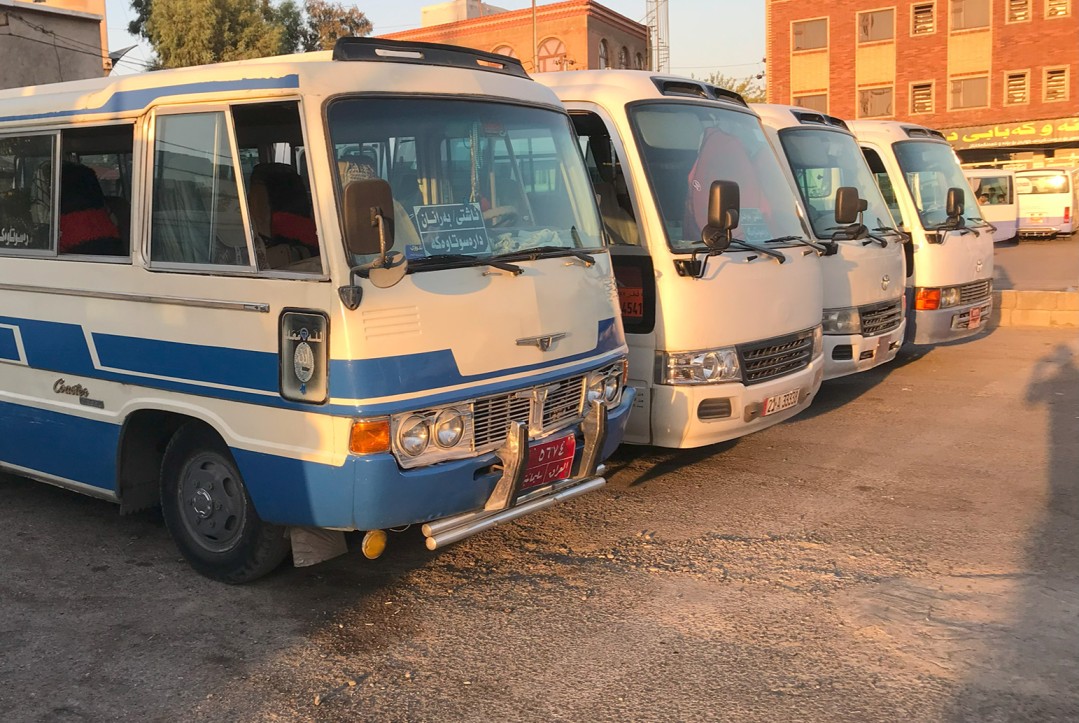
At a Glance
- Fuel prices forced a massive shift, pushing 1.5 million citizens onto public transit.
- The transit network lags behind global standards with obsolete, cash-only systems.
- Intra-city bus fares cost 500–1,000 IQD, while inter-city commutes reach 10,000 IQD.
- The government provided subsidized fuel at 750 Dinars to stop fare hikes.
Public transportation in the Kurdistan Region continues to lag significantly behind global standards, burdening citizens with higher costs, inadequate service provisions, and obsolete payment methods that cause widespread delays. However, recent fuel crises created a major shift in the way citizens commute, with nearly 1.5 million people turning to buses and taxis.
Key Statements and Focus Area
- While local neighborhood and extended intra-city transit fares vary depending on route length, commuting between regional governorates remains significantly more expensive for passengers.
- Soaring fuel prices have forced approximately one-fourth of the Kurdistan Region's population to shift toward public transit.
- Experts suggest that to resolve these structural deficiencies in public transportation system , the government must allocate dedicated lanes for buses and implement an electronic ticketing system alongside smart mobile applications.
Intra-city bus fares across major urban centers in the Kurdistan Region range from 500 to 1,000 Iraqi Dinars per passenger, with local neighborhood lines costing between 500 and 750 Dinars while longer routes reach the maximum tariff.
Meanwhile, inter-city travel between regional governorates remains significantly higher, with a single commuter seat on regional coasters between Slemani and Erbil averaging roughly 10,000 Dinars.
While single bus fares in lower-cost nations average $0.50 (750 IQD) compared to $3 to $4 in Europe and the United States, monthly transit passes ranging from $40 to $100 globally remain entirely unavailable in the Kurdistan Region.
Bus fares in Asian and African countries are only 50 cents, which is equivalent to 750 Dinars.
Rising Costs and Financial Burdens
Approximately one-fourth of the Kurdistan Region's population now relies on buses and taxis for their daily commute, as soaring fuel prices force even private car owners to shift toward public transit lines.
Region-wide, transportation unions have registered over 5,000 buses and nearly 100,000 taxis to meet this demand.
Urban transit patterns vary significantly by province; in Slemani, 400,000 residents utilize public buses daily, whereas 80% of Duhok's population relies on private vehicles.
Financially, local bus commuters spend between 500,000 and 800,000 Iraqi Dinars annually, while taxi passengers spend up to 2 million Dinars.
This economic burden has driven roaming taxi fares up by 1,000 Dinars in most sectors, prompting the government to intervene by supplying subsidized fuel at 750 Dinars per liter through designated stations to mitigate further transit hikes.
FYI
Public transportation in the Kurdistan also remains severely crippled by unpredictable schedules and a complete lack of 24-hour operations.
In contrast to developed nations that allocate dedicated bus lanes to guarantee timely commutes, regional transit lines offer no specialized infrastructure, exacerbating widespread travel delays for local citizens.
Furthermore, unlike many countries that heavily subsidize or offer free public transit to ease traffic congestion and environmental impact, the Region relies on an obsolete, hand-to-hand cash payment system that frequently fuels disputes between drivers and passengers.
Amid these issues, and to prevent further fare hikes, the Kurdistan Regional Government provides subsidized gasoline at 750 Dinars per liter for public transport through designated stations—including Peshawa, Kaziwa, and Tasluja—with buses receiving 100 liters of fuel twice a week.
Despite surging demand, the Ministry of Transport currently has no new infrastructure projects—such as subways, trams, or electric buses—on its agenda to alleviate financial burdens.
With the population of the Kurdistan reaching 6,519,129, the ongoing fuel crisis has driven public bus lines in Erbil and Slemani to transport more than one million passengers annually.
Dive Deeper: Handpicked Stories for You
Follow Channel8 for continuous updates:
Channel8 Exclusive: Slemani Highway Expansion Projects Advance Across Governorate
Slemani Begins Relocation of Tanjaro Fuel Facilities to Address Environmental Concerns
Solar Power Generation Surpasses 100 Megawatts in Slemani
Aviation Operations Proceed At Jalal Talabani International Airport Amid Regional Distortions
11/08/2026