Mawlana Khalid Naqshbandi Khanaqa Undergoes Major Restoration
At a Glance
- The Anzo Foundation is rebuilding the Mawlana Khalid Naqshbandi Khanaqa Mosque.
- The project aims to expand the site while preserving its historical architectural identity.
- Engineers are following the original blueprints and precise architectural measurements.
- Religious scholars describe the restoration as an effort to preserve Slemani’s.
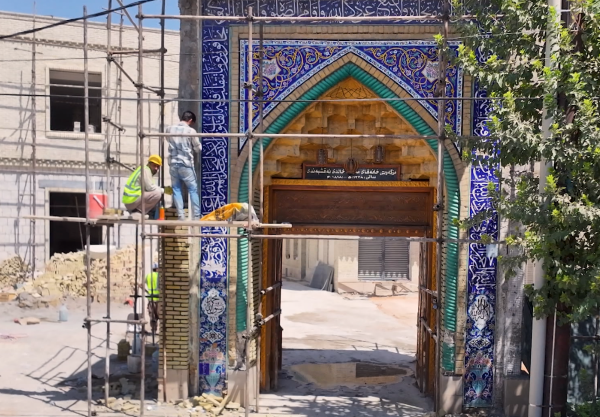
A historic Khanaqa in Slemani is undergoing a major rebuilding and expansion project designed to preserve its longstanding architectural and religious identity.
Key Statements and Focus Area
- Historical Preservation: The work is intended to ensure that the rebuilt center maintains the appearance and architectural features of its historic design. — Wael Imad, Supervising Engineer
- Architectural Accuracy: Every corner has been drawn according to precise architectural measurements and the historical blueprint. — Wael Imad.
Information obtained by Channel8 indicates that the Mawlana Khalid Naqshbandi Khanaqa (spiritual lodge) in Slemani is being rebuilt and expanded by the Anzo Foundation.
The Khanaqa dates back more than 200 years and is associated with the Naqshbandi Sufi order. The reconstruction is being carried out while following the site’s historical architectural plans, with the new structure designed to retain the character of the original center.
The engineering team is using detailed measurements and the historical blueprint to guide the construction. The project is therefore focused not only on increasing the available space but also on maintaining the identity of the Khanaqa as the site undergoes expansion.
Religious scholars have welcomed the project as an effort to preserve an important part of Slemani’s religious and cultural history. Among them, Omar Hussein said the Khanaqa holds particular significance because Mawlana Khalid is associated with raising hundreds of deputies, or Khalifas, who were later sent to different countries.
Religious leaders view the reconstruction as a way to revive the mosque while maintaining its historical character alongside modern architectural requirements. They say this approach preserves the site’s connection to its past while reaffirming its wider historical significance.
FYI
The Mawlana Khalid Khanaqa holds immense historical and spiritual weight, serving as a pillar of the Islamic and cultural heritage of Slemani and the wider Middle East. Founded over two centuries ago, this site was gifted to the prominent Kurdish Islamic scholar and mystic Mawlana Khalid Naqshbandi (1779–1827) by the ruler of the Baban Emirate, Mahmud Pasha.
Mawlana Khalid became the foundational figure of the Khalidiyya branch of the Naqshbandi Sufi order. His teachings transformed Slemani into a major center of spiritual learning, attracting disciples from across the Ottoman Empire, Persia, and India. He trained hundreds of Khalifas who traveled across Asia and Europe, making this specific Khanaqa the global spiritual capital of the Naqshbandi order.
Beyond its religious significance, the Khanaqa is deeply tied to the identity and urban history of Slemani. Historically, Sufi khanaqas in the region operated not just as places of worship but as community centers, schools, and sanctuaries that preserved the Kurdish language, literature, and social cohesion during times of political transition.
Over the decades, urban expansion and structural aging threatened the original layout of the site. The current comprehensive revitalization project by the Anzo Foundation aims to address these physical challenges by applying modern engineering to expand the capacity of the mosque while carefully restoring and preserving its 200-year-old architectural style and historical identity.
Dive Deeper: Handpicked Stories for You
Follow Channel8 for continuous updates:
27/08/2026