U.S. Strikes Larak Island; Tehran Retaliates in Jordan and UAE
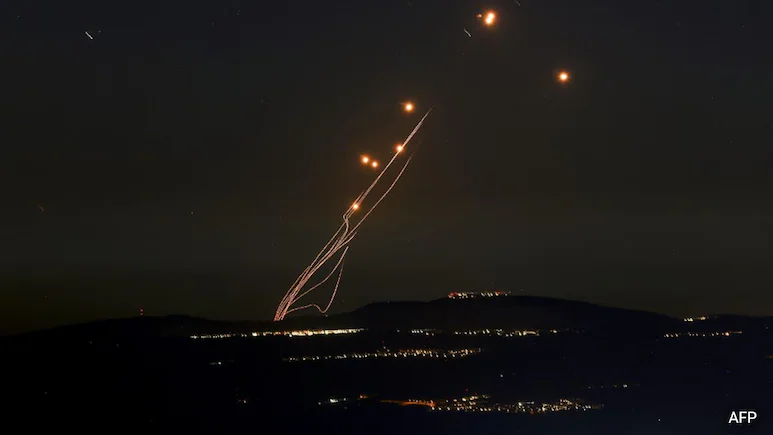
At a Glance
- The U.S. military launched airstrikes on Larak Island.
- CENTCOM stated it eliminated an imminent Iranian minelaying threat.
- Iran launched retaliatory missile and drone attacks.
- Jordan announced its air defenses downed eight missiles at dawn.
The United States carried out airstrikes on Larak Island in the Strait of Hormuz on Sunday, following which Iran targeted U.S. military bases in Jordan and the United Arab Emirates with missiles and drones.
Key Statement and Focus Area
- CENTCOM stated that "U.S. forces took limited, precise action against IRGC minelaying forces posing an imminent threat in the Strait of Hormuz."
- Iran’s Islamic Revolutionary Guard Corps (IRGC) said it launched multiple strikes in retaliation for a U.S. attack on Larak Island in the Strait of Hormuz.
U.S. Central Command said in a statement on Monday that Tehran posed a threat and the U.S. military eliminated it to protect civilian mariners, commercial shipping, and the free flow of global commerce.
Meanwhile, Iranian state media reported that IRGC ballistic missiles targeted maintenance facilities and fighter jet positions at the U.S.-operated King Hussein and al-Azraq airbases in Jordan, claiming the strikes inflicted heavy damage.
Tehran further claimed to have targeted U.S. military personnel at an airbase in the United Arab Emirates and downed a U.S. drone over the Strait of Hormuz.
The Jordanian military announced that its air defense systems intercepted eight missiles breaching the kingdom's airspace at dawn.
Regarding the retaliatory strikes, Iranian President Masoud Pezeshkian stressed that the country is "not seeking war, but we will deliver a decisive response to the aggressors."
FYI
The overnight military clashes are part of a wider regional conflict that erupted on February 28, when the United States and Israel launched large-scale, coordinated airstrikes against military and nuclear infrastructure inside Iran.
Following those initial strikes, the confrontation evolved into a decentralized regional war, with Iran launching missile and drone barrages against U.S. military bases, Israel, and U.S.-aligned Arab states.
Although a Pakistan-mediated Memorandum of Understanding (MoU) was signed in June 2026 to pause large-scale hostilities, a durable peace has remained elusive, and both sides have repeatedly traded targeted strikes over alleged violations of the agreement.
The primary flashpoint of the conflict remains the Strait of Hormuz, a strategic 29-nautical-mile international shipping lane that serves as the sole maritime exit for the Persian Gulf.
To bypass Iranian authority in the waterway, the U.S. military established a protected, heavily guarded naval route running along the southern coast of the strait near the shores of Oman and the United Arab Emirates. U.S. forces have consistently engaged Iranian anti-ship missile sites and minelaying operations attempting to disrupt this channel.
Meanwhile, the United States intensified pressure by launching "Operation Economic Outcast," expanding secondary sanctions across multiple Iranian economic sectors.
Dive Deeper: Handpicked Stories for You
Follow Channel8 for continuous updates:
Tehran Says U.S. Officials and Media Are Manipulating Global Oil Prices
Trump Announces "Biggest Oil Deal in World History" with Venezuela
US Treasury to Cut Off Banque Misr UAE Over Iran Ties
US Signals Pivot From Direct Military Strikes to Economic Pressure on Iran
1 hour ago