Sweden Holds Elections With Nearly 200 Kurdish Candidates
At a Glance
- Sweden is holding parliamentary, regional, and municipal elections today.
- More than 165 political parties are competing for 349 parliamentary seats.
- Polls indicate the Social Democrats could emerge as the largest party.
- Nearly 200 Kurdish candidates are running at national, regional, and municipal levels.
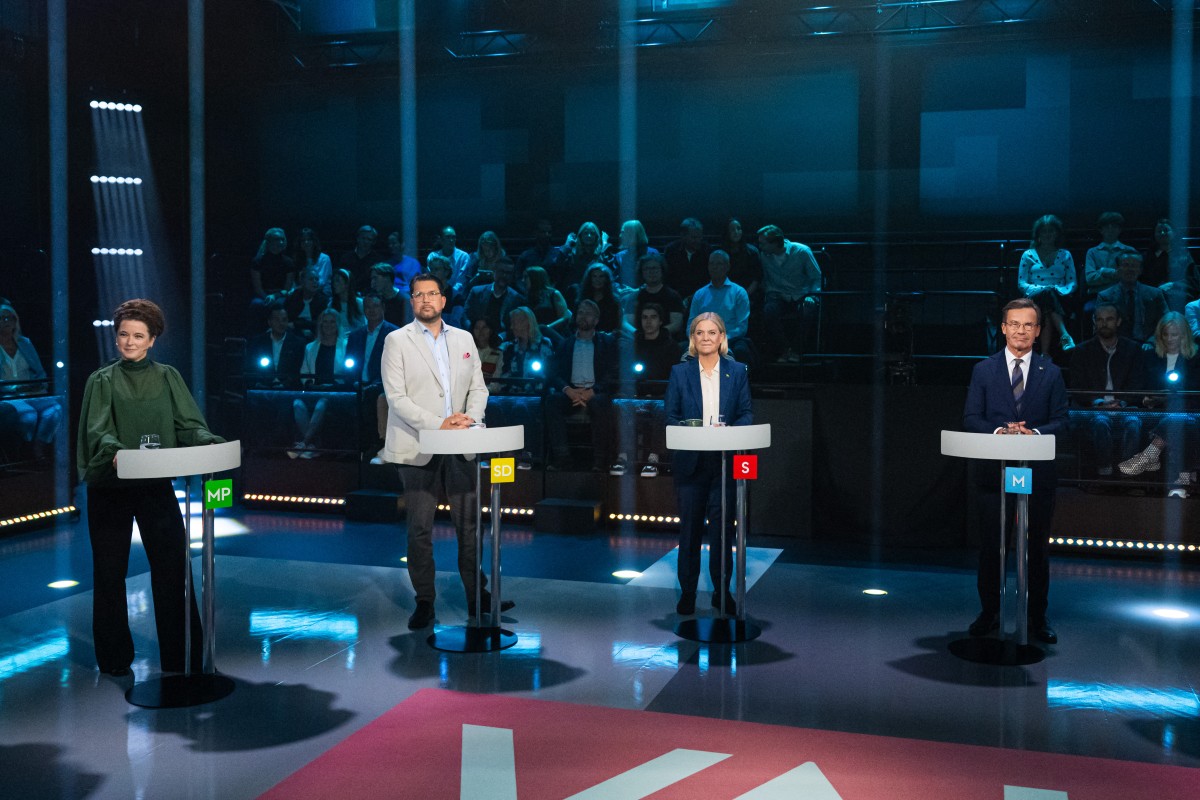
Sweden is holding general elections today as voters choose representatives for parliament, regional councils, and municipalities. Nearly 200 Kurdish candidates are also taking part, including around 50 competing for seats in parliament.
Key Statements and Focus Area
- Election Competition: More than 165 political parties are competing to win 349 parliamentary seats.
- Social Democrats: Polls indicate that the Social Democratic Party, led by Magdalena Andersson, is expected to emerge as the largest party, with projections placing its support between 29% and 31%.
- Kurdish Participation: Nearly 200 Kurdish candidates are competing at the parliamentary, regional, and municipal levels.
Swedish voters are casting ballots in three elections held simultaneously for the national parliament, regional councils, and municipalities. The parliamentary election will determine the members of the Riksdag, with political parties competing to form the country’s next government.
The right-wing coalition led by Prime Minister Ulf Kristersson is projected to receive between 45% and 46% collectively, according to polling. The Liberal Party is also facing uncertainty over its parliamentary future, with polling placing it near the 4% threshold required to enter parliament.
Kurdish participation is also prominent in this year’s elections. According to a Channel8 investigation, around 50 Kurdish candidates are competing for parliamentary seats on the lists of various political parties.
Kurdish candidates are running mainly with the Social Democrats and the Left Party, while others are contesting seats through centrist and moderate parties. The Kurdish diaspora is considered one of Sweden’s active immigrant communities, with candidates seeking representation at different levels of government.
FYI
Sweden became the primary European hub for the Kurdish diaspora starting in the 1970s and 1980s, as thousands of Kurds fled political persecution, forced assimilation, and armed conflicts across Turkey, Iraq, Iran, and Syria.
Unlike other European nations that accepted Kurds primarily as low-skilled guest workers, Sweden’s robust asylum framework welcomed political dissidents, intellectuals, and writers, allowing them to establish a thriving cultural and linguistic renaissance, including the pioneering development of modern Kurmanji Kurdish literature and media.
Today, the Swedish-Kurdish community is remarkably well-integrated and politically active, leveraging Sweden’s open democratic system to secure influential positions across major political parties, municipal councils, and the national parliament.
Dive Deeper: Handpicked Stories for You
Follow Channel8 for continuous updates:
Kurdish Family of Three Dies in Bulgaria Traffic Accident En Route to Slemani
2 hours ago