World Bank, Iraq Finance Committee Discuss Budget Reform Transition
At a glance
- The Parliamentary Finance Committee hosted the World Bank to transition Iraq to a performance-based budget.
- Both parties explored piloting the new budgeting across selected institutions and provinces.
- World Bank MENA Practice Director reaffirmed the World Bank's commitment to providing technical guidance and specialized financial training.
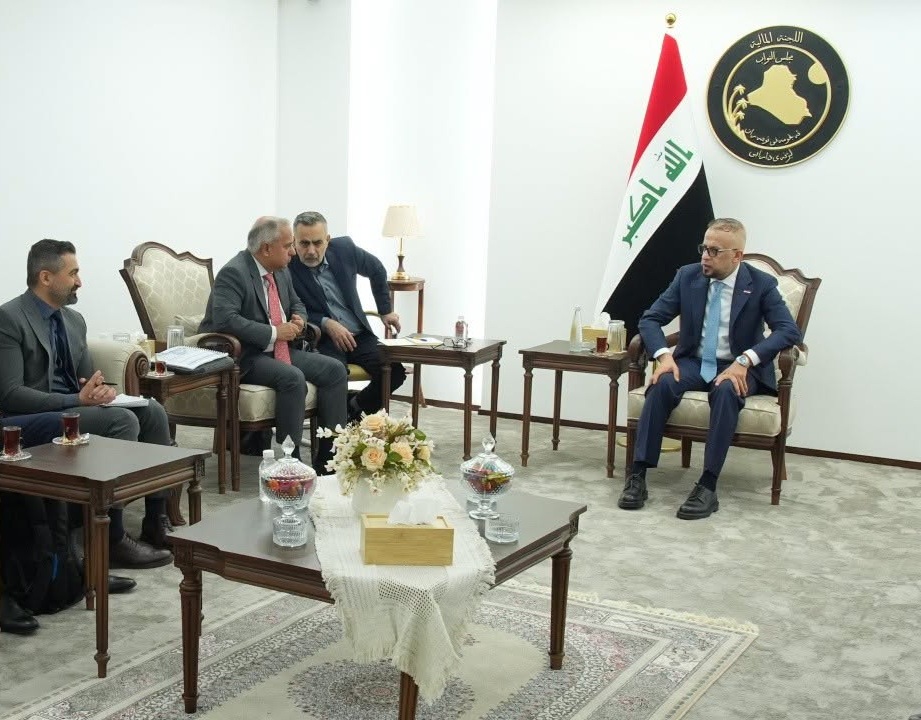
The Parliamentary Finance Committee hosted a World Bank delegation on Monday to discuss expanding non-oil revenues, automating the tax system, and transitioning Iraq to a performance-based budgeting framework.
Key Statements and Focus Area
- The Parliament’s Media Directorate stated that the committee and the World Bank officials “discussed the exact mechanisms required to transition from line-item budgeting to performance-based budgeting.”
- The head of the World Bank delegation confirmed that the Iraqi government possesses a clear vision for executing financial reforms.
- The meeting “focused on reviewing the country's financial status and discussing mechanisms to transition from a line-item budget to a program- and performance-based budget.”
The Parliamentary Finance Committee, chaired by MP Adi Awad and attended by several of its members, hosted a World Bank delegation led by Sandeep Mahajan, Regional Practice Director for Prosperity in the Middle East, North Africa, Afghanistan, and Pakistan region.
The Committee's Chairman welcomed the World Bank delegation, emphasizing the critical need to secure alternative trade routes to bypass the Strait of Hormuz, maximize non-oil revenues, and achieve genuine tax system automation.
The Finance Committee praised the World Bank's ongoing support for both the committee and the wider Iraqi government, and “expressed hope for continued collaboration and the facilitation of financial and economic procedures to help shape the country's fiscal policy.”
According to the parliament's statement, Director Mahajan and the head of the World Bank delegation said that “the national budget serves as a critical instrument for the government,” highlighting the need to improve the financial situation and replenish the budget with diversified revenues.
Mahajan emphasized that the Bank remains dedicated to offering the guidance and support needed to develop strong institutions and modern financial frameworks.
“The committee and the World Bank officials discussed the exact mechanisms required to transition from line-item budgeting to performance-based budgeting,” the statement said, adding that they reviewed data auditing practices to optimize performance, manage spending units, and streamline budget allocations through specialized software and key metrics.
Both parties explored a "phased, partial budget transition" by piloting program-based budgeting in selected areas, while highlighting the "urgent need to increase non-oil revenues" to stabilize the treasury and improve economic outcomes.
The meeting concluded with both sides agreeing to track financial developments and exchange expertise to keep Iraq on a correct economic path, while highlighting the importance of supporting the Iraqi government through specialized training in program- and performance-based budgeting.
FYI
Performance-based budgeting is a strategic fiscal framework that allocates public funds to specific governmental programs based on measurable results and clear performance metrics rather than traditional line-item inputs.
Iraq's current vision for this transition involves a phased, partial rollout piloted across selected governorates and institutions to modernize public spending, streamline data management, and reduce institutional corruption.
This structural budget reform aims to aggressively maximize non-oil revenues and enhance tax automation, thereby reducing the state's total vulnerability to volatile global crude oil fluctuations.
The strategy builds directly on a July 2026 Washington summit where Prime Minister Ali Faleh Al-Zaidi and World Bank President Ajay Banga agreed on comprehensive technical support to modernize Iraq's banking sector.
Bilateral coordination advanced further in September 2026 when Finance Minister Faleh al-Sari met with World Bank directors in Baghdad to transition digital initiatives and UN-backed customs networks into live operational phases.
Dive Deeper: Handpicked Stories for You
Follow Channel8 for continuous updates:
Kurdistan Delegation Postpones Baghdad Talks Amid Fiscal Disputes
Iraq Forwards 2027 Budget Draft To Ministerial Council For Economy
Iraqi Finance Minister Partners with World Bank to Accelerate Automation, Economic Reforms
PM al-Zaidi, World Bank Chief Discuss Economic Reform and Banking Sector Development
2 hours ago