Atrushi Warns Secret Iraqi Budget Threats Kurdistan Financial Security
At a Glance
- Deputy Speaker Farhad Atrushi warned of a political plan to destabilize the Kurdistan Region through systematic financial cuts.
- He revealed Iraq's 217 trillion dinar budget draft was created in strict secrecy and would cause severe financial harm if passed.
- Atrushi said Erbil demands its 29 trillion dinar allocation, rejecting an imposed 12 trillion debt.
- He emphasized that the KDP and the PUK must remain united during this critical legislative period.
- The lawmaker noted that budget talks are sidelined as Baghdad prioritizes adding three ministries and 16 cabinet personnel.
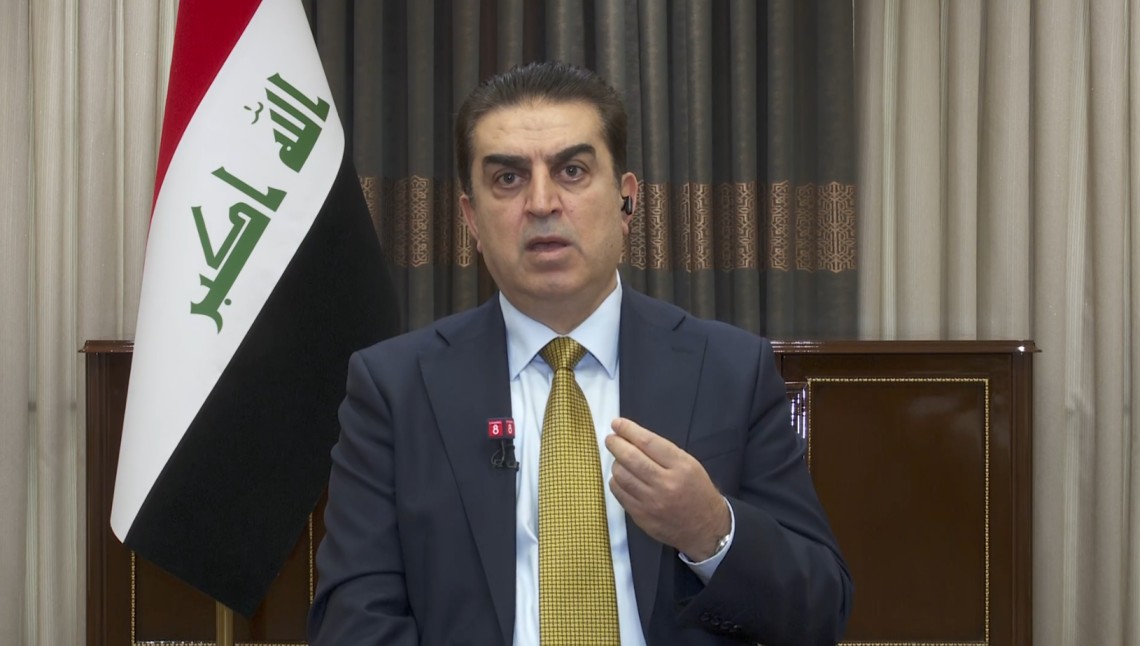
Farhad Atrushi, the Second Deputy Speaker of the Iraqi Parliament, warned that passing the current budget draft would cause severe financial harm, asserting that Erbil is simply demanding its legitimate 29 trillion dinar allocation. He also revealed that Iraq’s draft fiscal blueprint totals 217 trillion dinars, with 70 trillion dinars earmarked for sovereign allocations.
Key Statements and Focus Area
- Lawmaker Farhad Atrushi told Channel8 that the Ministry of Finance's draft budget was created in “strict secrecy.”
- Atrushi stressed that “If the budget is approved in its current form, it will be highly detrimental.”
- The speaker said that he had formally requested the decoupling of Kurdistan Region civil servant salaries from political disputes.
- According to Atrushi, a debt of 12 trillion dinars has been imposed on the Kurdistan Regional Government.
In an interview with Channel8 regarding Erbil-Baghdad relations and the upcoming federal budget, Farhad Atrushi, lawmaker from the Kurdistan Democratic Party (KDP), warned of a political plan to “destabilize” the Kurdistan Region.
He noted that what adversaries failed to achieve through military means against the Kurds, they are now attempting to execute through systematic financial cuts.
Atrushi mentioned that the Kurdistan Regional Government delegations met with the Kurdish leadership and political parties regarding the budget during their latest visits.
He emphasized that the Kurdistan Region's two major parties, the KDP and the PUK, must remain truly united and work together beyond political disputes during this critical period.
“As Kurds, we have never demanded anything illegal, nor do we infringe upon the rights of others,” he added.
Atrushi also confirmed that the Prime Minister and Deputy Prime Minister of the KRG are directly engaged in the budget issue.
The lawmaker highlighted that every effort will be made to safeguard the rights of the Kurdistan Region, noting that no official administrative steps have been taken toward civil service employment for the region.
Furthermore, he stated that the draft budget stipulates the Kurdistan Region must export 400,000 barrels of oil per day, while challenging federal public sector figures by asserting that the actual number of individuals receiving monthly government salaries in Iraq is significantly higher than the officially claimed four million.
Atrushi also underlined that the primary issue currently under dispute is the completion of the Iraqi government cabinet, noting that the draft budget is not undergoing heavy discussion.
The lawmaker stated that three additional ministries will be created under the upcoming government expansion, adding that 16 more individuals are scheduled to be added to the ministerial cabinet.
FYI
The federal draft budget has transitioned to the Iraqi Council of Ministers under strict secrecy, following intensive preparatory sessions where the KRG financial team submitted a 15-page data portfolio that Baghdad ultimately rejected in favor of demanding entirely new metrics.
To resolve the remaining bottlenecks, a high-level Kurdish negotiating team led by Omed Sabah, Amanj Rahim, and Abdulhakim Khusro is deploying to Baghdad to contest several vital fiscal portfolios.
A primary point of contention centers on the regional allocation percentage, with Erbil demanding a 14.14% share of the national budget while federal authorities have capped the current draft proposal at 12.70%.
Furthermore, the KRG is fiercely lobbying for the absolute removal of the controversial "Actual Expenditure" clause, which local officials argue has historically been weaponized to block the consistent release of regional funds.
The oil sector remains a central deadlock in the negotiations, as Erbil seeks a realistic production target reflecting its current capacity of 280,000 barrels per day (bpd), whereas Baghdad rigidly mandates a 400,000 bpd export requirement.
This sovereignty dispute extends directly into domestic refining allocations and non-oil revenues, as federal authorities, backed by a State Council legal opinion, declare all automated ASYCUDA customs and tax revenues as sovereign assets that must be fully repatriated to the central treasury.
Financially, the KRG is demanding a 29 trillion IQD block grant to cover essential payroll and investment cycles, an amount federal officials deem excessive against Iraq's broader 217 trillion IQD budget framework and its looming 43 trillion IQD deficit.
On administrative matters, Baghdad has offered only highly conditional promises regarding frozen civil service promotions and new public employment slots, basing any future hiring strictly on population metrics and available fiscal space.
Lawmakers emphasize that the finalization of these figures directly dictates the livelihoods of over six million citizens in the Kurdistan Region, warning that a technical delegation alone cannot bridge the gap.
Because the budget standoff remains twice as political as it is financial, members of parliament assert that the KRG Prime Minister and his deputy must personally execute extended, direct negotiations in Baghdad to secure a definitive political compromise.
Dive Deeper: Handpicked Stories for You
Follow Channel8 for continuous updates:
KRG Delegation Returns to Baghdad This Week for Budget Talks
Kurdistan Delegation Postpones Baghdad Talks Amid Fiscal Disputes
Kurdistan Region Fights for 14.14% Share as 2027 Budget Pegs Allocation at 12.70%
1 hour ago