Seychelles Survey Estimates Nearly 183,000 Giant Tortoises
At a Glance
- A new survey estimates nearly 183,000 adult and sub-adult giant tortoises live on Seychelles’ Aldabra Atoll.
- Researchers say the population remained relatively stable between 2018 and 2022.
- Conservation efforts have helped the species recover from severe historical exploitation.
- Climate change and invasive animals remain threats to its long-term survival.
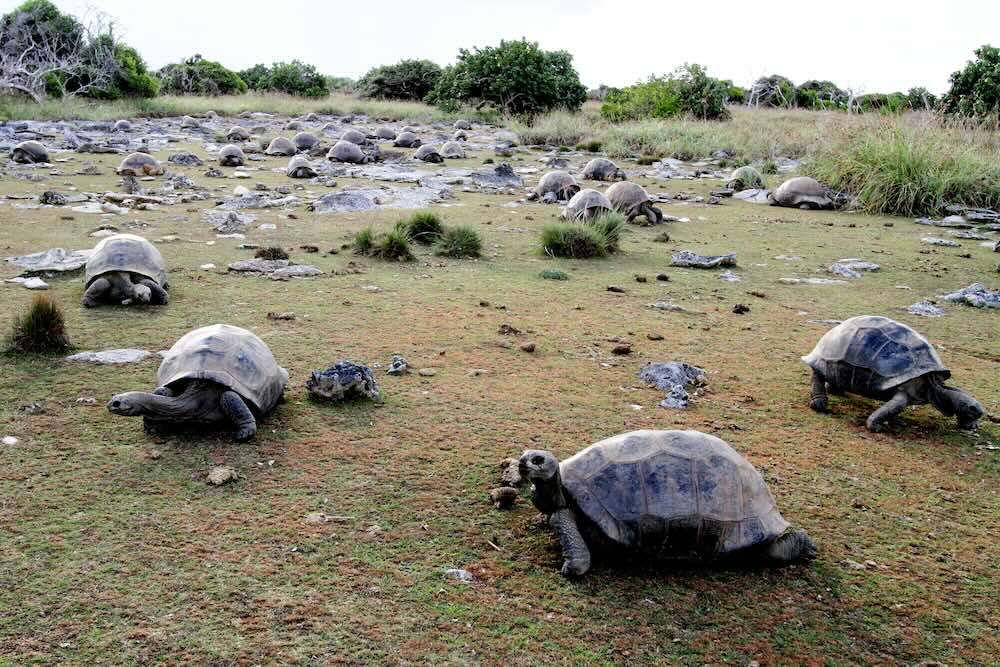
A major survey has documented the scale of the giant tortoise population on Aldabra Atoll in the Seychelles, providing researchers with a new baseline for future conservation efforts.
Key Statements and Focus Area
- Conservation Achievement: “More than 180,000 giant tortoises roaming freely on our atoll is proof of what long-term commitment to conservation can achieve.” — Dr. Frauke Fleischer-Dogley, Seychelles Islands Foundation CEO
- Population Monitoring: “By modeling what we didn’t see, as well as what we did, we’ve produced the most reliable baseline yet for this iconic Seychelles species.” — Dr. Nancy Bunbury, study co-author
- Focus Area: Researchers say continued monitoring is essential as drought, climate change, and invasive species threaten the tortoises’ habitat.
Survey Updates Decades-Old Estimate
Researchers from the Seychelles Islands Foundation and the University of Exeter analyzed five years of tortoise counts collected between 2018 and 2022. The study, published in Ecology and Evolution, estimated nearly 183,000 adult and sub-adult tortoises on Aldabra Atoll.
The findings update a widely cited estimate of 100,000 tortoises from the late 1990s. Researchers said counting the animals is difficult in parts of the atoll because of its dense vegetation, so their analysis modeled both observed and unobserved tortoises.
Aldabra is home to the world’s largest free-roaming population of giant tortoises. The other major wild population lives in the Galápagos Islands.
From Historical Exploitation to Recovery
During the 19th century, exploitation reduced Aldabra’s giant tortoise population to fewer than 1,000 animals, according to the report.
Protection measures later helped secure the population’s future. Aldabra became a strict nature reserve in 1981 and was designated a UNESCO World Heritage Site in 1982.
The latest survey indicates that the population has remained relatively stable during the five-year study period, giving conservation managers a more reliable benchmark for assessing future changes.
Climate and Invasive Species Pose Risks
Researchers warned that longer and more frequent droughts linked to changing climate conditions could reduce the shade and food available to tortoises.
Invasive animals, including feral cats and black rats, also threaten the population by preying on tortoise eggs and hatchlings. The study’s authors said removing these invasive mammals could improve the species’ ability to withstand future environmental pressures.
Researchers hope the new population estimate will help conservation managers identify changes early and adapt protection measures as conditions on the atoll evolve.
FYI
Aldabra Atoll lies in the Indian Ocean and forms part of the Seychelles. Its isolated ecosystem supports distinctive wildlife, including giant tortoises that play an important role in seed dispersal and vegetation dynamics.
The Seychelles Islands Foundation manages Aldabra and other protected areas. Long-term monitoring helps conservationists measure population trends, assess threats, and guide decisions on habitat protection and invasive species management.
Dive Deeper: Handpicked Stories for You
Follow Channel8 for continuous updates:
1 hour ago