Qubad Talabani Calls for Structural Reform and Constitutional Compliance
At a Glance
- Qubadl Talabani said recent PUK-KDP cabinet talks were constructive, prioritizing mutual understanding over meeting protocols.
- Iraq's issues stem from constitutional non-compliance, requiring core solutions “instead of patching them up.”
- The current governance system is inadequate and requires structural overhaul to eliminate bureaucracy.
- Power must be decentralized from the Council of Ministers to eliminate local decision delays.
Caretaker Kurdistan Regional Government Deputy Prime Minister Qubad Talabani stated that the Kurdistan Region's current governance system requires structural reform, adding that all political issues in Iraq fundamentally stem from a failure to adhere to the constitution.
Key Statements and Focus Areas
- Qubad Talabani told the MERI Forum that while the modern era requires a fresh political generation, it remains essential to draw lessons from the historical experiences of past politicians.
- Talabani said the recent meeting between the Patriotic Union of Kurdistan (PUK) and the Kurdistan Democratic Party (KDP) was constructive regarding the formation of a new cabinet.
- He emphasized the necessity of establishing a governance framework that operates entirely free from administrative bureaucracy.
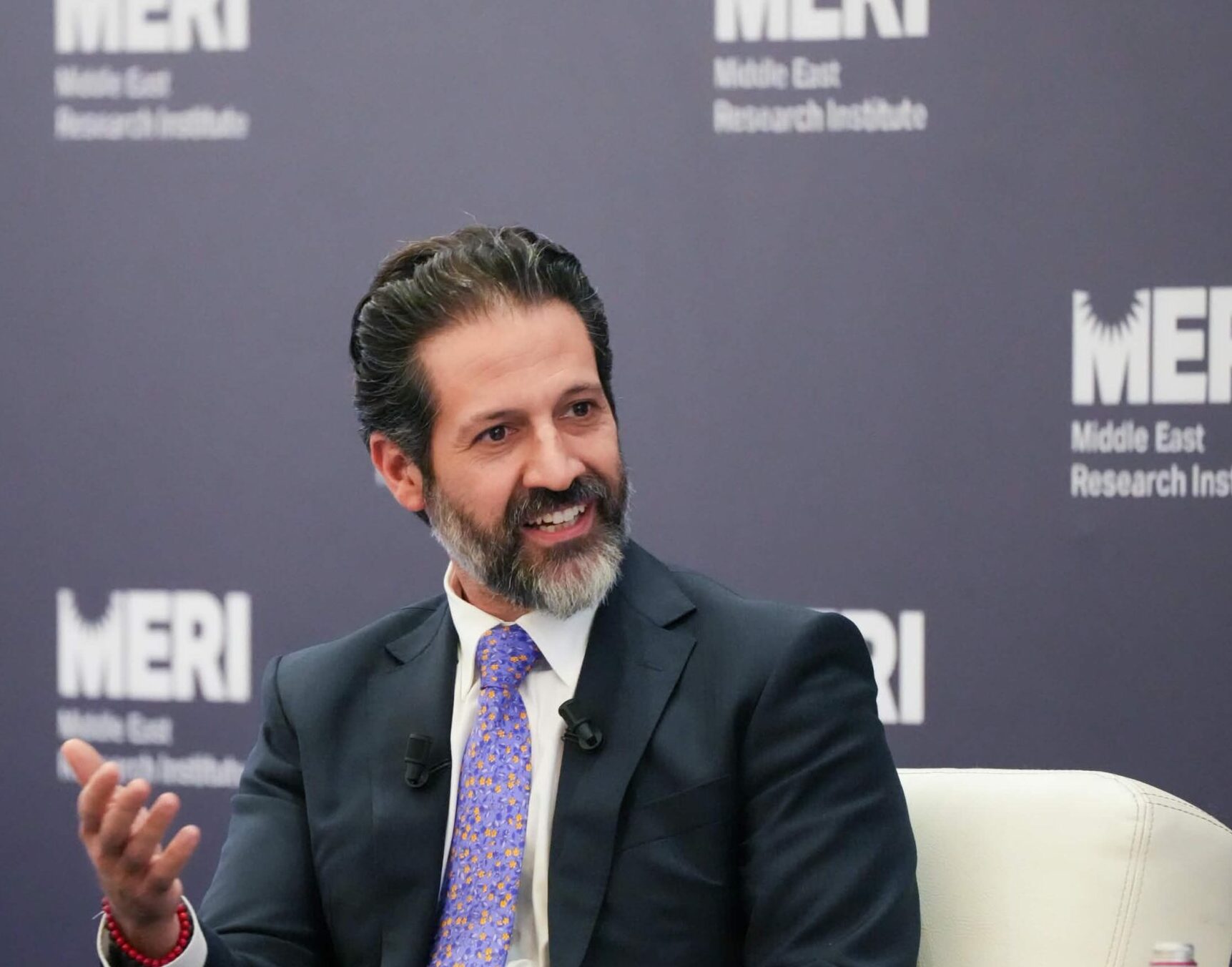
Addressing a panel at MERI Forum titled “Kurdistan at a Turning Point: Security, Federalism, and a New Political Compact” in Erbil today, Deputy Prime Minister Qubad Talabani reflected on the evolving dynamics between older and newer generations in Kurdish politics, noting that his own perspective and approach to governance have transformed significantly over the past decade.
“The current situation in Kurdistan requires looking at the bigger picture. We need to work within the scope of our own authority and not worry ourselves with things that are beyond our control,” he added.
Regarding recent government formation talks, Talabani confirmed that an upcoming meeting between the PUK and the KDP will take place, emphasizing that establishing a mutual understanding holds far greater significance than the session's title or protocol.
Commenting on his recent discussions with Prime Minister Masrour Barzani concerning the Region's system of governance, Talabani reaffirmed commitment to existing political agreements, stating that their policy is rooted in integrity.
He stated that in the Kurdistan Region, and in the absence of a constitution, the situation must be carefully studied.
Talabani emphasized that the current system of governance is inadequate for today and its structure must be altered, noting that certain ministries are no longer necessary for the current period.
He said authority must be decentralized from the Council of Ministers all the way down to all regions.
He clarified that by the time an order or a decision is issued by the Council of Ministers, it passes through numerous centers before reaching local authorities, which has created significant complications.
Furthermore, he stressed that Kurdish leaders have not yet settled among themselves what kind of political authority or philosophy they hold—whether it is a free market or another system—adding that up until now, they do not have a clear definition.
He added that forming a government “is not just about distributing political posts,” but also about giving due attention to these fundamental structural questions.
Turning to relations and disputes between Erbil and Baghdad, the Deputy Prime Minister stated, "There is not a single issue in Iraq whose root cause cannot be traced back to the constitution."
He highlighted that if leaders want to resolve the issues between Erbil and Baghdad, ”instead of patching them up or finding temporary fixes,” they must get to the core of the matter, which is the constitution.
He underlined that the Kurdistan Region becomes stronger when Iraq as a whole is strong, emphasizing that Kurds need to maintain a strong presence in Baghdad and actively participate in central decision-making bodies.
On security matters, Talabani noted that reform within the Ministry of Peshmerga remains a live and continuous process, while acknowledging that the current lack of coordination among security agencies is a critical issue that must be resolved.
FYI
The MERI Forum 2026 was held from October 12–13, 2026, in Erbil under the theme "In Our Shared Region: Promoting Stability, Cooperation and Prosperity."
Hosted by the Middle East Research Institute, the annual event brought together top international diplomats, policymakers, and regional leaders to address critical challenges facing Iraq and the broader Middle East.
Discussions heavily focused on institutional updates, government formation, and defining center-periphery relations via the Iraqi constitution.
Additionally, participants debated the changing security landscape following the official conclusion of the U.S.-led Global Coalition's military mission in Iraq.
Dive Deeper: Handpicked Stories for You
Follow Channel8 for continuous updates:
Ahmed Mufti: Kurdistan Region Provides 24-Hour Power Using Its Own Gas
Rebar Ahmed Warns of ISIS Resurgence at MERI Forum as Officials Tackle Security Threats
Nechirvan Barzani Addresses Regional Developments at MERI Forum
Talabani Outlines PUK Policy and Regional Diplomacy at MERI Forum
1 hour ago