Archaeologists Uncover Roman Temple Beneath German Forest
At a Glance
- Archaeologists have uncovered the remains of a Roman temple, military settlement, and craft workshops at Kapersburg in Germany.
- The temple is believed to have been dedicated to Mars, the Roman god of war.
- Forest cover helped preserve archaeological layers that are often lost through centuries of farming.
- The discoveries offer new insights into life along the Roman frontier and the settlement’s later development.
Archaeologists in Germany have uncovered the remains of a Roman temple believed to have been dedicated to Mars, the god of war, alongside a military settlement and craft workshops buried just beneath a forest floor at Kapersburg, near Frankfurt.
Key Statements and Focus Area
- Exceptional preservation: "The forest has preserved everything over the last few centuries." - Kai Muckenberger, State archaeologist
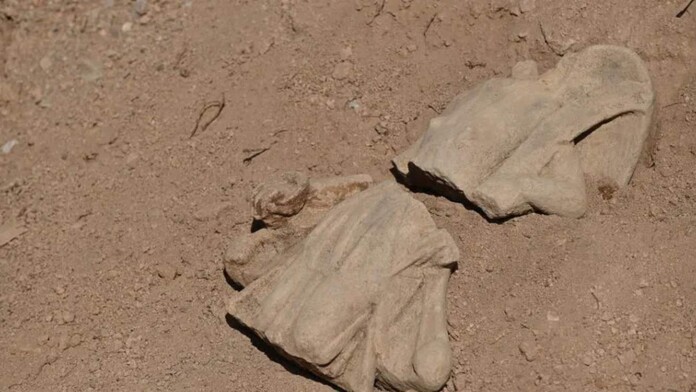
- Religious significance: Inscriptions referring to Mars were found at the site, along with fragments of a statue of Victoria, the Roman goddess of victory, depicted with wings and a laurel wreath.
- Military and civilian life: Excavations have revealed living areas, workshops, and evidence of changes to the settlement before it was abandoned.
Hessian state archaeologists and researchers from Goethe University Frankfurt have been excavating Kapersburg since 2024, uncovering extensive remains of a Roman military settlement in the foothills of Germany’s eastern Taunus Mountains.
The site lies along the Upper Germanic-Rhaetian Limes, a fortified frontier stretching approximately 342 miles from the Rhine to the Danube. The frontier marked the boundary of Roman military control in the region and was designated a UNESCO World Heritage Site in 2005.
Temple Linked to Mars
Among the latest discoveries is a temple within the vicus, the civilian settlement associated with the Roman fort. Archaeologists believe the rectangular structure was dedicated to Mars, the Roman god of war.
The temple measured about 16 feet in length and contained a smaller, three-walled room at its center where religious ceremonies are believed to have taken place.
A Military Community Along the Frontier
Kapersburg was established during the reign of either Emperor Trajan or Emperor Hadrian and remained part of the Roman frontier system for around 150 years.
The fort was associated with a military unit known as the Numerus Nidensium, believed to have numbered about 160 soldiers. Its name refers to Nida, a nearby Roman settlement whose location is now part of Heddernheim, a district of Frankfurt.
The surrounding vicus may have supported as many as 700 people, including workers, craftspeople, and others connected to the military community. Excavations have revealed residential areas and craft centres that help researchers reconstruct how soldiers and civilians lived and worked alongside one another.
Evidence of Later Development
Archaeologists have also uncovered remains of craft activities, including an area identified as a blacksmith’s workshop.
Evidence suggests that parts of the settlement were levelled before being replaced by residential buildings. The findings provide further clues about changes within the community before Kapersburg was abandoned in the third century.
FYI
The Upper Germanic-Rhaetian Limes formed part of the Roman Empire’s extensive frontier network. Its forts, watchtowers, settlements, and defensive structures helped monitor movement and support military operations along the empire’s borders.
The UNESCO-listed site preserves evidence of Roman military organization, engineering, and contact with communities beyond the frontier. Archaeological excavations continue to expand understanding of how these settlements functioned and changed over time.
Dive Deeper: Handpicked Stories for You
Follow Channel8 for continuous updates:
Historic Gawri Canal Excavation Reveals New Archaeological Discoveries in Garmian
57 minutes ago