Iraqi Oil Minister Speeds Up Implementation of Strategic Sector Projects
At a Glance
- Iraqi Oil Minister al-Abadi chaired an expanded ministerial meeting on Saturday.
- Review progress on strategic oil sector projects and government initiatives.
- The Minister ordered round-the-clock work to accelerate implementation schedules.
- Officials identified operational bottlenecks and established immediate corrective solutions.
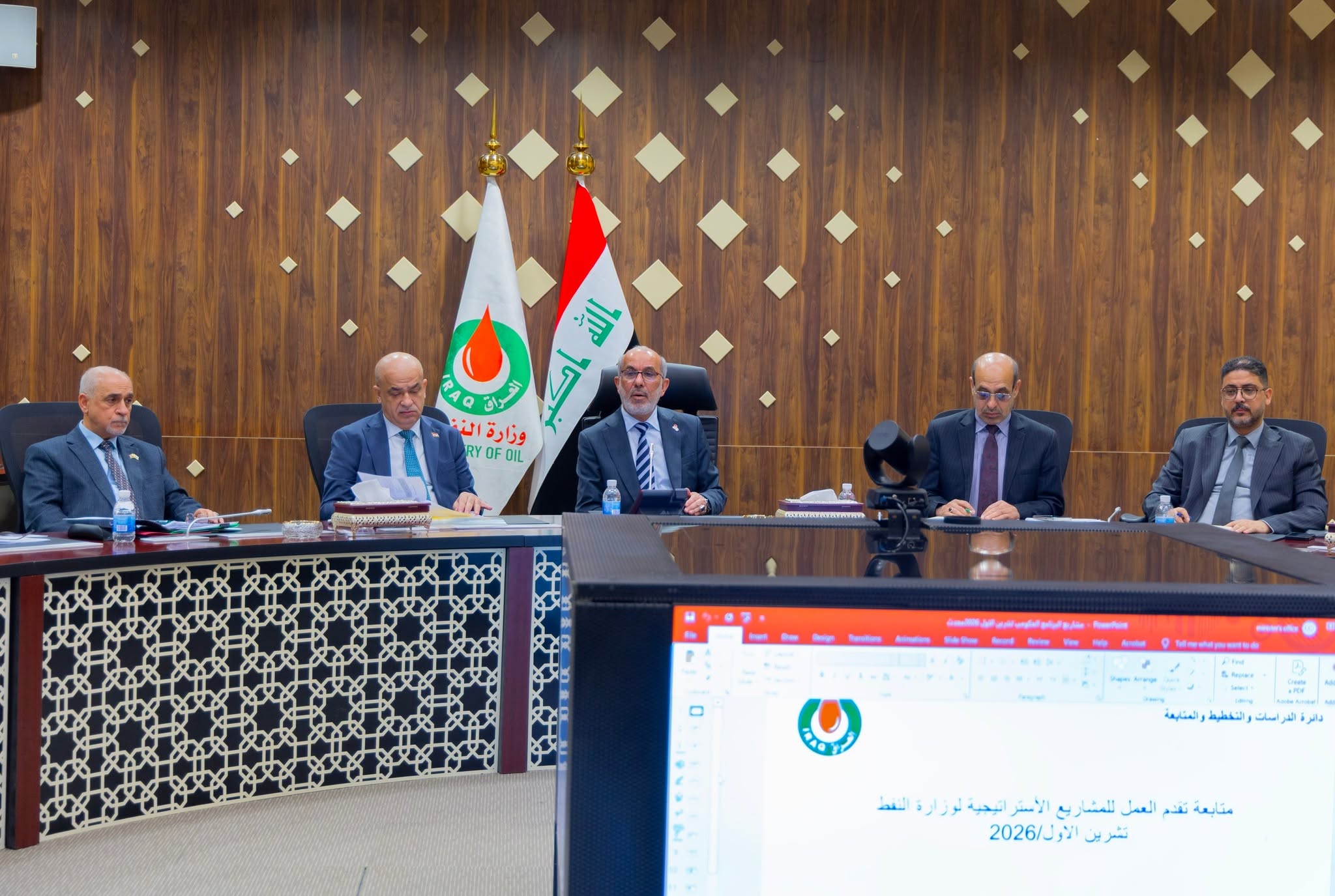
Iraqi Oil Minister Bassem Mohammed Khudair al-Abadi chaired an expanded meeting on Saturday to review the progress of strategic sector projects and government initiatives, urging relevant authorities to accelerate implementation schedules and overcome existing operational challenges.
Key Statements and Focus Area
- Minister al-Abadi emphasized "the need to double efforts, intensify work, and adopt an accelerated pace of implementation, while continuing to work around the clock to ensure that strategic projects and government program initiatives are completed according to the specified plans and schedules."
- In line with government program objectives, Minister al-Abadi chaired an expanded ministerial meeting to review the operational workflow and execution timelines of the ministry's key strategic projects.
During the Saturday session, the Minister and ministry officials evaluated project completion phases and milestone progress, while identifying operational bottlenecks and establishing immediate corrective solutions to streamline implementation.
The meeting was attended by Deputy Minister for Extraction Affairs Engineer Naseer Aziz Jabbar, alongside directors general from key affiliate companies, specialized departments, and technical experts.
The Minister emphasized the critical need for inter-agency collaboration, urging specialized departments and subsidiary companies to enhance operational integration, eliminate bureaucratic hurdles, and expedite administrative procedures.
"This aims to contribute to achieving the planned goals and elevating performance levels within the oil sector," the ministry noted.
The session concluded with an official directive stating: "This meeting provided an extensive review of our operational progress, allowing us to confront primary challenges head-on and implement the necessary corrective measures to safeguard uninterrupted workflow and secure our targeted completion milestones."
FYI
Under the administration of Prime Minister Ali Faleh al-Zaidi, the Ministry of Oil has embarked on an aggressive restructuring campaign to fortify national production, streamline infrastructure, and minimize bureaucratic delays.
Following the appointment of industry al-Abadi as Oil Minister, Iraq has shifted its focus heavily toward building operational resilience amidst regional disruptions.
The ministry is prioritizing an expansion of national crude production capacity alongside a strict timeline to completely eliminate routine gas flaring, while simultaneously optimizing relations and pipeline coordinates with the Kurdistan Regional Government (KRG).
To bypass ongoing maritime vulnerabilities, the ministry is aggressively expanding its midstream export corridors to diversify transport routes.
This includes extensive rehabilitation efforts to route production through Turkey, alongside multi-phase plans for internal strategic pipeline networks connecting major southern extraction hubs directly to alternative regional boundaries.
Furthermore, refining sector upgrades, such as the massive Fluid Catalytic Cracking (FCC) integration projects in southern refineries, are actively receiving targeted state support to shift Iraq toward high-value refined petroleum exports.
This infrastructure push is anchored by a wave of freshly activated agreements and commercial partnerships with international energy majors.
The Iraqi government has finalized a landmark $20–25 billion redevelopment deal with bp to aggressively modernize four massive fields in the Kirkuk region to hit a 450,000 bpd target within three years.
Concurrently, the state has deepened engagement with major U.S. firms; Chevron has committed a $200 million advance to secure exclusive negotiating rights for the West Qurna 2 field following a force majeure vacancy, ExxonMobil is pushing forward with development frameworks for the Majnoon field, and Halliburton has activated fixed-term upstream service contracts to expand crude and associated gas capacity at the Nahr Bin Umar and Sindbad fields.
Dive Deeper: Handpicked Stories for You
Follow Channel8 for continuous updates:
KRG Official Says Baghdad Oil Target Unachievable In 2027
Iraq and World Bank Discuss Funding for Strategic Economic Reforms
Iraq PM Meets TotalEnergies and ConocoPhillips Chiefs on Oil, Gas Expansion
2 hours ago