KRG Official Says Baghdad Oil Target Unachievable In 2027
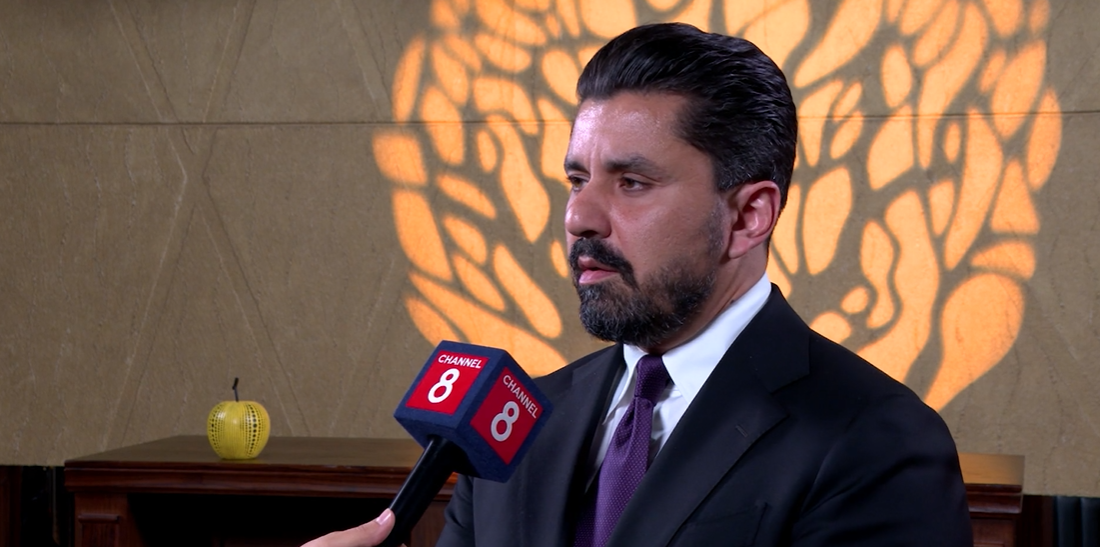
At a Glance
- Deputy Minister Ahmed Mufti stated Baghdad's demand for 400,000 daily barrels is a feasible objective that remains out of reach for 2027.
- The official cited a two-year investment drop in regional energy infrastructure.
- He stated foreign firms handle production because Erbil lacks a national oil company.
Ahmed Mufti, Deputy Minister of Natural Resources of the Kurdistan Regional Government, stated that Baghdad's budget demand for 400,000 barrels of oil is a viable target but cannot be achieved during 2027 without first providing financial and security reassurances to foreign energy firms.
Key Statements and Focus Area
- KRG ministry official Ahmed Mufti told Channel8 that “400,000 barrels is not an amount you can provide immediately.”
- “Investment in the oil and gas sector has decreased for nearly two years,” he stressed.
Speaking to Channel8 regarding the crude oil policy dispute between the KRG and the federal government, Deputy Minister Mufti noted that international oil companies handle production rather than the ministry, as the Kurdistan Region lacks a national oil company to manage extraction.
“400,000 barrels is an achievable goal, but it cannot be met during 2027,” he affirmed.
He stressed that the government owes outstanding entitlements to the operators, noting that these financial dues must be settled to increase production volumes to the requested 400,000 barrels.
“Reassurance must be given to the companies, and they require both financial and security reassurance,” he added.
FYI
The ongoing dispute between the KRG and the federal government in Baghdad centers on a steep deficit between federal budget demands and actual regional production capabilities.
In its draft budget, Baghdad has requested the KRG to hand over 400,000 barrels of oil per day. However, the Kurdistan Region's current exports stall at around 200,000 barrels per day, creating a persistent structural deficit.
The Kurdistan Region's current output shortfall is primarily tied to a two-year investment drop across its energy infrastructure.
Following the halting of independent pipeline exports through Turkey in early 2023, regional drilling and infrastructure development slowed significantly. This prolonged freeze has deeply degraded extraction capacities and restricted the volume of crude that can be readily brought online.
Beyond economic blockades, the production downturn worsened significantly due to escalating security vulnerabilities linked to the U.S.–Iran conflict and regional war. Frequent kamikaze drone and rocket strikes by armed groups explicitly targeted major regional energy hubs.
These hostile operations, specifically targeting vital installations like the Khor Mor field, disrupted regional power grids, caused sudden operational shutdowns, and severely constrained output by making consistent extraction hazardous for international operators.
Unlike federal Iraq, the KRG lacks its own state-run enterprise to manage extraction directly. Production relies entirely on international oil companies (IOCs).
Because the government owes substantial, long-standing financial entitlements to these private operators for past infrastructure work, the firms have restricted their output. They refuse to boost operations or invest fresh capital into regional fields until their financial backlog is cleared.
To meet Baghdad's federal targets, the KRG must first satisfy the strict preconditions set by its corporate partners. The international operators demand ironclad financial and security reassurances from both Erbil and Baghdad.
These guarantees must legally protect their production costs, ensure a reliable repayment mechanism for outstanding commercial debts, and secure field operations against regional instability before any expansion can take place.
Dive Deeper: Handpicked Stories for You
Follow Channel8 for continuous updates:
KRG Official Challenges Proposed Population Share Reduction
Ahmed Mufti: Kurdistan Region Provides 24-Hour Power Using Its Own Gas
Atrushi Warns Secret Iraqi Budget Threats Kurdistan Financial Security
Kurdistan Region and Baghdad Fail to Reach Agreement on Key Budget Provisions, Says MP Dilan Ghafoor
1 hour ago