Washington Hesitates On Patriot Missile Production License For Ukraine
At a Glance
- U.S. President Donald Trump casts doubt on licensing Patriot missile manufacturing for Ukraine.
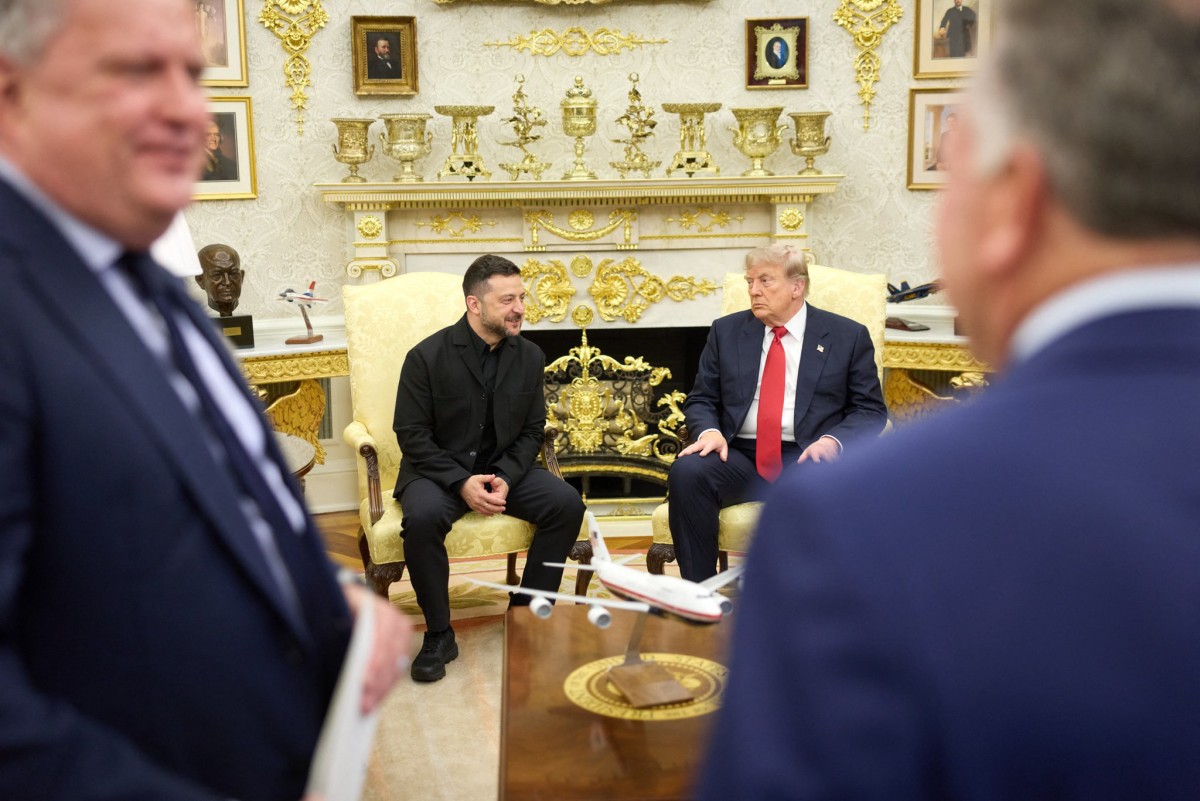
- Decision follows recent White House discussions between Trump and President Volodymyr Zelensky.
- Washington cites strict defense licensing protocols and sensitivity surrounding advanced weaponry.
- Kyiv considers domestic interceptor production critical against ongoing Russian ballistic attacks.
U.S. President Donald Trump has indicated that Washington remains undecided on whether to grant Ukraine a license to domestically manufacture Patriot surface-to-air interceptor missiles, introducing new uncertainty over a major defense priority for Kyiv.
Speaking in an interview with the Financial Times, Trump stated that the proposal remains under review, tempering expectations shortly after high-level bilateral talks at the White House.
Key Statements and Focus Area
- President Donald Trump: Addressing the reluctance over advanced technology transfers, Trump remarked, "It’s a very extraordinary weapon, and . . . we have to be a little bit careful of who we license to. We don’t really license equipment."
- White House Policy Scope: Outlining Washington's broader focus, Trump added, "Very simply put, we want the war in Ukraine with Russia ended. I’m not looking for missiles. We’re looking for peace."
- Ukrainian Strategy: Reflecting on defense coordination following his Washington visit, Ukrainian President Volodymyr Zelensky noted, "I had a meeting with representatives of production . . . I hope that we will do co-production. This is very important."
Strategic Hesitation Over Advanced Air Defense Technology
The Patriot air-defense system is widely recognized as the primary countermeasure against Russian ballistic missile strikes targeting key Ukrainian cities and critical infrastructure. Although Trump had previously signaled openness to exploring production licensing during earlier diplomatic exchanges, his latest comments underscore Washington's traditional hesitation toward licensing proprietary, top-tier military hardware abroad. U.S. officials continue to weigh the technology transfer against broader non-proliferation and defense industry regulations.
Diplomatic Outreach and Manufacturing Timelines
The ambiguity comes despite active discussions between Kyiv and major American defense contractors like Raytheon and Lockheed Martin regarding potential joint ventures and technical cooperation. Ukrainian officials have sought to accelerate domestic assembly to bypass international supply bottlenecks and safeguard energy infrastructure. However, defense analysts and leadership acknowledge that even if approved, establishing full-scale domestic manufacturing of complex Patriot interceptors would require between one to five years to achieve operational scale.
FYI
The debate over Patriot licensing highlights the evolving tension between Kyiv’s urgent air defense requirements and Washington’s broader diplomatic maneuvering to end the conflict. As Russia maintains heavy missile barrages on civilian and industrial targets, Ukraine’s reliance on Western-supplied interceptors remains a critical point of leverage in international aid discussions. Trump’s appointment of special envoys to travel to Ukraine reflects a dual track of maintaining security dialogues while seeking a negotiated resolution, leaving long-term co-production arrangements in diplomatic limbo.
Dive Deeper: Handpicked Stories for You
Follow Channel8 for continuous updates:
https://channel8.com/english/news/61095
2 hours ago