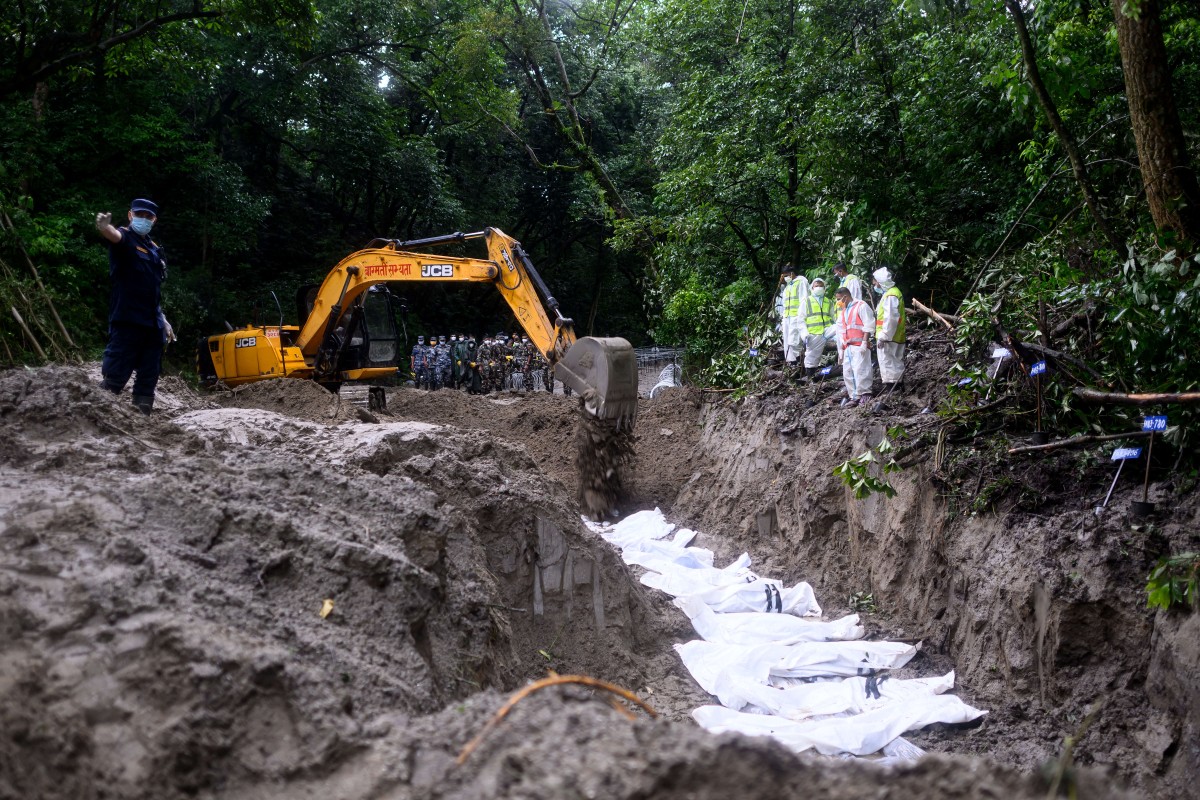
Nepal Begins Mass Burials as Flood Fatalities Exceed 1,000
At a Glance:
- Over 1,003 fatalities have been confirmed across the Himalayan region; 987 in Nepal and 16 in Tibet.
- A total of 4,462 people remain missing (3,916 in Nepal and 546 in Tibet), including 844 foreign nationals.
- Rescue teams in Nepal's Rasuwa district are utilizing thermal-imaging drones to search for survivors trapped inside a flooded hydroelectric tunnel.
- Nepal has begun mass burials in response to the humanitarian crisis and has requested specialized international aid, including tunnel rescue teams and forensic DNA identification equipment.
The death toll from severe flooding and landslides across the Himalayan region has passed 1,000, as search and rescue teams in Nepal and Tibet battle challenging terrain to locate thousands of missing people. With Nepal's Disaster Management Authority confirming 987 fatalities domestically and Chinese authorities recording 16 deaths in Tibet, officials in Kathmandu have initiated mass burials and requested specialized international assistance to manage the mounting humanitarian disaster.
Key Statements and Focus Area:
- Local Rescue Official (Nuwakot District):
"The humanitarian catastrophe in flooded districts is immense, with the odor of decaying bodies spreading across disaster zones as rescue teams clear debris."
Casualty Breakdown and Foreign National Impact
| Region / Category | Confirmed Fatalities | Reported Missing | Foreign Nationals Missing |
| Nepal (Domestic) | 987 | 3,916 | 583 (from over 30 countries) |
| Tibet, China | 16 | 546 | 261 (from 23 countries) |
| Total Regional Impact | 1,003 | 4,462 | 844 Foreign Nationals |
Hydroelectric Infrastructure and Thermal Technology Deployments
In Nepal’s Rasuwa district, search efforts are focused on a damaged hydroelectric project where 639 power plant workers and dam construction personnel remain unaccounted for. Rescue crews have deployed thermal-imaging drones inside flooded glacial tunnels to detect heat signatures and pinpoint trapped survivors. Given the high risk of secondary tunnel collapses, the Nepalese government has requested neighboring nations to dispatch specialized underground rescue units, forensic DNA analysis tools, mobile mortuary freezers, and disaster recovery equipment.
Monsoon Extremes and Regional Risk Trends
The disaster struck during South Asia's annual monsoon season, which spans from June through September. Environmental scientists warn that climate change is increasing the frequency and intensity of extreme weather patterns across the Himalayas, escalating landslide hazards for remote mountain communities, river basins, and critical infrastructure located in steep valleys.
FYI
The rapid scale of the disaster has overwhelmed Nepal's domestic emergency response capacity, prompting the transition to mass burials to mitigate public health risks. Deploying advanced drone technology and requesting international forensic and tunnel-rescue capabilities underscores the structural challenges landlocked, mountainous regions face when responding to climate-driven natural disasters.
Dive Deeper: Handpicked Stories for You
Follow Channel8 for continuous updates:
Nepal Resuming Tunnel Rescue Operations Amid Adverse Weather
Nepal Reaches Out for Global Aid Following Devastating Floods
2 hours ago