Atacama Desert Bursts Into Bloom After Heavy Rains
At a Glance
- Chile’s Atacama Desert is experiencing an unusually extensive wildflower bloom.
- Heavy rainfall earlier this year activated seeds and bulbs dormant for decades.
- More than 200 plant species are appearing across the desert.
- The rare spectacle is drawing tourists to northern Chile.
An unusual transformation is underway in one of the world’s driest landscapes, as large parts of Chile’s Atacama Desert have turned into fields of wildflowers.
Key Statements and Focus Area
- Scale of the Bloom: “There are more than 200 plant species.” — Jorge Carabantes, National Forest Corporation (CONAF).
- Exceptional Event: “This is a flowering event that is obviously extraordinary and unusual.” — Jorge Carabantes, CONAF.
- Focus Area: The phenomenon is linked to unusually heavy rainfall and the activation of long-dormant desert plant life.
The Atacama stretches about 1,600 kilometers along northern Chile between the Pacific Ocean and the Andes Mountains. While seasonal flowering does occur as winter gives way to spring, the scale of this year’s bloom has made it an exceptional Desierto Florido, or “flowering desert.”
Chile recorded unusually heavy rainfall between July and August, with some areas registering levels not seen since measurements began in the 1950s. In parts of the country, rainfall reached between 160 and 190 millimeters.
The weather brought flooding and damage to several regions, but in northern Chile it also created conditions for dormant biological material in the desert to become active.
According to CONAF, the affected area is estimated at about 17,000 square kilometers, roughly comparable in size to the Santiago Metropolitan Region. Officials expect this to be the most extensive and intense flowering event since 1997.
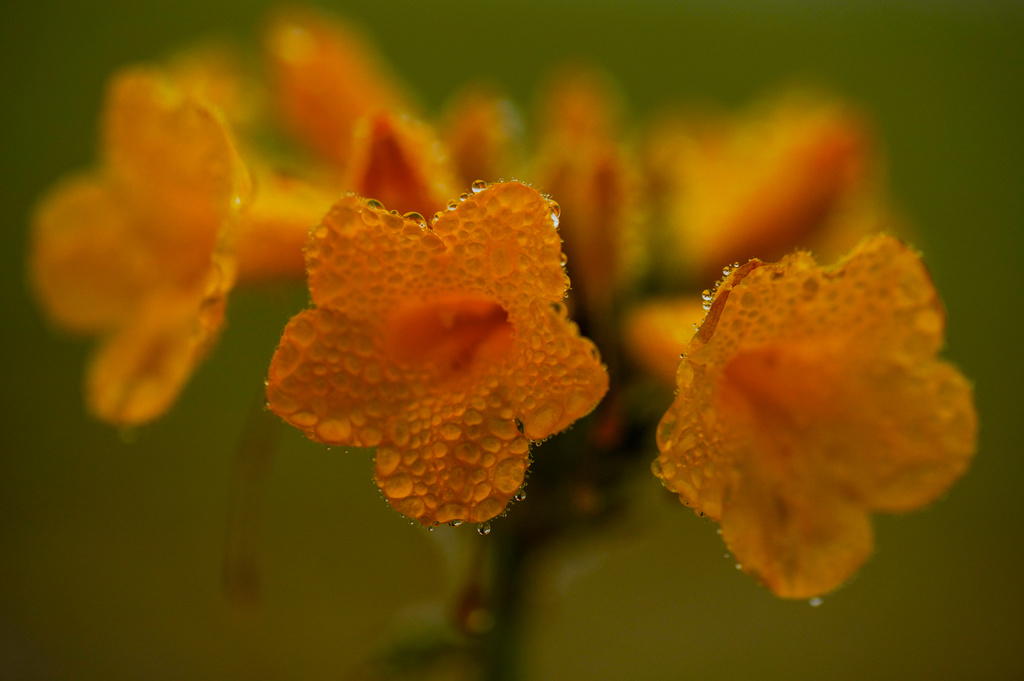
The bloom includes red and yellow ñañucas, purple rock purslane, white suspiros, orange terciopelos, and the native garra de león. Some hills and mountain ranges have seen vegetation and flowers for the first time in several decades.
The desert’s germplasm includes seeds, bulbs, and tubers, as well as eggs of some invertebrates and reptiles. Much of this biological material can remain dormant for years or even decades until sufficient moisture triggers growth.
The flowering has also brought visitors to remote parts of the Atacama, with travelers arriving from across Chile and abroad to see the landscape transformed.
Chile’s National Tourism Secretariat expects the Atacama region to record nearly 300,000 overnight trips by the end of the phenomenon in November, making the bloom one of the area’s main attractions this season.
Some visitors are traveling long distances specifically to see the flowers. One couple traveled nearly 1,000 kilometers from central Chile’s Colchagua Valley to explore the flowering areas.
FYI
The Atacama is widely recognized as the driest nonpolar desert on Earth. Its extreme aridity means that major flowering events are highly dependent on unusual rainfall patterns, allowing plants and other organisms that remain dormant underground to respond when moisture becomes available.
Dive Deeper: Handpicked Stories for You
Follow Channel8 for continuous updates:
Hurricane Polo Threatens Mexico as Nolo Hits Hawaii
Indigenous Communities Cut Wildfires Across Peru’s Forests
El Niño Raises Global Risk of Extreme Weather, Impacts Expected in the Kurdistan Region
3 hours ago