Swiss Glaciers Lose 5.5% Ice Volume This Year
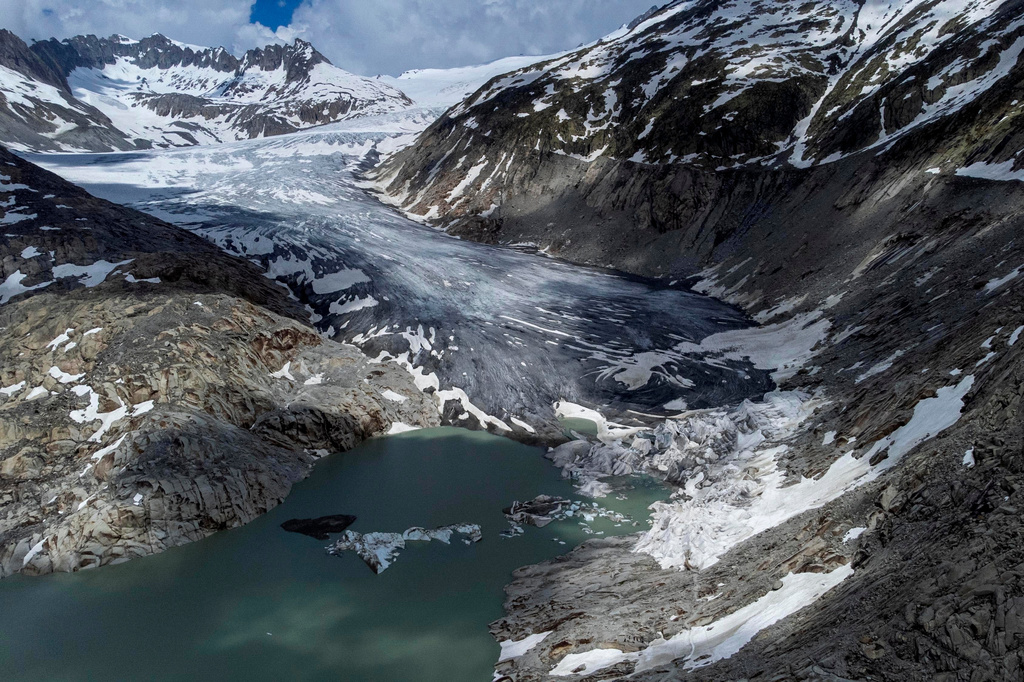
At a Glance
- Swiss glaciers recorded their second-largest percentage loss of ice.
- Heat waves and low winter snowfall accelerated the melt.
- Glacier volume has fallen by nearly one-fifth in five years.
- The losses could affect water resources and hydropower.
Switzerland’s glaciers are continuing to shrink at an accelerating pace, with experts warning that the latest losses underscore the growing impact of warming temperatures across the Alps.
Key Statements and Focus Area
- Long-Term Outlook: “Alpine glaciers have no chance of surviving in the long term under such conditions.” — GLAMOS Swiss glacier monitoring service and Swiss Academy of Sciences.
- Climate Change: “The warming that we are experiencing now can be attributed 100% to anthropogenic climate change.” — Matthias Huss, head of GLAMOS.
- Focus Area: The scale of this year’s melt highlights the growing pressure on Switzerland’s water resources, hydropower system, and major European river basins.
The 5.5% reduction recorded this year is the second-largest annual percentage decline since Swiss glacier measurements began. The record relative loss occurred in 2022, when glaciers lost 3.5% of their total volume.
The difference in percentage losses reflects how much ice remains. Switzerland’s glaciers now hold roughly one-third of the volume they had in 2003, meaning comparable physical losses represent a larger share of the remaining ice.
Experts recorded an average thickness reduction of between 2.5 and 4 meters on individual glaciers. Some glacier tongues lost as much as 10 meters. Among those recording their largest melt on record this year were the Allalin, Clariden, Rhone, and Aletsch glaciers. Aletsch is the largest glacier in the Alps.
From July through September, Switzerland lost an estimated 2.2 trillion liters of glacier ice. That is equivalent to roughly four times the country’s annual water consumption.
The losses are significant for Switzerland’s energy system because hydropower provides more than half of the country’s electricity. Glacier melt also affects water supplies beyond Switzerland, which feeds several major European rivers.
The Danube, Po, Rhine, and Rhone all have headwaters or tributaries connected to the Alpine region, making changes in the glaciers relevant to water systems across Europe. Scientists have also been monitoring runoff and water channels forming within the shrinking glaciers. Field teams have used red dye to trace water movement through the ice and assess how meltwater is flowing.
Low snowfall during winter leaves glacier ice exposed for longer periods during the warmer months. Snow also provides material that can accumulate at higher elevations and eventually contribute to the formation of new ice. The combination of limited winter snow and repeated heat waves has therefore increased the pressure on Alpine glaciers this year.
FYI
Switzerland contains more glaciers than any other country in the Alps. Their decline is part of a wider pattern of glacier loss linked to rising global temperatures, with researchers also documenting substantial ice losses in other mountain regions and in Greenland and Antarctica.
Dive Deeper: Handpicked Stories for You
Follow Channel8 for continuous updates:
Atacama Desert Bursts Into Bloom After Heavy Rains
Thailand Flooding Kills Eight As Bangkok Declares Disaster
Climate Action Now Hinges on Speed, Finance, and Cooperation
2 hours ago