Three Scientists Win 2026 Nobel Prize in Medicine
At a Glance
- Three scientists have won the 2026 Nobel Prize in Medicine.
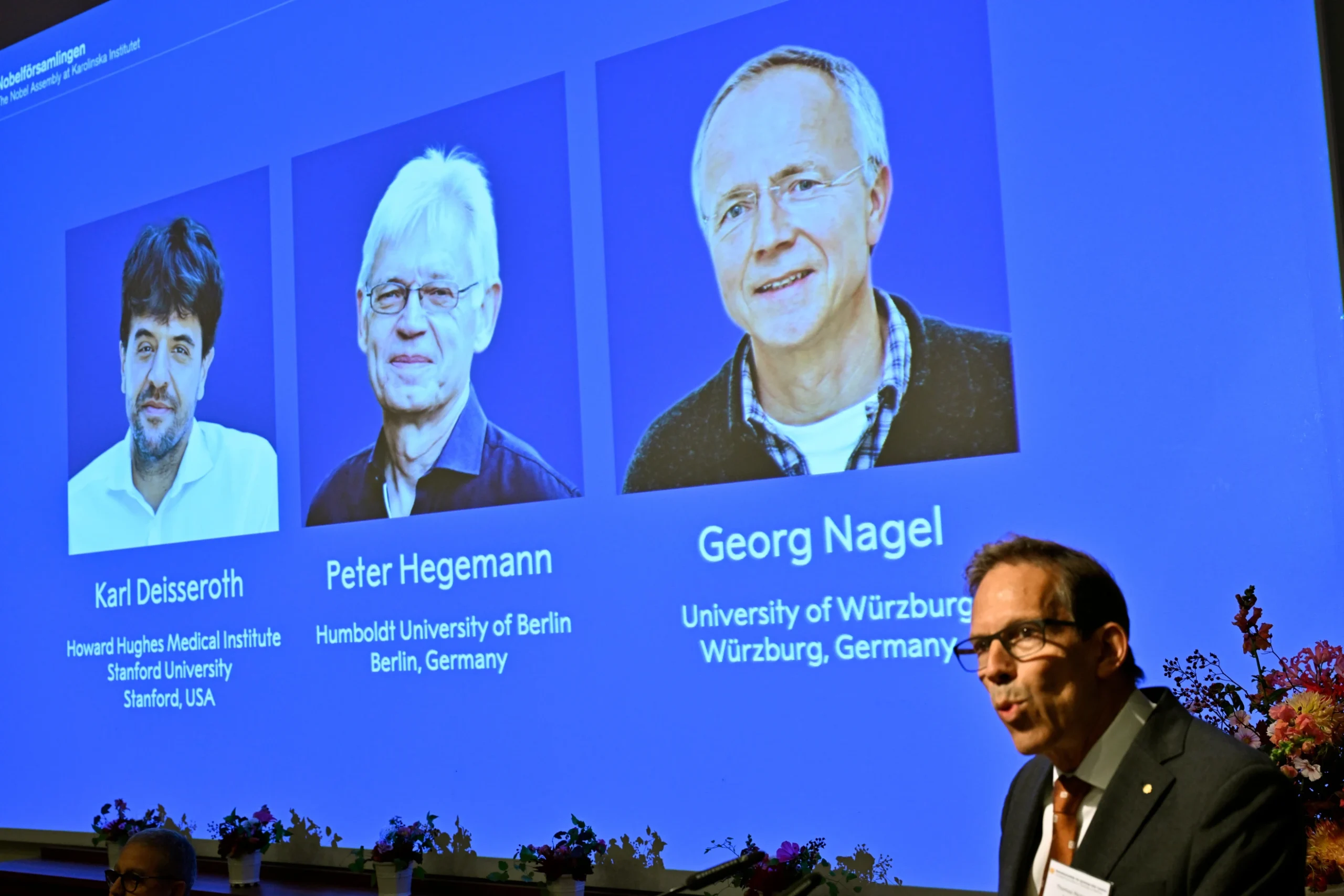
- Karl Deisseroth, Peter Hegemann, and Georg Nagel pioneered research that led to optogenetics.
- Their work allows researchers to switch individual nerve cells and brain circuits using light.
- The medicine award opens this year’s Nobel Prize announcements in Stockholm.
Three scientists have been awarded the 2026 Nobel Prize in Medicine for research that has transformed how scientists study the brain and its nerve cells.
Key Statements and Focus Area
- Scientific Impact: "Optogenetics is now being used in laboratories around the world to reveal the brain’s mysteries." — Nobel Assembly.
- Neuroscience Breakthrough: "Optogenetics opened a new era in neuroscience." — Nobel Assembly.
- Focus Area: The research established a way to control nerve-cell activity with light, providing researchers with a tool to investigate brain function, behavior, and disease.
Karl Deisseroth of Stanford University, Peter Hegemann of Humboldt University in Berlin, and Georg Nagel of the University of Würzburg were named the recipients of the medicine prize.
Their research centers on light-gated ion channels, proteins that can open in response to light and generate electrical signals in cells. The discoveries eventually enabled scientists to manipulate specific nerve cells with precisely controlled light.
Hegemann began investigating how single-celled green algae respond to light while swimming. He and Nagel identified a protein that opens a channel when exposed to blue light, allowing an electrical impulse to pass through the cell.
The researchers then demonstrated that transferring the gene responsible for the protein into other cells could make those cells responsive to light.
Deisseroth subsequently helped apply the approach to neuroscience. By introducing the relevant gene into nerve cells, his research team developed a method for controlling the activity of targeted neurons in living mice with light.
The technique, known as optogenetics, has since become widely used in neuroscience research. It allows scientists to activate or inhibit specific groups of neurons while observing their effects on brain circuits and behavior. The Nobel Assembly said the method has helped researchers investigate the biological pathways involved in brain function and neurological disease.
Nobel medicine committee secretary Thomas Perlmann said he was able to reach all three laureates by telephone after the announcement. The prize was announced at the Karolinska Institute in Stockholm, marking the beginning of Nobel Prize week.
FYI
The Nobel Prize in Medicine is the first of this year's Nobel awards. The physics prize is scheduled for Tuesday, followed by chemistry on Wednesday and literature on Thursday.
The Nobel Peace Prize will be announced Friday, while the Nobel Memorial Prize in Economic Sciences is scheduled for October 12. The 2026 prize amount is 12 million Swedish kronor, approximately $1.2 million, for each Nobel Prize category.
Dive Deeper: Handpicked Stories for You
Follow Channel8 for continuous updates:
Japan Reports Record Number of People Aged 100 and Over
Stanford’s Evo AI Designs Viruses to Fight Antibiotic Resistance
2 hours ago