Iraq Eyes $15B Syria Pipeline to Bypass Hormuz Chokepoint
At a Glance:
- Projected mega-pipeline requires $15 billion and four years to complete.
- Infrastructure designed to redirect crude exports away from volatile Gulf waters.
- MoU signed with Chevron, TI Capital, and Qatari firm UCC Holding.
- Legacy Kirkuk–Baniyas pipeline deemed unusable; full line requires rebuild.
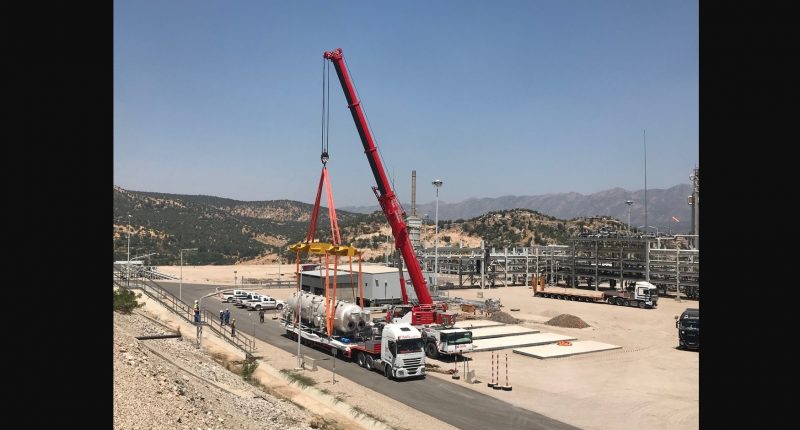
Iraq has outlined plans to construct a massive $15 billion crude oil transport pipeline extending through Syria to the Mediterranean Port of Baniyas, aiming to drastically cut its reliance on the Strait of Hormuz for energy exports.
Developed alongside major international partners, the ambitious infrastructure effort faces a minimum four-year construction timeline to establish a completely modern network from Iraqi production hubs to Syrian coastal terminals.
Key Statements and Focus Area:
- Corporate Status:"Chevron has not yet conducted any technical or financial studies for the construction of the pipeline." — Chevron statement regarding the preliminary nature of the current stage.
- Export Strain:"Iraq’s oil exports through the Strait of Hormuz dropped to 35.5 million barrels in July." — SOMO (State Organization for Marketing of Oil) data highlighting severe volume reductions during Gulf tensions.
- International Support:"U.S. officials and energy sector executives support Chevron in constructing this pipeline as part of a strategy to reduce pressure on Iraq during times of regional conflict." — Energy sector report on backing for alternative export routes.
Pipeline Scope and Infrastructure Expansion
The project entails building an integrated system that connects oil fields in both southern and northern Iraq. Crude will route to a central junction in Haditha in western Iraq before continuing onward to Syria’s Port of Baniyas. Initial design benchmarks project a transport capacity capable of handling significantly higher volumes than historic export routes.
Rebuilding Beyond Legacy Assets
Although an older Kirkuk–Baniyas line previously connected the two nations, industry assessments confirm that decades of war damage and outdated engineering render the historic corridor irreparable. Consequently, the project requires entirely new pipeline infrastructure built to modern technical specifications rather than simple restoration work.
Multinational Agreement and Technical Review
Iraq and Syria entered a Memorandum of Understanding (MoU) alongside a consortium featuring American energy giant Chevron, TI Capital, and Qatar-based UCC Holding. While political and official support for the corridor is strong, participating firms emphasize that formal feasibility, technical design, and economic studies have not yet officially commenced.
FYI
Iraq remains heavily exposed to geopolitical shocks due to its historic dependence on Persian Gulf shipping lanes near Basra. With conflict and political friction periodically threatening navigation through the Strait of Hormuz, Baghdad's fiscal stability, which rests on oil revenue for roughly 90% of state spending, faces recurring jeopardy. Establishing an alternative outlet through Syria to Mediterranean waters serves a vital strategic goal for Iraq, Syrian transit revenue efforts, and international market stabilization.
Dive Deeper: Handpicked Stories for You
Follow Channel8 for continuous updates:
Al-Zaidi: Iraq Must Turn Hormuz Crisis Into Infrastructure Opportunity