Iraq Struggles to Contain Volatile Dinar Currency Disparity
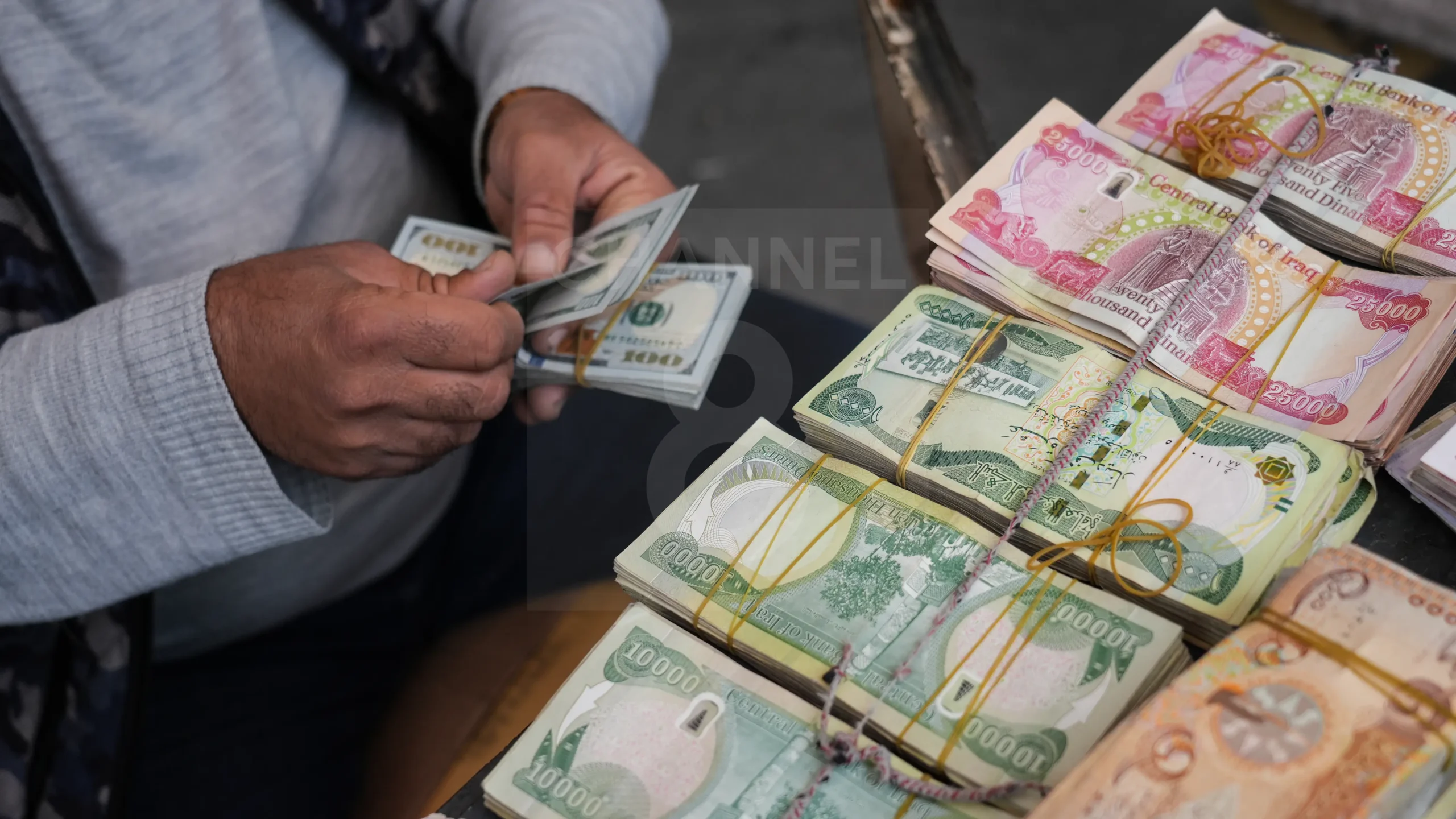
At a Glance
- The Iraqi dinar reached its peak value during the 1970s when one dinar was worth four U.S. dollars.
- Conflict and economic embargoes during the 1990s caused the currency to crash to 3,000 dinars per dollar.
- The Central Bank fixed the official rate at 1,320 IQD, but parallel market rates remain high at 1,530 IQD.
- The government has failed to contain the significant price gap between official state channels and open market vendors.
Channel8 has learned that decades of geopolitical conflict, sanctions, and market resistance have left Iraq unable to bridge the gap between its official 1,320 IQD peg and parallel market rates exceeding 1,530 IQD, cementing a historic decline from its four-dollar peak in the 1970s.
Key Statements and Focus Area
- On current market disparity: A persistent, wide gap remains between Iraq's official and market exchange rates, with open markets trading at 1,530 IQD despite the Central Bank's 1,320 IQD official peg.
- On structural historical declines: This modern monetary disparity mirrors the volatile historical trajectory of the Iraqi dinar, which collapsed from its historic peak of four dollars per dinar to some of its lowest historical levels.
- On modern monetary interventions: Although the government devalued the dinar to 1,460 IQD in 2021 due to crashing oil revenues and later revalued it to 1,320 IQD in 2023, the market resisted, with street prices occasionally spiking to 1,700 IQD.
Chronological Eras of the Iraqi Dinar Value
- 1968–1979 (The Peak): The currency maintained its absolute highest valuation, trading at a stable rate of 1 IQD to $4.00 USD.
- 1980–1988 (The Iran-Iraq War): Wartime economic strain caused a minor depreciation, adjusting the value to 1 IQD to $3.30 USD.
- 1991–2003 (The Sanctions Era): Under a crushing economic blockade and excessive domestic printing, the currency collapsed to 3,000 IQD to $1 USD.
- 2004–2021 (Post-War Stabilization): The introduction of a new currency stabilized the market, keeping exchange rates steady between 1,180 IQD and 1,200 IQD per dollar.
In recent weeks, the Iraqi dinar strengthened against the U.S. dollar, with the exchange rate dropping from a peak of nearly 160,000 IQD to 153,000 IQD per 100 dollars.
This decline was driven by the U.S. government lifting restrictions on several private Iraqi banks and the Central Bank of Iraq addressing rumors of currency devaluation.
Market traders told Channel8 that ongoing government financial stabilization measures, including organized customs duty collections via the ASYCUDA system, helped restore public sector confidence, keeping the dollar from climbing back to its June peaks.
Speaking to Channel8 today, Jabar Goran, spokesperson for the Slemani Currency Exchange Market, highlighted that deleting zeros from the dinar would compel holders of hidden cash reserves to disclose their origins, effectively rendering tens of trillions in illicit funds unusable.
Goran also dismissed rumors of an Iraqi dinar exchange-rate adjustment, stating that a devaluation is unnecessary because rising revenues have offset increased expenditures.
The spokesperson previously predicted that if regional geopolitical tensions ease and vital maritime trade channels like the Strait of Hormuz remain stable, the parallel market exchange rate could significantly strengthen, potentially dropping down to a range between 146,000 and 147,000 IQD per $100 USD.
FYI
The Iraqi dinar was originally introduced into circulation in 1932. Following the regime change in 2003, the Coalition Provisional Authority introduced an entirely overhauled banknote series widely known as the "Bremer Print."
This new issue systematically replaced both the pre-1991 high-quality "Swiss Print" and the poorly printed, easily counterfeited banknotes produced locally during the 1990s sanctions era.
This monetary timeline demonstrates that prolonged foreign wars, domestic mismanagement, and geopolitical shifts remain the primary drivers behind the dynamic instability of the dinar against global currencies.
Dive Deeper: Handpicked Stories for You
Follow Channel8 for continuous updates:
Iraq Projects Historic 3.5 Trillion Dinar Customs Revenue Surge
Erbil And Baghdad Reportedly Agree On Equal Customs Split
Finance Minister Meets Central Bank Governor on Monetary Stability
Deficit consumes nearly half of Iraq's projected 200 trillion IQD 2027 budget
Iraq's Budget Deficit Reaches 80 Trillion Dinars, Says PM Economic Advisor
Rumors and Security Fears Reverse Iraqi Dinar Gains in Kurdistan Markets
16/08/2026